

What is an Inverted Deep Hole Drilling Machine?
You try to drill a deep hole. Metal chips clog the hole and break your expensive tool. You lose time and money. You need a better machine.
An inverted deep hole drilling machine places the rotating cutting tool at the bottom and the stationary workpiece at the top. The workpiece moves downward into the tool. This vertical upside-down design allows metal chips to fall out naturally using gravity, preventing clogs and tool breakage.
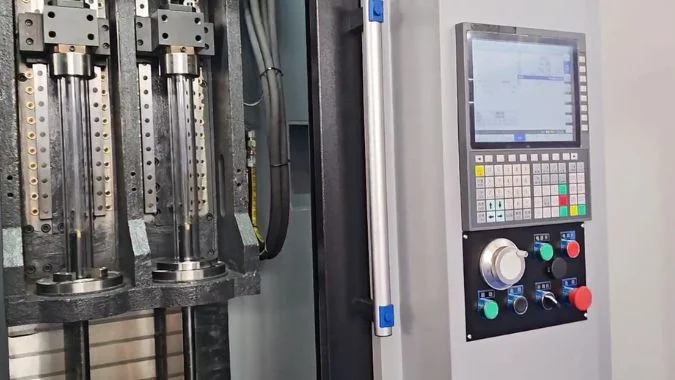
My clients constantly struggle with deep hole drilling problems. I showed them this unique machine design to solve their worst chip clogging nightmares. Let me show you how this upside-down technology completely changes the drilling process.
What are the Differences Between Horizontal and Inverted Deep Hole Drilling?
You buy a standard horizontal drill. It takes up massive floor space and struggles with small parts. You waste valuable factory room and delay your daily production.
Horizontal drills hold long, heavy workpieces sideways and force chips out using high-pressure coolant. Inverted drills hold short workpieces vertically at the top. The tool cuts upward from below. This lets chips fall out naturally, saves factory floor space, and cuts cycle times significantly.
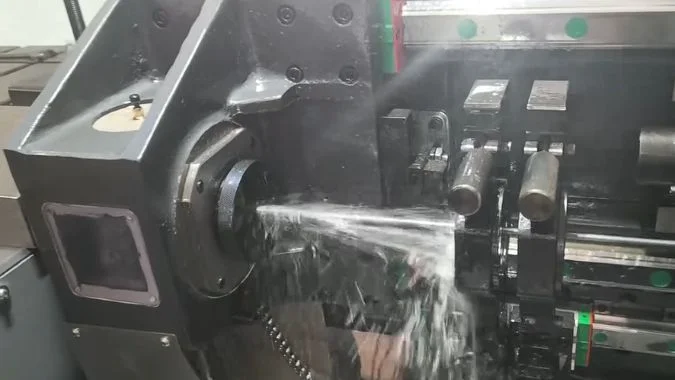
Horizontal deep-hole drilling machines1 work perfectly for extra-long parts like massive hydraulic cylinders. But they occupy a huge floor footprint. They also require complex forced chip removal systems. Setup times on horizontal machines take thirty to sixty minutes. They also need extremely long cutting tools. These long tools shake and vibrate constantly. Inverted deep-hole drilling machines2 fix these exact problems. They use a smart vertical design. The machine holds short cylindrical parts above the tool. The parts usually measure under 350 millimeters long. The cutting tool sits at the bottom and points up. This design makes the cutting tool much shorter. A shorter tool means thirty percent more rigidity. You do not need complex chip removal boxes. Setup takes only five to fifteen minutes. You can also automate these machines easily with robot arms to speed up mass production.
System Design Comparison
| Machine Feature | Horizontal Drilling System | Inverted Drilling System |
|---|---|---|
| Part orientation | Lays flat sideways | Hangs vertically |
| Best part size | Extra long and heavy | Short and cylindrical |
| Enlèvement des copeaux | Forced out by water pressure | Falls out naturally by gravity |
| Setup time | Takes thirty to sixty minutes | Takes five to fifteen minutes |
Why is Hole Straightness Better Maintained in an Inverted Configuration Compared to Horizontal Drilling?
Your deep hole wanders off center. The hole curves inside the metal block. You must scrap the expensive part and start over completely. You lose big profits.
Inverted configurations maintain perfect hole straightness because gravity pulls metal chips down. This prevents chip accumulation. The vertical spindle aligns with gravity perfectly. It stops lateral sagging. The rigid frame and short cutting tool stop the tool from bending during heavy cuts.
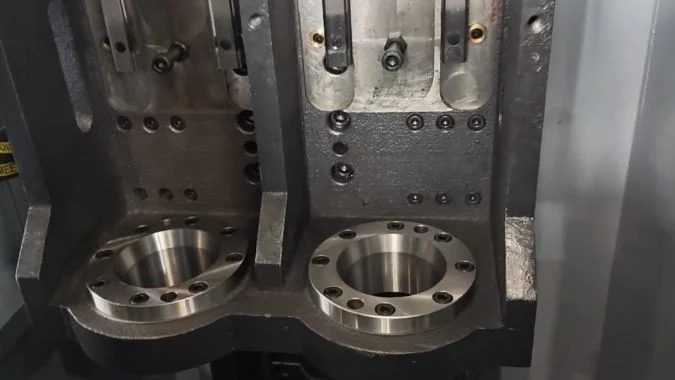
Straightness matters more than anything in deep hole drilling. If your hole bends by half a millimeter, the entire part fails quality inspection. I talk to engineers about this daily. They hate horizontal drilling for precise jobs. Horizontal machines push coolant into the hole to flush chips out. Sometimes the chips get stuck inside the tight horizontal space. These stuck chips push against the long cutting tool. We call this tool pushing. Also, long horizontal tools sag sideways under their own weight. This gravitational deflection causes centerline drift3. Your hole becomes crooked instantly. Inverted machines4 stop this bending completely. The tool points straight up. The chips fall straight down. They never stay inside the cutting zone. The vertical setup aligns perfectly with gravity. You get pure axial force with zero sideways sag. The machine also uses a heavy frame-type rigid body. The spindle runs with extreme precision. The radial runout stays under 0.002 millimeters. You get incredibly straight holes every single time without needing complex compensation systems.
Factors Controlling Straight Hole Quality
| Quality Factor | Horizontal Machine Problem | Inverted Machine Solution |
|---|---|---|
| Chip location | Chips pile up inside the hole | Chips drop down instantly |
| Gravity effect | Tool sags sideways | Pure axial force downward |
| Tool pushing | Stuck chips bend the drill | Empty hole keeps drill straight |
| Spindle body | Standard horizontal setup | Heavy rigid frame design |
How Does High-Pressure TSC Work Better in Inverted Deep Hole Drilling Machine?
Your cutting tool overheats and snaps deep inside the metal. You cannot remove the broken piece. The entire expensive workpiece becomes useless scrap metal immediately.
Through-Spindle Coolant delivers high-pressure fluid directly through the center of the cutting tool. In an inverted machine, this high-pressure fluid hits the top cutting area and pushes chips straight down. It cools the tool tip perfectly and prevents thermal damage.
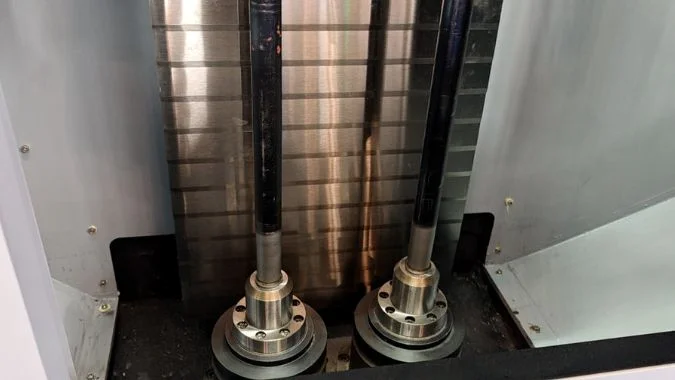
Gravity helps remove chips, but gravity alone is not enough for very deep holes. When your hole depth is twenty times larger than your hole diameter, you need serious fluid power. The machine pumps coolant at three to eight megapascals of pressure. The fluid travels straight up through tiny holes inside the single-edge gun drill5 or BTA tool. It explodes out of the tool tip right where the cutting happens. In a horizontal machine, this fluid must fight against gravity to push chips out sideways. In an inverted machine, the TSC fluid pushes the chips exactly in the same direction as gravity. They work together perfectly. This massive coolant flow stops the tool tip from melting. It prevents thermal deformation of your metal part. You get a beautiful smooth surface finish near Ra 1.6 microns6. This reliable chip flushing lets you run the machine all night safely without a human operator.
TSC Performance Advantages
| TSC Function | Action Inside the Hole | Final Machining Result |
|---|---|---|
| Direct tip cooling | Stops heat at the cutting edge | Extends tool life massively |
| Fluid pressure | Pushes chips downward hard | Prevents clogs completely |
| Thermal control | Keeps metal part cold | Improves surface roughness |
| Flow stability | Washes hole continuously | Allows safe unmanned operation |
What Industries Require Inverted Deep Hole Technology?
You try to mass-produce small precision parts. Your current machines work too slowly. Your competitors deliver parts faster and steal your best business contracts easily.
The automotive, aerospace, and mold-making industries require inverted deep hole technology. These fields mass-produce short parts with very strict precision limits. Inverted machines drill engine parts, titanium aerospace components, and small mold inserts with extreme accuracy and amazing speed.

Different factories need different tools. Some industries absolutely must use inverted drilling technology7 to survive. The automotive industry is the biggest user. Car factories make millions of small connecting rods and electric vehicle drive shafts. They need small diameter oil holes drilled perfectly and quickly. Inverted machines can process multiple parts at the exact same time. Some machines have dual-station or four-station configurations. This mass production speed saves car companies millions of dollars. The aerospace industry uses these machines for completely different reasons. Airplane makers drill tiny holes in very tough titanium landing gear parts and actuators. They care about une précision de l'ordre du micron8, not just speed. The rigid inverted spindle gives them perfect aerospace parts. Mold makers also love these machines. They use them to drill precision cooling channels and ejector pin bores in small mold inserts. General machine shops buy them to drill short stainless steel rods easily.
Core Industry Applications
| Manufacturing Field | Typical Drilled Part | Machine Benefit |
|---|---|---|
| Automobile | EV drive shafts | High-speed batch production |
| Aérospatiale | Titanium landing gear | Micron-level extreme precision |
| Mold Making | Mold cooling channels | Perfect hole straightness |
| General Machining | Short stainless steel rods | Easy automation loading |
Conclusion
You must choose an inverted deep hole drilling machine for short parts. The upside-down vertical design uses gravity and high-pressure coolant to deliver perfectly straight holes and fast production.
-
Read an in-depth analysis of large floor footprint, forced chip removal systems, long setup times and tool vibration to guide machine selection. ↩
-
Discover how the vertical inverted design uses shorter tools for ~30% more rigidity, faster setups, and easier automation to boost throughput. ↩
-
Find engineering analyses and mitigation strategies (tool deflection, chip forces, fixturing) that reduce centerline drift and improve hole straightness. ↩
-
See manufacturer specs and case studies showing how inverted setups use gravity, rigid frames, and low radial runout to deliver straighter holes and fewer chip-related issues. ↩
-
Learn tool design, coolant passages, and best practices for efficient chip removal and accuracy in deep-hole drilling applications. ↩
-
Find standards, measurement methods, and machining tips to consistently reach Ra 1.6 μm finishes using proper tooling and coolant delivery. ↩
-
Learn how inverted drilling technology enables simultaneous multi-part processing to cut costs and increase throughput in automotive manufacturing. ↩
-
Discover methods, tooling, and best practices for achieving micron-level precision essential for aerospace-grade drilling and component safety. ↩

Chris Lu
Fort de plus d'une décennie d'expérience pratique dans l'industrie des machines-outils, en particulier des machines à commande numérique, je suis là pour vous aider. Que vous ayez des questions suscitées par cet article, que vous ayez besoin de conseils pour choisir le bon équipement (CNC ou conventionnel), que vous envisagiez des solutions de machines personnalisées ou que vous soyez prêt à discuter d'un achat, n'hésitez pas à me CONTACTER. Trouvons ensemble la machine-outil idéale pour vos besoins.