

How to Choose Between 5-Axis Head and Angular Head for Profile Machining Center?
You need to machine complex profiles, but you are stuck between expensive technology and cheaper add-ons. Making the wrong choice drains your budget and ruins your production schedule.
Choose a 5-axis head for complex, multi-angle machining needs, such as intricate contours or 3D surfaces on profiles. Opt for a fixed angular head for simpler orthogonal operations like side-drilling or face milling on standard profiles. The 5-axis head offers versatility, while the angular head provides cost-effective simplicity for basic 3-axis machines.

Some shop owners buy expensive 5-axis machines just to drill simple holes. I also see shops struggling with angular heads on complex parts.
What are the Primary Functional Differences Between a 5-Axis Head and a Fixed Angular Head?
You might think both heads do the same job because they both cut from the side. This misunderstanding leads to buying equipment that cannot handle your specific geometry.
A 5-axis head uses synchronized A and C axes to tilt and rotate the tool continuously during cutting, allowing for full simultaneous rotation (often ±120° tilt). An angular head is a mechanical attachment locked at a set angle (usually 90°). It cannot change angles dynamically while the tool is moving.
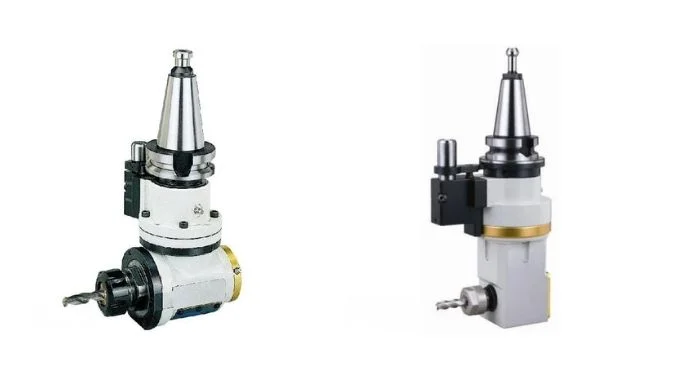
We need to define the mechanics clearly. A 5-axis head is like a human wrist. It twists, turns, and tilts while it works. It supports "five-axis linkage." This means the head moves simultaneously with the X, Y, and Z axes. It creates a fluid, continuous motion. This is essential for workpieces with complex shapes, like aerospace components or automotive engine parts. You do not stop to adjust it. The head flows over the surface, maintaining the perfect cutting angle against a curved profile.
An angular head1 is different. It is more like an "angle adjuster" or a rigid adapter. You put it into the spindle. It points the tool at a fixed angle, typically 90 degrees for side access. It turns your vertical machine into a horizontal one for a moment. It is excellent for reaching tight spaces or performing orthogonal machining on side faces. But it is static. If you need to cut a curve that wraps around a corner or changes pitch, an angular head cannot do it. It requires manual adjustment or a tool change to switch angles. This limits it to basic side operations, unlike the 5-axis head which handles dynamic 3D contours in one setup.
| Feature | 5-Axis Head | Angular Head |
|---|---|---|
| Motion | Continuous Linkage (Dynamic) | Fixed Angle (Static) |
| Adjustment | Automatic / Real-time | Manual / Tool Change |
| Primary Use | Complex Curves & Surfaces | Simple Side Drilling/Milling |
| Flexibility | High (Any angle) | Low (Preset angles) |
How Does an Angular Head Provide a Cost-Effective Alternative for Simple Side-Drilling and Milling?
Your budget is tight, and you only need to put a few holes in the side of a beam. Buying a full 5-axis system for this is throwing money away.
Angular heads allow standard 3-axis equipment to perform multi-sided machining without factory reconfiguration. They are affordable attachments you can buy later to enable side access without workpiece flipping. This reduces setups and handling time for high-volume, repetitive tasks like slotting aluminum extrusions.

Cost is the biggest factor for my clients. A true 5-axis head is expensive. It requires a specific machine structure and typically must be configured at the factory. If you buy a machine without it, you are usually stuck. It is difficult to modify later.
An angular head gives you freedom. It is an accessory. You can buy a standard 3-axis machine from us today. Two years later, you get a contract for window frames that need side lock holes. You do not need a new machine. You simply buy an angular head.
This setup avoids the need for complex tooling strategies or expensive 5-axis upgrades2. For regular sections like steel or aluminum profiles used in windows and doors, you usually just need to drill, tap, or mill a flat slot. The angular head does this perfectly. It is a "set it and forget it" solution. You get multi-face machining capabilities on a 3-axis budget. It eliminates the need to manually flip the workpiece, which saves massive amounts of time and fixture costs.
How Do Programming Requirements and Software Costs Differ Between these Two Milling Solutions?
You have the machine, but do you have the staff? A 5-axis machine is a paperweight if your programmer only knows standard 3-axis G-code.
Five-axis heads require expensive advanced CAM software and skilled programmers to manage RTCP algorithms and collision simulation. Angular heads use standard 3-axis programming with simple geometric offsets. If you lack specialized staff, the angular head reduces training costs and eliminates the need for complex post-processors.
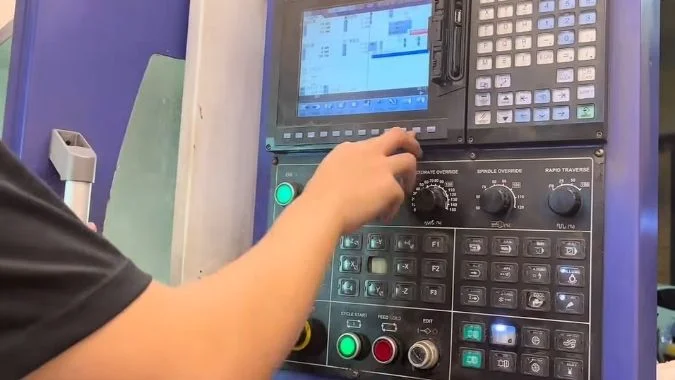
The hidden cost of 5-axis machining3 is the software and the brainpower. Programming a 5-axis head is difficult. You need to coordinate the synchronized movement of five axes—linear and rotary. You must manage the Tool Center Point (RTCP). This prevents the tool from digging into the part as it tilts. If your machine lacks "true" 5-axis functions (RTCP), you need customized post-processors and expensive software licenses to recalculate paths for every tool change.
Programming an angular head is simple. It is basically 3-axis programming. You tell the machine the tool is sticking out sideways. You use a simple macro or geometric compensation in the CNC system to account for the head length. That is it. It is compatible with basic CAM software.
You also save on personnel. Experienced 5-axis programmers are rare and demand high salaries because they must understand tool path non-linear error checking. Anyone can program an angle head. You do not need to perform complex collision checks in 3D space for every single move. You just set the path and cut.
Which Setup is Better for Machining Extra-Long Profiles?
Machining a 10-meter beam requires stability. Using the wrong head on these long parts leads to vibration, poor finishes, and rejected materials.
For long profiles with complex curved surfaces or compound angles, the 5-axis head is superior because it cuts continuously without re-clamping. For long profiles requiring only simple side holes or straight slots, the angular head is better because it offers simpler setup and sufficient reach without the programming overhead.

When you machine extra-long profiles—like 6-meter aluminum extrusions—the complexity of the geometry dictates the tool choice.
If that beam needs a twisted shape, a 3D contour, or a complex groove running down the length, you need the 5-axis head4. It optimizes the cutting angle. It uses the side of the ball-end mill to improve surface finish. It avoids the roughness you get when a 3-axis machine tries to step-over a curve. More importantly, a 5-axis head allows you to machine five sides of the beam in one setup, merging processes and ensuring the coordinate system aligns perfectly along the entire length.
However, if the beam is simple—like a standard window rail or door frame—the angular head wins. On a long-bed 3-axis machine, adding an angular head allows you to drill side holes effortlessly. It avoids the massive investment of a 5-axis gantry system. While you must be careful about the tool length-to-diameter ratio to avoid vibration, for standard straight profiles, the angular head provides side access without frequent repositioning or complex programming.
Conclusion
If you need complex curves and high precision, invest in the 5-axis head. If you need simple side drilling on a budget, choose the angular head. Match the tool to your workpiece geometry.
-
Exploring the concept of an angular head can enhance your knowledge of machining tools and their applications in tight spaces and orthogonal operations. ↩
-
Learn about the costs and complexities associated with 5-axis upgrades to make informed decisions for your machining needs. ↩
-
Explore the advantages of 5-axis machining to understand its efficiency and precision in manufacturing. ↩
-
Explore this link to understand how a 5-axis head enhances machining efficiency and precision for complex geometries. ↩

Chris Lu
Leveraging over a decade of hands-on experience in the machine tool industry, particularly with CNC machines, I'm here to help. Whether you have questions sparked by this post, need guidance on selecting the right equipment (CNC or conventional), are exploring custom machine solutions, or are ready to discuss a purchase, don't hesitate to CONTACT Me. Let's find the perfect machine tool for your needs.