

How to Choose Between LS-WEDM and MS-WEDM?
You’re producing high-quality parts with a MS-WEDM, but now face jobs with mirror-finish and micron-level accuracy requirements. The jump in price to a Low-Speed machine is massive, a terrifying investment.
Choose a Medium-Speed WEDM (MS-WEDM) for cost-effective production of molds and parts with excellent precision (±0.003mm). Invest in a Low-Speed WEDM (LS-WEDM) for mission-critical applications demanding the absolute highest accuracy (±0.001mm) and mirror-like surface finishes (Ra ~0.05μm).
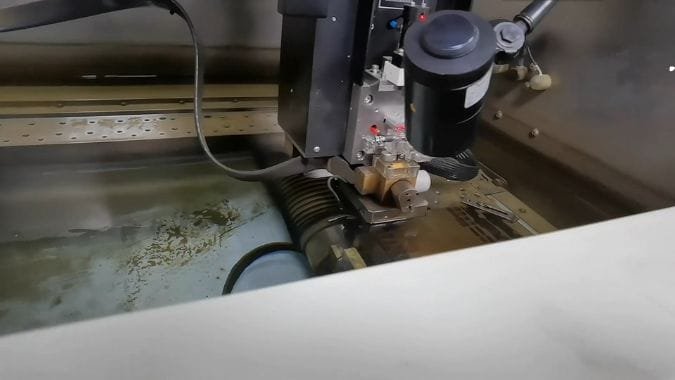
The MS-WEDM is the smart, cost-effective workhorse. It uses a recyclable molybdenum wire to produce beautiful parts that meet most high-end needs. The LS-WEDM is a different beast entirely. It uses a single-use copper wire and operates in a world of absolute precision, where temperature fluctuations of a single degree can ruin a part. This isn’t a simple upgrade; it’s a choice between two fundamentally different tools for two different classes of work.
Why is a Submerged Cutting System in LS-WEDM Critical for Thermal Stability and Fine Finishes?
You’ve noticed that LS-WEDM machines always operate with the workpiece fully submerged. This looks complex and seems like a hassle, making you wonder if it’s truly necessary for achieving top-tier results.
The submerged cutting system is essential because it uses temperature-controlled deionized water to create a perfectly stable thermal environment. This prevents microscopic expansion of the workpiece, which is critical for achieving sub-micron accuracy and a flawless finish.
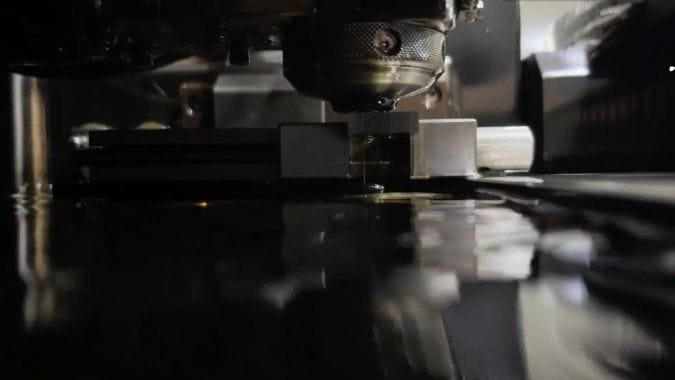
When you are chasing tolerances of ±0.001mm, everything matters. The submerged system is a trifecta of coolant, insulator, and flushing medium. It acts as a massive heat sink, instantly pulling away thermal energy from the cut and preventing the part from warping or expanding, even by a few microns. This thermal stability is non-negotiable for holding tight dimensions over long cutting cycles. The constant flow of clean dielectric fluid is also crucial for flushing microscopic debris away from the spark gap. This efficient flushing is what enables clean "skim cuts"—the final, low-energy passes that produce a mirror-like surface. It prevents particles from causing short circuits or marring the finish, ensuring a perfect, defect-free result that is impossible to achieve in an open-air flush system.
Thermal Stability1: The Foundation of Precision
- Heat Dissipation: The dielectric bath instantly neutralizes heat from the spark, preventing any thermal expansion of the workpiece.
- Dimensional Integrity: Eliminating temperature changes ensures the part’s dimensions are constant throughout the entire cutting process.
- Superior Flushing2: The submerged environment efficiently removes microscopic particles, preventing them from interfering with the cut and enabling mirror-like finishes.
Which Machine Offers Greater Capability For Taper Cutting and Complex Geometries?
Your shop is getting requests for parts with intricate internal shapes and extreme taper angles. You are pushing the limits of your current equipment and are unsure which machine can handle these highly complex jobs.
A LS-WEDM offers vastly superior capability for taper cutting and complex geometries. Its ultra-fine, single-use wire, advanced CNC controls, and unmatched rigidity allow it to produce incredibly sharp internal corners and steep, precise angles (up to 45 degrees).
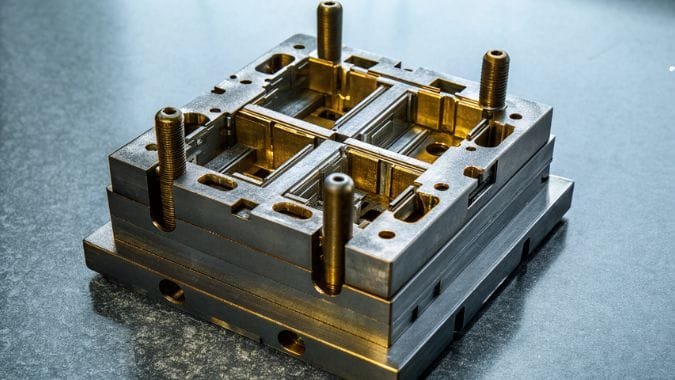
This is where the engineering of a LS-WEDM truly shines. Its design is obsessive about stability. Features like low wire jitter3 and constant tension control mean the wire is perfectly straight and stable as it cuts. This, combined with high-precision independent control of the upper and lower wire guides, allows it to execute extreme taper angles4 with incredible accuracy. Furthermore, LS-WEDM systems can use wire as fine as 0.02mm in diameter. This allows them to get into incredibly sharp internal corners that the thicker, reusable molybdenum wire on a MS-WEDM simply cannot access. For parts like extrusion dies, complex medical implants, or precision stamping tools, these capabilities are not just helpful—they are often the only way the part can be made.
The Tools for Complexity
| Feature | Low-Speed WEDM (LS-WEDM) | Medium-Speed WEDM (MS-WEDM) |
|---|---|---|
| Wire System | Unidirectional, single-use, low jitter. | Reciprocating, reusable, more vibration. |
| Internal Corner Radius | Capable of extremely sharp, near-zero radii. | Limited by the larger diameter of the wire. |
| Taper Angle Capability | High-precision control for steep angles (up to 45°). | Good capability for moderate angles. |
| Ideal Application | Intricate extrusion dies, micro-mechanics, complex molds. | Plastic molds, parts with less complex geometry. |
How Do Operating Costs Differ Over the Machine’s Lifespan In Terms of Consumables?
You know a LS-WEDM has a higher purchase price, but you’re worried about the hidden costs. The daily operating expenses for consumables like wire can make or break the profitability of a machine.
The primary cost difference is the wire. A MS-WEDM uses a single spool of molybdenum wire that it reuses, keeping costs very low. A LS-WEDM uses disposable copper-based wire that is used once and discarded, resulting in significantly higher consumable costs.
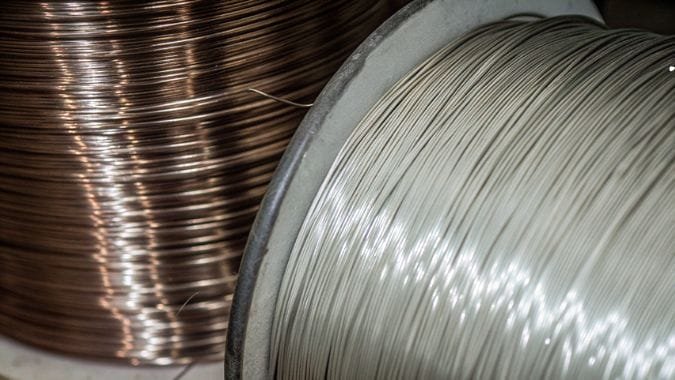
This is the most significant trade-off. The MS-WEDM5 is incredibly economical. Its reusable molybdenum wire keeps the biggest consumable expense to a minimum. A LS-WEDM6 operates on a totally different principle. To guarantee absolute precision and a virgin cutting surface for every millimeter of the cut, it uses a brand-new section of wire, which moves unidirectionally at a slow speed (<0.2 m/s). This wire is used once and then collected for scrap. Wire can account for up to 50% of a machine’s operating costs, and this single-use system means you are constantly feeding the machine expensive, precision-made wire. While the premium price of LS-WEDM parts justifies this, you must factor this continuous expense into your job costing. The higher purity requirements for the dielectric system can also mean more frequent filter and deionizing resin changes, adding to the total cost.
Consumable Cost Breakdown
- MS-WEDM:
- Wire: Reusable Molybdenum. Very low cost.
- Other: Standard filters and fluids. Moderate cost.
- LS-WEDM:
- Wire: Disposable Copper/Brass. High and continuous cost.
- Other: High-purity filters and resin. Higher consumption and cost.
What is the Ultimate Application Checklist for Deciding if You Need the Power of LS-WEDM?
You are still on the fence. You need a final, no-nonsense checklist to look at your jobs and business goals to decide if the massive investment in a LS-WEDM is truly necessary and profitable.
You need a LS-WEDM only if your work demands the absolute pinnacle of precision and finish, and your customers are willing to pay a premium for it. If you can meet specs with a MS-WEDM, it is the more profitable choice.
I guide my clients through this checklist to make the final call. This isn’t about which machine is "better"—it’s about which is the right financial tool for your business. A LS-WEDM is a commitment to a specific type of high-stakes manufacturing7. It opens the door to the most demanding jobs in the medical, aerospace, and micro-electronics industries. But it comes with higher costs. If your work doesn’t explicitly require this level of performance, the MS-WEDM will deliver excellent results with much higher profitability. Be honest about what your customers need and what they will pay for.
Your Final Decision Checklist
- 1. What is the required tolerance?
- MS-WEDM: If ±0.003mm is acceptable for your parts.
- LS-WEDM: If you absolutely must hold tolerances tighter than ±0.003mm8 (e.g., ±0.001mm).
- 2. What is the surface finish requirement?
- MS-WEDM: If an excellent, smooth finish (Ra ~0.65μm) is sufficient.
- LS-WEDM: If the part requires a flawless, mirror-like finish (Ra ~0.05μm) with no cutting lines.
- 3. Does the geometry require it?
- MS-WEDM: For standard parts and molds with moderate complexity.
- LS-WEDM: For parts with extremely sharp internal corners or very steep taper angles.
- 4. Can your business model support it?
- MS-WEDM: If you need to keep operating costs low to stay competitive.
- LS-WEDM: If your part pricing justifies the high cost of disposable wire and other consumables.
Conclusion
Choose a MS-WEDM for the best balance of cost, speed, and high-quality results. Only invest in a LS-WEDM when your applications demand the ultimate, non-negotiable levels of accuracy and surface finish.
-
Understanding thermal stability is crucial for achieving precision in machining processes, ensuring tight tolerances and high-quality finishes. ↩
-
Exploring superior flushing techniques can enhance your machining results, leading to cleaner cuts and better surface finishes. ↩
-
Understanding low wire jitter is crucial for appreciating how LS-WEDM achieves precision in cutting. ↩
-
Exploring this topic reveals the advanced techniques that enable LS-WEDM to create complex geometries. ↩
-
Explore the benefits of MS-WEDM to understand its cost-effectiveness and efficiency in manufacturing processes. ↩
-
Learn about LS-WEDM’s impact on production costs to make informed decisions about your manufacturing investments. ↩
-
Understanding high-stakes manufacturing can help you grasp the complexities and demands of industries like medical and aerospace. ↩
-
Exploring tighter tolerances will enhance your knowledge of precision engineering and its critical role in manufacturing. ↩

Chris Lu
Leveraging over a decade of hands-on experience in the machine tool industry, particularly with CNC machines, I'm here to help. Whether you have questions sparked by this post, need guidance on selecting the right equipment (CNC or conventional), are exploring custom machine solutions, or are ready to discuss a purchase, don't hesitate to CONTACT Me. Let's find the perfect machine tool for your needs.