

How to Choose Between Servo and Power Turret for CNC Lathe?
You waste money buying the wrong CNC lathe turret. Your machine crashes or lacks needed functions. You lose profitable machining contracts. You must understand turret differences immediately.
A servo turret uses a high-precision motor for extremely fast turning tool changes. A power turret includes an internal motor and transmission to drive rotating milling and drilling tools. You choose a servo turret for pure turning speed and a power turret for turn-mill composite machining.
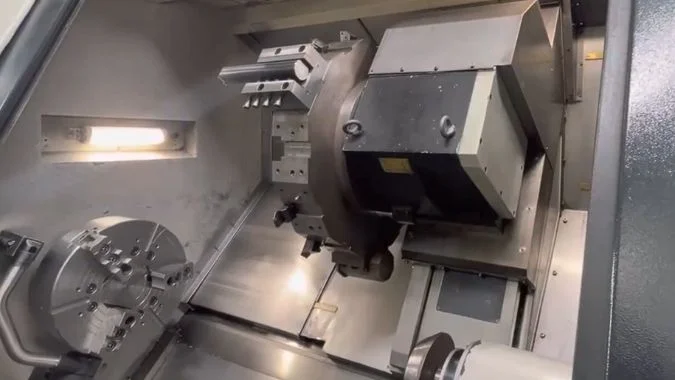
Let me break down the exact differences so you can make the best purchasing decision for your production line.
What are the Primary Functional Differences Between a Servo Turret and a Power Turret?
You bid on complex parts. Your lathe only turns metal. You lose the job because you cannot mill. You need the right turret function.
The primary functional difference is tool rotation. A servo turret holds only static cutting tools for turning. A power turret contains an internal motor and gears. This internal system drives live tools like milling cutters and drills for complete turn-mill compound machining.
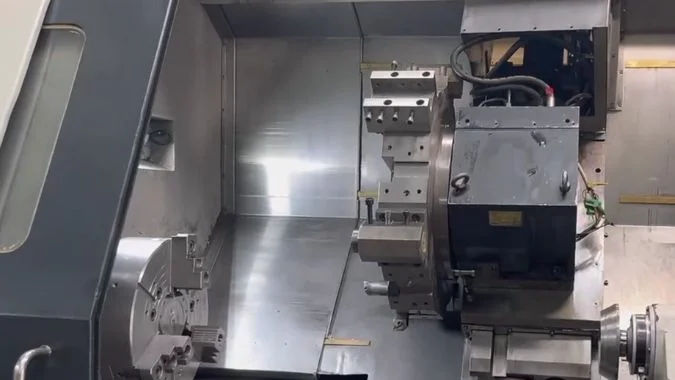
A servo turret uses a high-precision servo motor. It achieves perfect position control using a digital encoder. The positioning accuracy reaches 0.001 millimeters easily. This turret focuses entirely on rapid tool indexing. It works perfectly for mass production turning parts. You use it for simple turning, grooving, and boring. You need more capability sometimes. You need a live tooling turret1. We call this a power turret. A power turret adds internal complexity. It includes clutches, drive shafts, and transmission gears. This internal system delivers rotary power directly to the live tools. You mount milling cutters and twist drills on the turret. You load the raw metal bar once. The machine turns the shape. The machine then mills flat sides and drills holes. We call this one-time clamping complete processing2. You eliminate secondary milling operations entirely. You save money on fixtures. You increase your daily factory output.
Turret Core Function Comparison
| Turret Feature | Standard Servo Turret | Live Power Turret |
|---|---|---|
| Drive system | Servo motor for indexing | Internal motor and transmission gears |
| Tool support | Holds static turning tools only | Holds static and rotating tools |
| Core capability | Fast high-precision turning | Turn-mill compound machining |
| Best application | Aerospace and medical turning | Complex automotive shaft and sleeve parts |
How Does the Indexing Speed of a Servo Turret Compare to a Power Turret in High-Volume Production?
Your lathe indexes tools slowly. You waste hours of non-cutting time every week. Your production cost per part stays high. You must increase your tool change speed.
A servo turret indexes significantly faster than a power turret. The servo turret lacks heavy internal gears. It changes adjacent tools in 0.1 to 0.25 seconds. The power turret indexes slightly slower due to mechanical overhead but drastically reduces overall part cycle time by eliminating secondary milling setups.
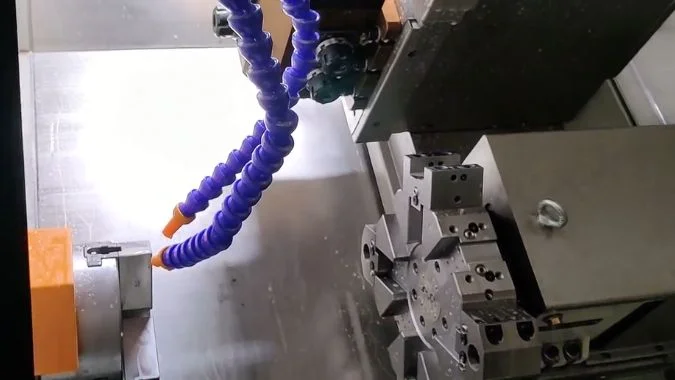
A modern servo turret3 uses a very simple and light structure. The closed-loop servo system selects the shortest bidirectional rotation path. The servo turret jumps to any tool position without sequential constraints. An adjacent tool change takes 0.1 seconds. A diagonal tool change takes less than 0.5 seconds. The mechanism uses non-lifting indexing to save precious micro-seconds. A power turret4 also uses servo motors for indexing. A power turret carries heavy internal clutches and live tool transmissions. This extra mechanical overhead makes the indexing action slightly slower than a pure servo turret. The power turret makes up for this indexing delay easily on complex parts. The power turret eliminates moving the part to a separate milling machine. You save massive amounts of handling time. You maintain perfect part alignment. Both electric options destroy old fluid-driven hydraulic turrets in pure speed. You never wait for slow hydraulic valves again.
Production Speed Analysis
| Indexing Feature | Standard Servo Turret | Power Turret |
|---|---|---|
| Adjacent tool change | Takes 0.1 to 0.25 seconds | Slightly slower indexing action |
| Internal mechanism | Simple and lightweight | Heavy clutches and gears |
| High-volume turning | Minimizes non-cutting time perfectly | Adds minor mechanical overhead time |
| Complex part cycle | Requires secondary milling setups | Reduces overall processing time massively |
What are the Rigidity and Loading Capacity Differences Between These Two Turret Types?
You try heavy cuts on hard steel. Your turret shakes violently. You break expensive cutting tools immediately. You need a highly rigid turret design now.
A power turret provides superior rigidity and loading capacity for heavy-duty cutting. It uses large-diameter couplings and robust locking mechanisms. A standard servo turret offers excellent static rigidity for precision turning but cannot handle the extreme torque of heavy face milling operations.
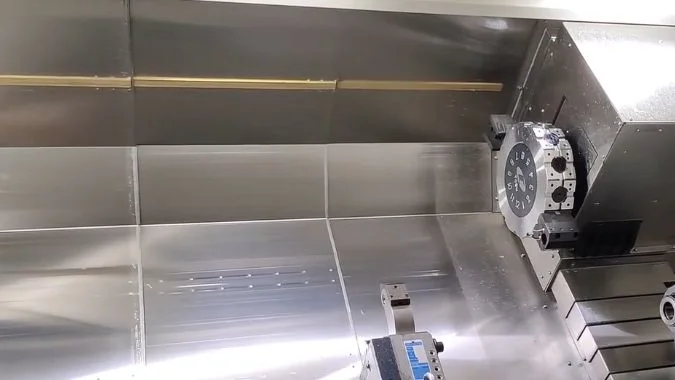
Rigidity prevents vibration. A standard servo turret5 uses a one-piece cast iron body. It uses a high-precision three-piece coupling for positioning. This design gives excellent static repeatability for standard turning cuts. A standard servo turret prioritizes speed and precision over maximum brute-force clamping. It does not output any rotational torque. A power turret handles much tougher jobs. A power turret integrates a strong servo motor just to drive the rotating tools. The power turret disc uses a heavily reinforced structure. It features large-diameter couplings and strong hydraulic clamping. This design improves overall rigidity by over twenty percent compared to standard servo turrets. The load capacity of a power turret is massive. The live tool spindle outputs up to 150 Newton-meters of torque. It withstands greater radial and axial cutting forces easily. It supports heavy-duty tool interfaces like BMT55 or ER32. You perform aggressive face milling without machine chatter. You cut hard metals with total confidence.
Mechanical Rigidity Comparison
| Mechanical Feature | Standard Servo Turret | Power Turret |
|---|---|---|
| Design priority | High speed and extreme precision | Maximum stiffness and high load |
| Structural strength | Good static rigidity for turning | Reinforced heavy-duty deformation resistance |
| Spindle torque output | Zero rotational torque output | Outputs up to 150 Newton-meters |
| Cutting force capacity | Light to medium turning cuts | Heavy milling and roughing forces |
How Does Your Choice of Turret Affect the Maintenance Costs and Long-Term Reliability of Your CNC Lathe?
Your lathe breaks down mid-production. You pay huge repair bills constantly. You miss customer delivery deadlines completely. You must choose a reliable turret system.
A servo turret lowers your maintenance costs significantly. It features a simple design with low failure rates and low energy consumption. A power turret requires more maintenance due to complex internal gears. Both electric options beat old hydraulic turrets in long-term reliability and cleanliness.
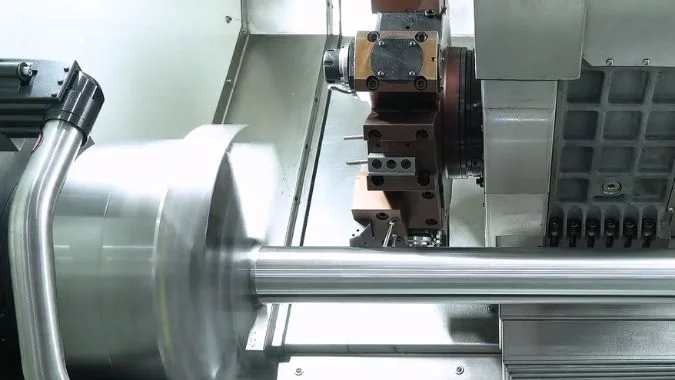
Old hydraulic systems cost too much money to maintain. A hydraulic turret requires constant oil changes and filter replacements. You fix leaking hoses frequently. A servo turret eliminates all these horrible fluid problems. A servo turret uses clean electric motors and simple electronic components. It has a compact structure with very few moving wear parts. The system consumes power only during the actual indexing movement. This drops your daily electricity bill and operating costs. The digital encoder maintains a repeatability of 0.001 millimeters for millions of cycles. A power turret introduces more maintenance needs. The power turret contains a complex internal drive system. The clutches and live-tool transmissions act as potential wear points. The power turret uses more energy during rotary cutting operations. A power turret still offers very good long-term reliability for compound machining if you maintain it properly. It reduces overall process steps and improves total factory reliability. You deliver perfect complex parts to your customers on time.
Long-Term Reliability Factors
| Reliability Factor | Standard Servo Turret | Power Turret |
|---|---|---|
| Maintenance needs | Very simple electronic checks | Requires internal gear and transmission upkeep |
| Operating costs | Extremely low energy consumption | Higher energy use during milling |
| Wear and tear points | Very few moving mechanical parts | Multiple clutches and drive shafts |
| Machining reliability | High accuracy for pure turning | Excellent for complex one-setup parts |
Conclusion
You must choose a servo turret for high-speed precision turning. You must buy a power turret for complex turn-mill jobs. Evaluate your parts carefully before purchasing your lathe.
-
Manufacturer guides and case studies show how live tooling enables milling/drilling on turrets, cutting setups and improving throughput. ↩
-
Technical articles and whitepapers explain cost, fixture, and cycle-time savings from completing turning and milling in a single setup. ↩
-
Learn how servo turrets use closed-loop control for fastest bidirectional indexing and minimal tool-change delay—key for high-speed machining. ↩
-
Understand power turrets’ clutches and live tools to see why they handle complex parts faster and eliminate extra handling and alignment. ↩
-
Read technical articles to understand how cast-iron bodies and three-piece couplings deliver quick, repeatable turning operations and precision trade-offs. ↩

Chris Lu
Leveraging over a decade of hands-on experience in the machine tool industry, particularly with CNC machines, I'm here to help. Whether you have questions sparked by this post, need guidance on selecting the right equipment (CNC or conventional), are exploring custom machine solutions, or are ready to discuss a purchase, don't hesitate to CONTACT Me. Let's find the perfect machine tool for your needs.