

What are the Differences Between Hydraulic and Servo Motor Feed in a CNC Drilling Machine?
You struggle to choose the right feed system for your drilling machine. A wrong choice leads to slow cycles, broken tools, and lost revenue. I will explain the real differences to help you decide.
Hydraulic feeds use fluid pressure to provide high, stable thrust, making them ideal for deep holes and large diameters. Servo motor feeds use electric precision for distinct speed control, rapid retraction, and exact positioning, suiting high-speed production and complex tapping operations.
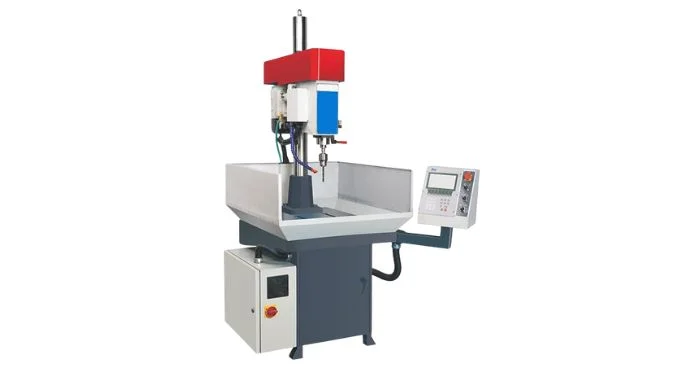
Most people look only at the price tag. The real answer is found in the mechanics of how power is applied to the workpiece.
How Do the Core Mechanisms of Hydraulic and Servo Feed Systems Fundamentally Differ?
You see hoses on one machine and wires on another. It looks confusing, but the mechanics are simple. Knowing the inside helps you predict performance and maintenance needs.
Hydraulic drives rely on pumps pushing oil into cylinders to create linear force, emphasizing raw power and "muscle." Servo systems use electric motors driving leadscrews with digital closed-loop control, converting rotary motion into precise linear placement for exact positioning.
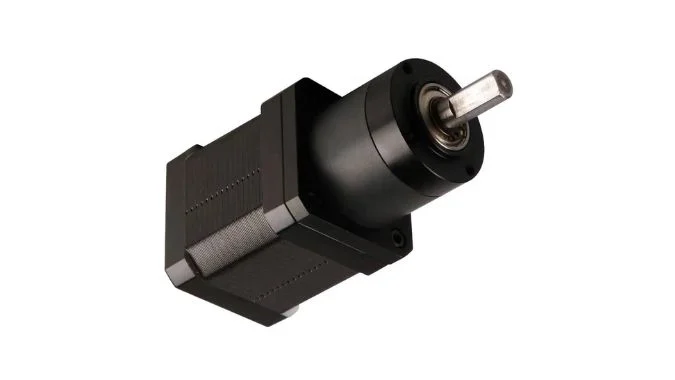
These two systems’ constructions are completely different. A hydraulic system1 centers around a pump station. This pump pushes oil through valves into a cylinder. It offers high power density but suffers from complexity. You must deal with oil leaks, filter changes, and energy loss because the pump often runs constantly to maintain pressure.
A servo system2 is the "brain" approach. It uses a high-precision electric motor connected to a ball screw. A computer (CNC) tells the motor exactly where to go using a closed-loop control (PID algorithm). It checks its position thousands of times a second using encoders. It moves to a specific spot regardless of resistance, up to its torque limit. This method is cleaner, uses energy only when moving, and requires less maintenance.
| Feature | Hydraulic System | Servo System |
|---|---|---|
| Actuation | Cylinder / Piston | Ball Screw / Nut |
| Control Logic | Open/Semi-closed (Valve flow) | Fully Closed-Loop (Encoder) |
| Philosophy | Force-Oriented | Position-Oriented |
| Energy | High (Constant pump run) | Low (Power on demand) |
| Maintenance | Messy (Oil, seals, filters) | Clean (Lubrication only) |
How Do Hydraulic and Servo Feeds Compare in Terms of Feed Rate and Rapid Retraction Speed?
Your cycle times feel too slow during retraction phases. Every wasted second hurts your bottom line. The feed system type dictates your maximum production speed and acceleration.
Servo feeds react in milliseconds, offering high acceleration and rapid retraction speeds often exceeding 30 m/min. Hydraulic feeds have sluggish dynamic response due to fluid compressibility and valve lag, limiting them to slower retraction based on pump flow rates.
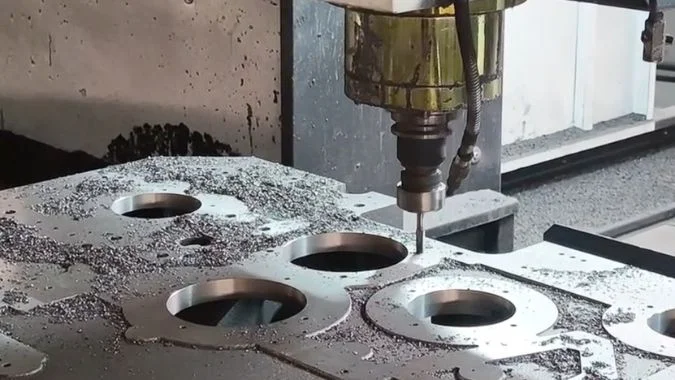
Speed is not just about how fast the drill spins; it is about how fast the head moves when it is not cutting. Hydraulic feed3 is excellent for medium to low-speed precision work. It offers smooth stability because oil is incompressible in large volumes, but distinct valve adjustments take time. The dynamic response is typically below 10Hz. When you need to reverse direction, the valve must shift, and the oil flow must reverse. This creates a delay of 50 to 300 milliseconds.
Servo feed4 supports high-speed dynamic adjustment. The response frequency is hundreds of hertz. A servo motor can switch from cutting feed to rapid retract in less than 20 milliseconds. There is no fluid inertia to overcome. Modern servo systems allow for "S-curve" acceleration profiles. This means the machine ramps up to speed smoothly but incredibly fast (10–50 m/s²). For a job with hundreds of holes, the time saved on rapid retraction alone can reduce total cycle time by 30% to 70%.
| Metric | Hydraulic Feed | Servo Feed |
|---|---|---|
| Dynamic Response | Slow (<10 Hz) | Fast (>100 Hz) |
| Start/Stop Time | 50–300 ms | <20 ms |
| Acceleration | 1–5 m/s² | 10–50 m/s² |
| Retract Speed Limit | Flow dependent (slower) | Motor RPM dependent (faster) |
What Drilling Applications is a Hydraulic Feed Essential?
Servo motors are faster, so you might think they are always better. But raw speed fails in heavy-duty scenarios where brute force and shock absorption are the only options.
Hydraulic feed is essential for deep hole drilling (L/D ratio > 10) and large diameter holes (≥30mm). The natural damping of fluid absorbs vibration, providing stable, massive axial thrust that prevents tool breakage in tough materials where servos would overload or stall.
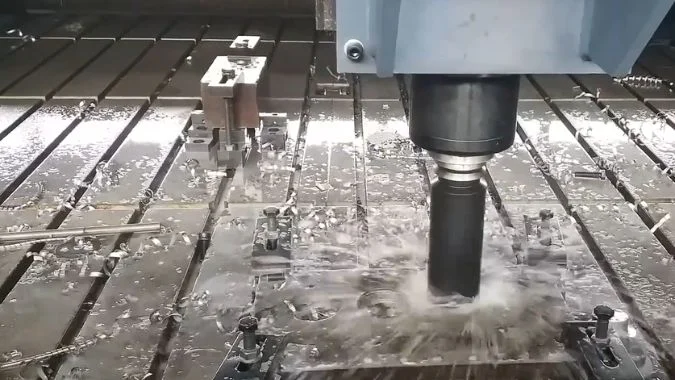
I recommend hydraulic systems for specific "heavy lifting" jobs. When drilling a hole 100 times deeper than its diameter, you face massive friction and cutting forces. A hydraulic cylinder provides a constant 20–50 kN of thrust without overheating. If the drill hits a hard spot in a casting, the oil acts as a liquid spring. It dampens the shock. A stiff servo system might force the tool forward too rigidly, causing the drill to snap.
Large diameter drilling is another stronghold for hydraulics. Drilling a 50mm hole in steel requires immense torque and feed force. A comparable servo motor would need to be enormous and expensive. Hydraulic systems handle this load naturally. They also excel in complex hole systems like stepped holes or blind holes where you need stepless speed regulation under heavy load. The system integrates pressure sensors easily. If the tool dulls and force spikes, the hydraulics "feel" it and can stop the feed to save the machine.
- Deep Hole Drilling5: Provides continuous push for L/D > 10 up to 100:1.
- Large Diameters: Handles high torque requirements for >30mm holes easily.
- Shock Absorption: Best for interrupted cuts or hard spots in forgings.
- Thrust Capacity: Delivers high force (e.g., 50kN) effectively.
Why Does a Servo Motor Feed Offer Superior Control for Precision Tapping and Peck Drilling?
You snap expensive taps because the machine cannot reverse fast enough. Precision problems require the computerized fine-tuning that only a digital motor system can provide.
Servo feeds excel here by synchronizing spindle rotation with feed rate for rigid tapping, ensuring zero pitch error. Their ability to track absolute position allows for precise peck drilling depths and instant reversal without the lag that breaks tools.
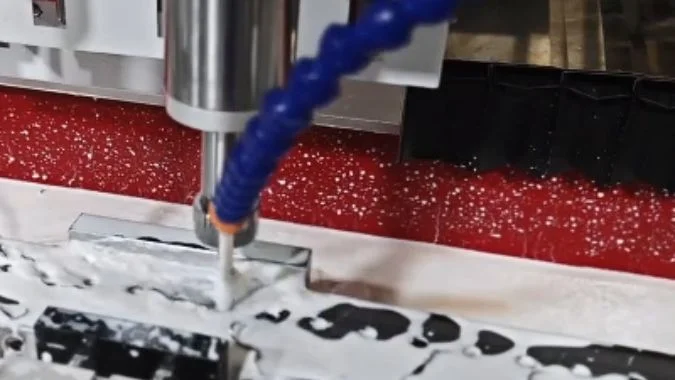
Servo motors function as the "brain" of precision operations. In rigid tapping, the downward feed must match the thread pitch exactly. If the spindle spins once, the feed must move exactly one pitch length. Servo drives use high-resolution encoders to lock these two motions together electronically. There is no need for expensive "floating" tap holders. The result is pitch accuracy within ±0.005 mm.
Peck drilling (retracting the drill to clear chips) is another area where servos dominate. A hydraulic system struggles to stop at an exact depth, retract, and return to the exact previous point. It relies on timers or flow, which drift. This leads to tool smashing. A servo knows its position down to the micron. It performs the "woodpecker" action instantly. It drives down, retracts to clear chips, and rapids back to the cut surface without colliding. This precision reduces scrap rates significantly in high-value parts like aerospace components.
| Function | Hydraulic Limitation | Servo Advantage |
|---|---|---|
| Rigid Tapping6 | Valve lag causes pitch error | Perfect sync via encoders |
| Reversal | Slow (risk of tap break) | Instant (safe for blind holes) |
| Peck Drilling7 | Position drift, slow cycle | Exact depth return, fast cycle |
| Control | Reactionary (Pressure) | Predictive (Algorithm) |
Conclusion
Choose hydraulic systems for raw thrust in deep or large holes. Select servo feeds for speed, energy efficiency, and precision tasks like rigid tapping and complex cycles.
-
Explore this link to understand the pros and cons of hydraulic systems, enhancing your knowledge on their applications and limitations. ↩
-
Discover how servo systems operate in automation, providing insights into their efficiency and precision in various applications. ↩
-
Explore the benefits of hydraulic feed for precision work and stability in machining processes. ↩
-
Learn how servo feed enhances speed and efficiency, making it ideal for high-speed applications. ↩
-
Learn about Deep Hole Drilling techniques and their advantages for precision and efficiency in various applications. ↩
-
Explore this link to understand how Rigid Tapping enhances precision in machining, ensuring perfect synchronization and accuracy. ↩
-
Discover the advantages of Peck Drilling with servo motors, including improved precision and reduced scrap rates in high-value manufacturing. ↩

Chris Lu
Leveraging over a decade of hands-on experience in the machine tool industry, particularly with CNC machines, I'm here to help. Whether you have questions sparked by this post, need guidance on selecting the right equipment (CNC or conventional), are exploring custom machine solutions, or are ready to discuss a purchase, don't hesitate to CONTACT Me. Let's find the perfect machine tool for your needs.