

Why Does Mirror Grinding Require Filtered Coolant?
You spent hours grinding a mold to a perfect mirror finish. Then you see a single scratch under the light. It ruins the whole job and wastes your money.
Filtered coolant is essential for mirror grinding to prevent "comet tail" scratches caused by micron-sized debris. It avoids secondary cutting where chips are pressed back into the surface, maintains grinding wheel porosity, and prevents thermal expansion (steel expands 1.2µm/100mm/°C), ensuring surface roughness stays below Ra 0.2µm.
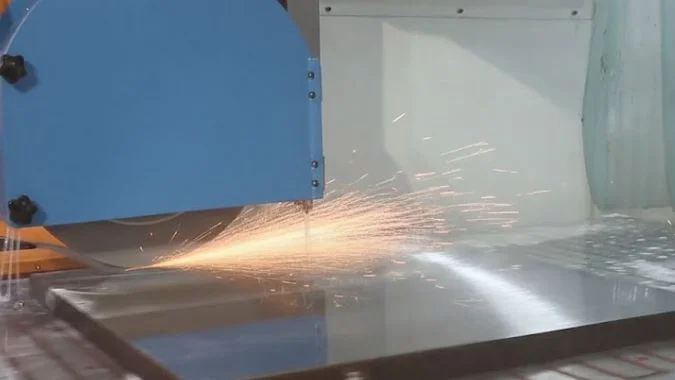
While a high-precision machine is the foundation, the auxiliary support system often dictates the final outcome. In mirror grinding, even the most advanced equipment will fail if the cooling environment is compromised. To achieve sub-micron perfection, the coolant must be treated as a critical component of the machine’s geometry rather than a simple consumable. Understanding the mechanics of fluid management is the only way to safeguard your finish and your bottom line.
How Do Micron Particles in Dirty Coolant Cause “Comet Tails” and Surface Scratches?
You look at the part under a light. You see tiny trails dragging across the shine. These marks destroy the visual quality of your product.
Micron-sized particles in dirty coolant get trapped between the grinding wheel and the workpiece. As the wheel rotates, it drags these hard particles across the surface, gouging deep grooves that look like comets with a head and a fading tail. This physical damage prevents achieving a true mirror finish.
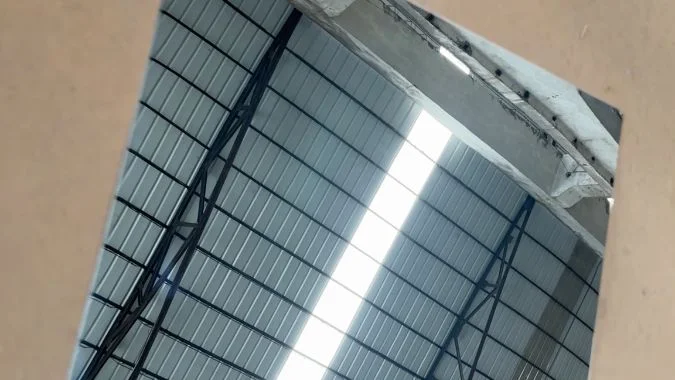
We need to look at the microscopic level to understand this failure. Mirror grinding is delicate. We are trying to achieve a surface roughness (Ra) of 0.2μm or better1. In dirty coolant, you have floating debris. These are tiny hard particles. They can be detached abrasive grains from the wheel, metal chips from the part, or just dust from the shop floor.
When the coolant floods the grinding zone, it carries these particles with it. The gap between the grinding wheel and the workpiece is incredibly small. A particle gets trapped in this gap. The wheel is spinning at high speed. It catches the particle and drags it across the workpiece surface.
This action creates a "comet tail." The particle digs deep at first. This is the head of the comet. Then, the particle might roll, bounce, or break. The scratch gets shallower and fades away. This is the tail. These scratches usually follow the direction of the wheel rotation or the table feed. Under 200X magnification, you can clearly see the "pluckout" point where the damage begins.
Sometimes, the particles just roll around randomly. This causes irregular, random scratches all over the surface.
There is another risk called "secondary cutting2." This happens when swarf (metal chips) accumulates. The wheel presses this swarf back into the metal. It re-cuts the surface you just finished. This ruins the gloss and increases roughness. You must filter these particles out to stop this mechanical damage.
Why Is Coolant Temperature Control Essential for Maintaining Tight Tolerances During Long Shifts?
Your first part in the morning is perfect. By lunch, the parts are oversized. You are chasing the tolerance all day long and creating scrap.
Temperature control prevents thermal expansion. Steel expands approximately 1.2μm per 100mm for every 1°C rise. Without a chiller, coolant heats up, causing the workpiece to grow and the wheel to wear faster, making it impossible to hold the sub-micron tolerances required for mirror grinding.
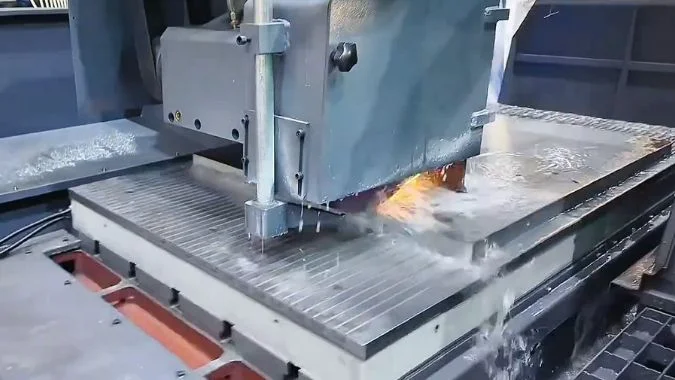
Temperature stability is the secret to consistency. In mirror grinding, we often work with tolerances around 0.01mm (10μm) or even tighter, sometimes down to ±0.001 mm. Metal is extremely sensitive to heat.
Think about the math. For steel, every time the temperature goes up by just 1°C, the metal expands. It grows about 1.2μm for every 100mm of length. This sounds small. But if your coolant warms up by 5°C or 10°C during a long shift, your part changes size significantly. You might grind the part to the correct number on the screen, but when it cools down, it shrinks and goes out of tolerance.
Heat also creates a vicious cycle for the machine. The grinding process creates friction. This friction makes heat. The coolant absorbs the heat. If you do not have a chiller, the coolant in the tank gets hotter and hotter.
Hot coolant cannot cool the wheel effectively. The wheel starts to suffer. The lubrication film breaks down. The friction increases. This causes "glazing" or "slipping" of the wheel. The wheel rubs instead of cuts. This generates even more heat. It can cause burn marks on your mirror surface.
You end up with a situation where "the more you grind, the hotter it gets." High-end mirror grinders must use an independent refrigeration unit3. This keeps the liquid at a constant temperature. It stops the thermal drift before it ruins your batch.
What Filtration System Matches Your Mirror Grinding?
You have a filter, but the coolant is still cloudy. Standard filters let the dangerous fine dust pass right through and damage your parts.
For mirror grinding, you need a multi-stage filtration system capable of removing particles down to 5 microns. Start with a magnetic separator for iron chips, followed by a copper mesh or paper band filter. Finally, strict fine filtration removes suspended silt to protect the wheel pores.
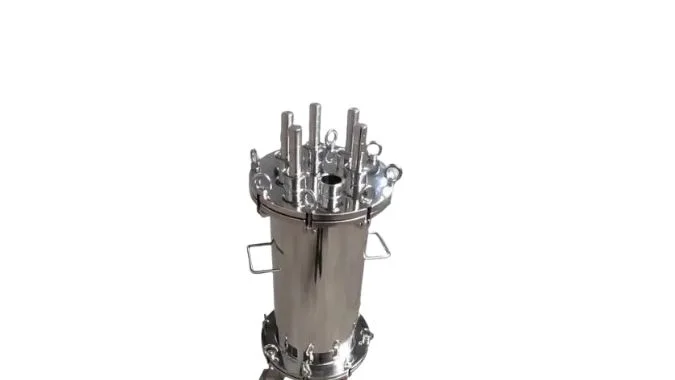
You cannot rely on a single filter method for high-precision work. You need a defense in depth. We recommend a multi-stage approach to clean the coolant.
First, use magnetic filtration4. Most grinding involves ferrous metals. A magnetic separator pulls out the heavy iron filings and large chips. This protects your pumps and takes the heavy load off the finer filters.
Second, use a barrier filter. This is often a copper mesh or a paper band filter. The coolant passes through this physical barrier. It catches the medium-sized particles and non-magnetic debris.
However, for mirror finishes, this is not enough. You need to remove the microscopic silt. Even particles as small as 10-20 microns can compromise optical-quality surfaces. You need filtration that gets down to 5 microns5. If you do not, these fines will clog the pores of your grinding wheel. A clogged wheel cannot cut. It rubs and burns.
You need to implement a strict replacement schedule. Check the contamination level regularly. If the coolant looks dirty, it is already too late. You must also seal the system. Shop dust is an enemy. Keep the tank covered and the pipelines sealed.
Clean coolant also protects the machine chemistry. Impurities can ruin the rust prevention additives in the fluid. This leads to corrosion on your expensive machine bed.
| Filtration Stage | Contaminant Removed | Purpose |
|---|---|---|
| Magnetic Separator | Iron filings, heavy chips | Protects pumps, removes bulk waste |
| Paper/Mesh Filter | Medium particles, wheel grit | Prevents gross contamination |
| Fine Filtration | Particles <5 microns | Prevents scratches and wheel clogging |
How Does Coolant Concentration Balance Lubricity and Cooling Performance in the Grinding Zone?
You add water to save money. Suddenly, the wheel clogs and the part burns. The mixture is just as important as the machine itself.
A concentration of 8%–10% provides the necessary lubrication to reduce friction and prevent wheel dulling. While water cools best, this higher oil content prevents burning and allows for a smoother finish. You must combine this with high-pressure jets (3–5MPa) to break the air barrier and reach the cut.
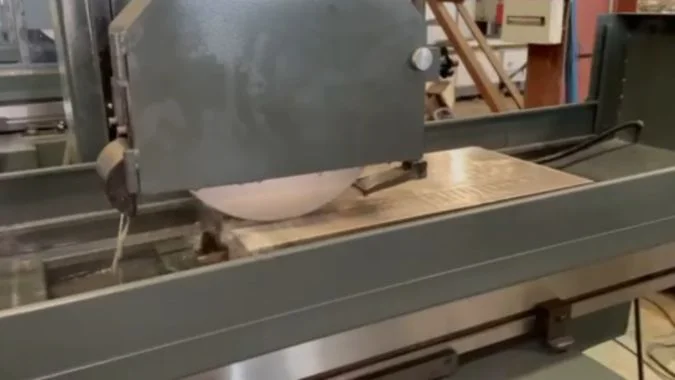
Finding the balance is tricky. Water is the best coolant in the world. Oil is the best lubricant. In mirror grinding, you need both.
If the concentration is too low (lean), you have mostly water. You get great cooling, but poor lubrication. The abrasive grains on the wheel will wear out quickly. The wheel pores will clog with metal. You might see burn marks on the part because the friction is too high.
If the concentration is too high (rich), you have too much oil. The heat does not dissipate fast enough. The part might distort thermally.
For mirror grinding, we recommend a higher concentration than standard grinding. Aim for 8% to 10%. We prefer extreme pressure emulsions6 or oil-based fluids. This rich mixture creates a strong lubricating film. It makes the cutting action smoother. It helps achieve that Ra ≤ 0.2μm finish.
But you cannot just pour it in. The grinding zone is hot—up to 1000°C. The spinning wheel creates an air barrier that blocks the liquid. You need force. You must use high-pressure jets7, ideally 3 to 5 MPa. This pressure punches through the air barrier. It delivers the rich coolant directly to the contact point. It flushes away the chips immediately so they cannot scratch the surface.
For sensitive materials like ceramics, standard fluid might not be enough. You might need composite cooling technologies. But for most metals, keep your concentration at 8-10% and your pressure high.
Conclusion
To achieve a mirror finish, you must filter debris smaller than 5 microns to stop scratches, control temperature to hold tolerances, and maintain 8-10% coolant concentration for lubrication.
-
Explore advanced grinding techniques to consistently achieve ultra-smooth surfaces with Ra of 0.2μm or better for high-precision applications. ↩
-
Learn about the impact of secondary cutting on surface finish and effective methods to prevent this damage during grinding processes. ↩
-
Learn why using an independent refrigeration unit is crucial for preventing thermal drift and maintaining grinding accuracy. ↩
-
Explore this link to understand how magnetic filtration effectively removes heavy iron filings, protecting pumps and enhancing coolant cleaning. ↩
-
Learn why ultra-fine filtration is crucial for removing microscopic silt to maintain optical-quality surfaces and prevent grinding wheel clogging. ↩
-
Explore this to understand why extreme pressure emulsions enhance lubrication and surface finish in mirror grinding. ↩
-
Learn how high-pressure jets effectively deliver coolant and prevent surface damage during grinding. ↩

Chris Lu
Leveraging over a decade of hands-on experience in the machine tool industry, particularly with CNC machines, I'm here to help. Whether you have questions sparked by this post, need guidance on selecting the right equipment (CNC or conventional), are exploring custom machine solutions, or are ready to discuss a purchase, don't hesitate to CONTACT Me. Let's find the perfect machine tool for your needs.