

How to Adjust Cutting Parameters Based on CNC Deep Hole Drilling Tool Wear?
Deep hole drilling tools wear down silently inside the metal1. Sudden breaks ruin expensive parts quickly. Adjusting cutting parameters regularly saves tools and protects workpiece quality.
Adjust cutting parameters by matching speed and feed rates to the specific tool wear stage. Reduce the cutting speed by five to ten percent during initial wear, make tiny feed adjustments during normal wear, and stop the machine completely when severe wear appears.
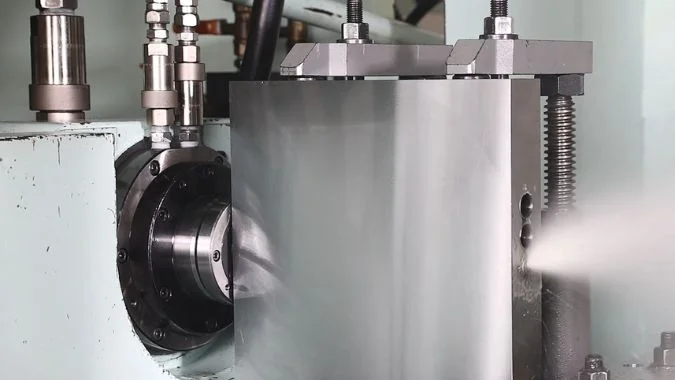
Some operators just push the start button and ignore tool wear completely. Broken tools and damaged parts often follow. Tracking tool wear changes everything. Adjusting a few numbers in the CNC program extends tool life massively. Let me share my exact parameter adjustment strategy to help solve this problem.
What Happens If Cutting Parameters Are Not Adjusted?
Ignoring tool wear increases cutting forces instantly. High heat destroys the metal surface. Changing programmed numbers prevents broken tools and ruined machines.
Ignoring tool wear increases cutting force and heat massively. The dull tool pushes instead of cutting, ruining hole dimensions and creating rough surfaces. Heavy machine loads will eventually snap the drill inside the workpiece and damage the expensive spindle.
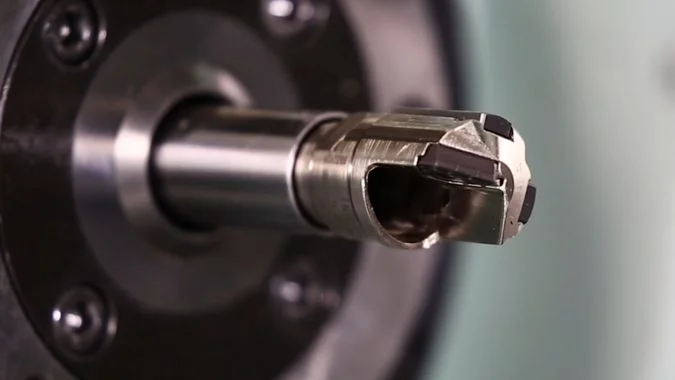
Checking the heat becomes necessary when a tool gets dull. A worn tool loses its sharp edge over time. This flat edge rubs against the metal block instead of cutting. Heavy rubbing creates massive heat. Cutting forces jump up by thirty percent very fast2. Extreme heat melts the tool into the workpiece.
Hole dimension errors appear quickly. A dull deep hole drill loses its centering ability. The drill point changes shape completely. This damage causes the tool to wander off the center line. Wandering creates bad holes. The hole loses its round shape. The hole diameter grows too large. Operators cannot control the final size.
Surface finishes drop significantly. A sharp tool cuts metal cleanly. A dull tool squeezes the metal violently. This violent squeezing tears the hole wall. The surface finish drops from a smooth surface to a rough surface3. Customers will reject these ugly parts.
Machine overload happens next. Uneven wear causes the machine to shake. Chips get stuck in the deep hole. The drill tries to push through the solid metal block. This action overloads the machine spindle. A long deep hole drill breaks easily under this heavy pressure.
| Problem Area | Direct Cause | Final Result |
|---|---|---|
| Cutting Temperature | Heavy rubbing | Tool melts |
| Hole Dimension | Worn drill point | Bad hole shape |
| Surface Finish | Metal squeezing | Torn hole wall |
| Machine Load | Stuck chips | Broken drill bit |
How to Set Parameters During Initial Tool Wear?
Brand new tools have tiny rough metal bumps on the cutting edge. These sharp edges chip easily. Lowering cutting speeds at first protects the fresh tool perfectly.
Set parameters during initial wear by reducing the cutting speed by five to ten percent. Lowering the feed rate slightly by three to five percent helps too. Keeping the depth of cut unchanged flattens rough edges safely without breaking the fresh tool.
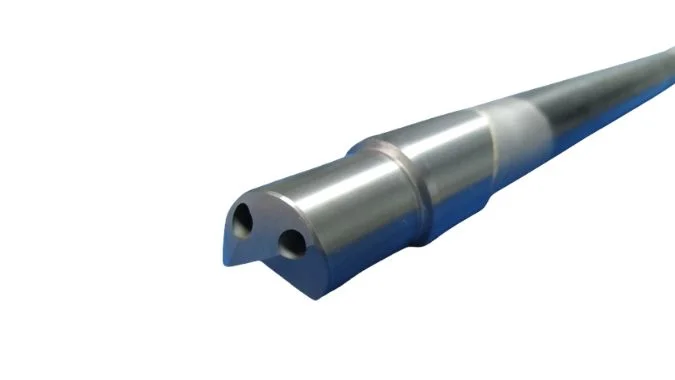
Treating a brand new deep hole drill carefully is essential. The factory grinds the tool to a sharp edge. Microscopes show tiny metal bumps on this new edge.4 The first few cuts flatten these tiny bumps very fast. Wear happens quickly during this short time.
Maximum speed damages a new tool. Dropping the cutting speed by ten percent creates a smooth transition5. For example, a speed of one hundred meters per minute becomes ninety meters per minute. This slower speed makes the tool edge strong safely.
Feed rates also need adjustments during the first few holes. Dropping the feed rate by five percent works well. A feed rate of 0.2 millimeters per revolution changes to 0.19 millimeters per revolution.
Cut depths stay exactly the same. Initial wear only happens on the very edge of the tool. The tool easily handles a deep cut perfectly at this stage.
| Parameter | Original Setting | Initial Wear Setting | Adjustment Goal |
|---|---|---|---|
| Cutting Speed | 100 m/min | 90 to 95 m/min | Smooth the edge |
| Feed Rate | 0.20 mm/rev | 0.19 mm/rev | Protect the point |
| Cut Depth | 5.0 mm | 5.0 mm | Keep chip flow |
What Is the Best Strategy for Normal Wear?
Tools run smoothly but lose their edge slowly over time. Heat and friction eat the metal constantly6. Precise parameter adjustments stretch the normal tool life significantly.
The best strategy for normal wear requires reducing the cutting speed by three to eight percent. Dropping the feed rate by two to six percent works well when the wear mark reaches 0.1 millimeters. Cut depths need slight reductions if the part needs high accuracy.
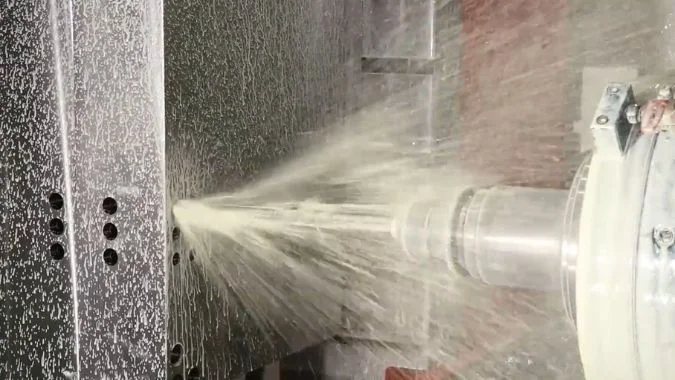
Monitoring the tool carefully after the first stage is important. The drill enters the normal wear stage. The wear rate becomes very stable. Cutting heat slowly eats the tool material. Measuring the flat wear mark on the tool edge guides the process. Parameter changes start when this mark reaches 0.1 millimeters.
Dropping the cutting speed slightly controls the heat. Reducing the speed by five percent cools the tool down. A speed of eighty meters per minute drops to seventy-six meters per minute. This small change helps the tool last much longer.
Fine feed adjustments also help during normal wear. Decreasing the feed rate by a few percent reduces pushing forces. A feed rate of 0.15 millimeters per revolution changes to 0.14 millimeters per revolution.
Customer drawings dictate the cut depth. High accuracy parts require smaller cut depths. Reducing the cut depth by 0.1 millimeters per pass keeps the hole straight. Parts with loose rules allow the original cut depth.
| Wear Stage Factor | Parameter Change | Reason for Change |
|---|---|---|
| Wear Mark 0.1mm | Drop speed 5% | Control cutting heat |
| Tool Friction | Drop feed 4% | Reduce pushing force |
| High Accuracy Part | Reduce depth 0.1mm | Keep hole straight |
| Low Accuracy Part | Keep depth same | Maintain cycle time |
What Must Be Done During Severe Tool Wear?
A screaming drill shakes the entire machine. The tool edge starts peeling away quickly. Stopping the machine prevents the dying tool from destroying the workpiece.
Machine operation must stop immediately during severe tool wear. Adjusting parameters will never save a dying tool. Replacing the broken drill with a new one is mandatory. Programming the new tool with slightly lower speeds prevents another sudden failure.
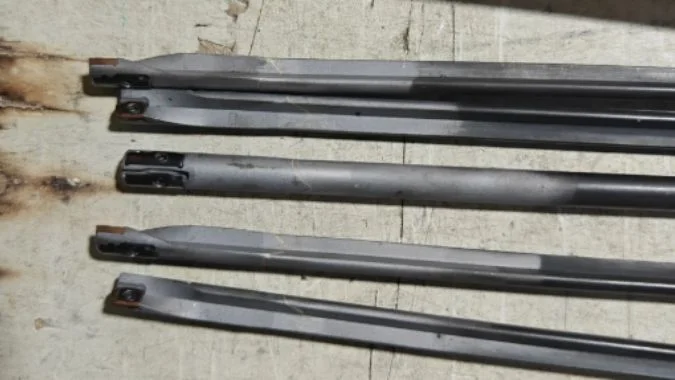
Machine sounds provide clear warnings every day. A loud grinding noise indicates the severe wear stage. Wear speeds up extremely fast at this point. The cutting edge actually chips and peels off. Normal wear changes into aggressive melting wear7. The tool literally melts into the workpiece.
Pressing the machine stop button must happen instantly. Changing parameters at this stage never works. A new feed rate will not fix a broken cutting edge. Pushing a dying tool destroys the expensive workpiece completely. Heavy shaking also damages the spindle bearings8.
Removing the broken drill comes next. A brand new tool goes into the machine. The CNC program requires updates for this new tool. Old speeds from the late normal wear stage serve as a baseline. Dropping the new speed by ten percent from that old number adds safety. The new feed rate drops by seven percent. Smaller cut depths protect the fresh tool perfectly.
| Severe Wear Sign | Immediate Action | Programming Step |
|---|---|---|
| Edge Peeling | Stop spindle | Delete old fast speeds |
| Grinding Noise | Remove broken tool | Lower new tool speed |
| Heavy Shaking | Check workpiece | Lower new tool feed |
| Melted Metal | Clean machine | Reduce cut depth |
Conclusion
Adjusting cutting speeds and feed rates based on specific wear stages protects workpiece quality. Matching parameters to tool wear prevents drill breakage and saves massive factory costs.
-
"Experimental Investigation of Tool Wear and Machining Quality of …", https://pmc.ncbi.nlm.nih.gov/articles/PMC10608523/. Research on deep hole drilling processes identifies tool condition monitoring as particularly challenging due to limited accessibility, with wear progression often undetectable until performance degradation occurs. Evidence role: general_support; source type: paper. Supports: that deep hole drilling presents unique tool monitoring challenges. ↩
-
"Comparison of Tool Wear, Surface Roughness, Cutting Forces, Tool …", https://pmc.ncbi.nlm.nih.gov/articles/PMC10303288/. Machining studies report cutting force increases ranging from 20-50% as tools progress from sharp to worn states, depending on workpiece material and cutting parameters. Evidence role: statistic; source type: paper. Supports: that cutting forces increase substantially with tool wear progression. Scope note: The exact percentage varies with material hardness, tool coating, and wear mechanism ↩
-
"The fundamental relationship between tool wear, surface integrity …", https://ir.ua.edu/items/ac6e6971-d60f-4eb9-a0f3-1abc0bb17941. Machining research consistently demonstrates that tool wear increases surface roughness through mechanisms including edge radius enlargement, built-up edge formation, and increased vibration. Evidence role: mechanism; source type: paper. Supports: that progressive tool wear degrades machined surface quality. ↩
-
"Influence of Cutting-Edge Microgeometry on Cutting Forces in High …", https://pmc.ncbi.nlm.nih.gov/articles/PMC10221921/. Studies of cutting tool edge preparation show that even precision-ground tools exhibit microscale edge irregularities and surface roughness that affect initial cutting performance. Evidence role: mechanism; source type: paper. Supports: that manufactured cutting edges contain microscale surface features. ↩
-
"Optimization Method of Tool Parameters and Cutting … – PMC – NIH", https://pmc.ncbi.nlm.nih.gov/articles/PMC8538737/. Machining textbooks and technical guides recommend conservative cutting parameters during initial tool use to condition the cutting edge, though specific reduction percentages vary by application and tool type. Evidence role: general_support; source type: education. Supports: that reduced cutting parameters during tool break-in improve tool life. Scope note: Optimal adjustments depend on tool material, coating, workpiece, and operation type ↩
-
"[PDF] Developments in Tribology of Manufacturing Processes", https://mtrc.utk.edu/wp-content/uploads/sites/45/2020/08/MANU-20-1045_Publshed-article.pdf. Tool wear in metal cutting occurs through multiple mechanisms including abrasion, adhesion, diffusion, and oxidation, all accelerated by the high temperatures and contact stresses at the tool-workpiece interface. Evidence role: mechanism; source type: encyclopedia. Supports: that tool wear results from thermal and mechanical processes. ↩
-
"The Research of Tool Wear Mechanism for High-Speed Milling …", https://pmc.ncbi.nlm.nih.gov/articles/PMC7956700/. At advanced wear stages, cutting temperatures can exceed the softening point of tool materials, leading to accelerated wear through plastic deformation, diffusion, and localized melting at the tool-chip interface. Evidence role: mechanism; source type: paper. Supports: that severe tool wear involves thermal degradation mechanisms. ↩
-
"Investigation on the Tool Wear Suppression Mechanism in Non …", https://pmc.ncbi.nlm.nih.gov/articles/PMC7231048/. Machine tool engineering literature identifies excessive vibration from worn or damaged tools as a source of accelerated bearing wear and spindle damage through increased dynamic loads and impact forces. Evidence role: mechanism; source type: education. Supports: that excessive machining vibration can damage machine components. ↩

Chris Lu
Leveraging over a decade of hands-on experience in the machine tool industry, particularly with CNC machines, I'm here to help. Whether you have questions sparked by this post, need guidance on selecting the right equipment (CNC or conventional), are exploring custom machine solutions, or are ready to discuss a purchase, don't hesitate to CONTACT Me. Let's find the perfect machine tool for your needs.