

How to Pinpoint the Root Cause of HMC Abnormal Noise?
A sudden grinding sound from a horizontal machining center often ruins expensive parts. Ignoring these sounds leads to total machine failure. You should diagnose these warnings immediately to save equipment.
Operators pinpoint HMC abnormal noise by listening closely to specific machine movements. Isolating individual axes reveals dry friction, structural vibrations, or broken transmission gears. Checking lubrication lines, tightening anchor bolts, and adjusting drive belts will fix these mechanical problems and stop the noise.
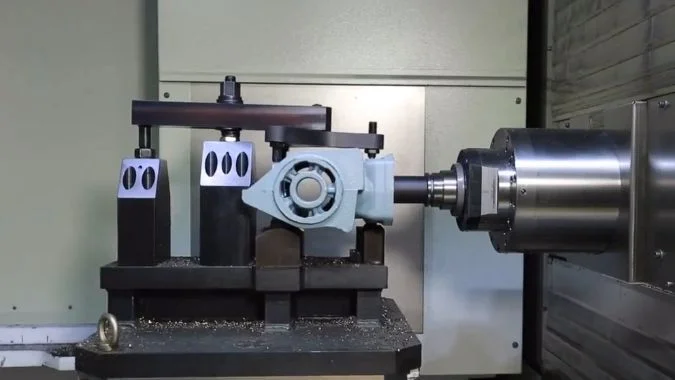
If factory managers want to ignore these mechanical warnings and pay thousands for sudden repairs, this guide is useless. However, mechanics who want to stop expensive breakdowns should read every single word below.
What Machine Failures Start With Unresolved Abnormal Noise?
Small noises easily hide behind loud factory operations. These tiny sounds quickly grow into massive mechanical breakdowns. You should track every strange noise to stop expensive damage before it starts.
Unresolved abnormal noises lead to massive machine failures over time. A small friction sound turns into destroyed guide rails. A low humming vibration eventually breaks the spindle bearings. Diagnosing these sounds early prevents minor mechanical issues from becoming major, expensive breakdowns.
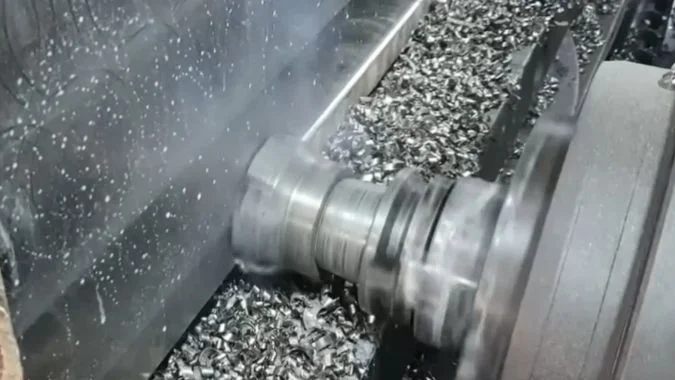
Operators often ignore machine noises during busy production shifts. A small sound seems harmless at first. This mistake destroys the horizontal machining center. Developing a strong habit of diagnosing by listening prevents disasters. Mechanics must run each axis under no-load conditions1. Isolating the X, Y, and Z axes shows exactly which movement makes the sound. A detailed logbook tracks every strange sound. This record helps the repair team find the broken part much faster.
Building a strong preventive maintenance system stops failures completely. Daily lubrication checks keep moving parts safe. Monthly anchor bolt tightening stops structural shaking2. Yearly machine accuracy inspections catch hidden wear3. This system stops abnormal noises right at the source.
Immediate action saves money. A new noise always means a new problem. A decline in part quality usually follows the bad sound. Shutting the machine down immediately prevents further damage. Fixing the small problem today saves the entire machine tomorrow.
| Bad Sound | Hidden Problem | Final Failure |
|---|---|---|
| Light rustling | No oil | Destroyed guide rails |
| Low hum | Loose bolt | Bent spindle shaft |
| Small clunk | Loose belt | Broken transmission |
| Metal scrape | Bad gear | Ruined gearbox |
How to Troubleshoot Continuous Friction and Scraping Noises?
A loud scraping sound means bare metal slides against bare metal. This terrible friction destroys expensive guide rails fast. Check the oil lines first to save the machine.
Mechanics troubleshoot continuous friction noises by checking the central lubrication system and cleaning the guide rails. Oil must reach all moving parts perfectly. Removing all metal chips from the surfaces stops the dry scraping sound and protects the overall positioning accuracy of the machine.
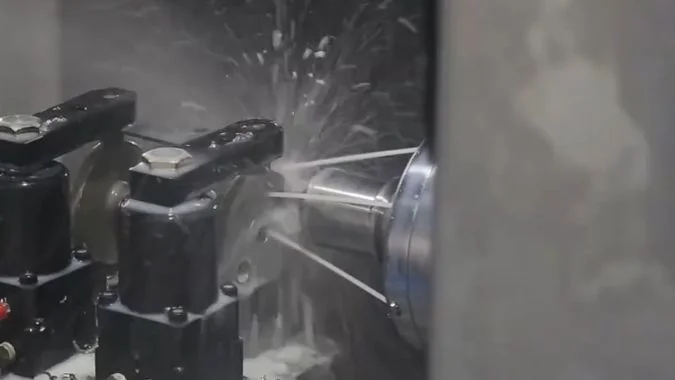
Friction noises sound like a continuous rustling or rough scraping. This specific sound points directly to bad lubrication or dirt. Guide rails and ball screws need constant oil4. A dry rail slides against the metal block. This dry contact makes a loud rustling noise. A broken protective cover lets sharp metal chips fall onto the rails. The heavy machine crushes these chips during movement. This crushing action makes a terrible scraping sound. Broken rail covers need immediate replacement. Blowing compressed air near the rails pushes dirt under the rubber seals.
Spindles can also make friction noises. Spindle bearings work very hard under heavy cutting loads. Old bearings wear out and make a whining noise5. Broken spindle seals let the protective grease leak out. Running the spindle with no tool reveals the truth. Changing the speed shows if the noise changes.
Fixing the oil lines solves most problems. The centralized lubrication pump needs regular inspection. The rails need complete cleaning. Worn spindle bearings require professional replacement.
| Noise Location | Sound Type | Primary Cause | Solution |
|---|---|---|---|
| Guide Rails | Rustling | No oil | Check lubrication pump |
| Ball Screws | Scraping | Metal chips | Clean rails and fix covers |
| Spindle Shaft | Whining | Worn bearings | Replace spindle bearings |
| Machine Seals | Rubbing | Broken rubber | Install new seals |
What Causes Humming and Knocking Vibrations in HMCs?
Heavy knocking and loud humming shake the whole factory floor. This violent vibration ruins part finishes and breaks tools. Tightening machine foundations stops this destructive movement immediately.
Humming and knocking vibrations come from loose mechanical structures, unbalanced moving parts, or machining resonance. Tightening the machine anchor bolts, balancing the spindle system, and changing the programmed cutting speeds will stop these destructive vibration frequencies and restore smooth operation.

Vibration noises sound like a low hum or a sudden loud bang. Loose anchor bolts cause these bad sounds easily. A loose worktable shakes badly under heavy cutting pressure. The machine loses its rigid strength. A bad floor foundation makes the entire machine rock back and forth6. A precision level helps fix the machine base. Locking the worktable tightly before cutting heavy metal blocks is essential.
A spinning spindle must stay perfectly balanced. A bad tool holder throws the balance off completely. This imbalance acts like a washing machine with uneven clothes. It creates massive centrifugal force7. The whole machine shakes. Bad drive belts and poorly meshed gears also transmit strange vibrations. High-quality balanced tool holders stop the shaking.
Sometimes the programmed cutting speed matches the natural frequency of the machine. Engineers call this harmonic resonance8. The machine shakes violently at one specific speed. Changing the spindle speed in the CNC program fixes this issue. Testing different speeds finds the quiet cutting zone.
| Vibration Source | Sound Type | Repair Action |
|---|---|---|
| Floor Bolts | Low hum | Tighten foundation anchors |
| Bad Tool Holder | Roaring noise | Balance the spindle |
| Spindle Speed | Sudden shaking | Change programmed RPM |
| Lead Screw Nut | Banging sound | Adjust preload device |
How to Fix Clunking Noises in HMC Transmission?
A sharp clunk from the motor box means power loss. This transmission failure stops production instantly. Replacing worn gears and adjusting belt tension restores full machine power.
Mechanics fix clunking noises by adjusting belt tension, replacing worn gearbox gears, and checking the drive shaft bearings. Using special tools to set the exact belt tension stops slipping. Replacing broken bearing cages ensures smooth power transmission inside the motor box.
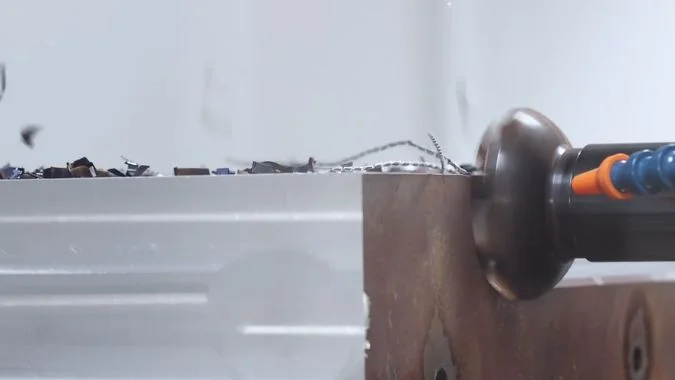
Transmission noises sound like intermittent clunks or sharp metal meshing. Belt problems cause most of these sudden sounds. A tight belt makes a sharp squeal. A loose belt slips constantly under heavy cutting9. This slip makes a loud clunking noise. Old rubber belts lose their teeth. A proper gauge checks the belt tension accurately. Following the equipment manual perfectly during the repair is crucial.
The internal gearbox contains many moving metal parts. Old gears lose their smooth shape over time. Pits form on the metal surface. This damage makes a constant clicking sound10. Loose chains also make a slapping noise against the metal covers. Opening the gearbox allows inspection of these moving parts. Original factory parts must replace the broken gears.
The drive shaft spins on heavy support bearings. The metal cage inside the bearing can break. A broken cage lets the metal balls drop out. This causes a heavy, irregular clunking sound. Turning the shaft slowly by hand reveals this sound. A machine must never run with broken bearings.
| Transmission Part | Noise Characteristic | Required Fix |
|---|---|---|
| Drive Belt | Squeal or slip clunk | Adjust tension gauge |
| Gearbox Gears | Periodic clicking | Replace worn gears |
| Shaft Bearings | Irregular heavy clunk | Install new bearings |
| Drive Chain | Slapping sound | Tighten loose chain |
Conclusion
Listening carefully to your HMC reveals friction, vibration, and transmission noises. Fixing these abnormal sounds early protects the machine, ensures high precision, and saves massive repair costs.
-
"[PDF] NUM CNC Error List.pdf – Purdue Engineering", https://engineering.purdue.edu/ME576/manual/NUM%20CNC%20Error%20List.pdf. ISO 230-1, which governs geometric accuracy testing of machine tools, prescribes no-load movement tests as a baseline for identifying mechanical irregularities independent of cutting forces. Evidence role: expert_consensus; source type: institution. Supports: That no-load axis testing is a recognized procedure in machine tool diagnostics for isolating mechanical noise sources. Scope note: ISO 230-1 addresses geometric accuracy rather than acoustic diagnostics specifically; its applicability to noise isolation is contextual rather than a direct procedural mandate. ↩
-
"[PDF] Tightening Procedures for Large-Diameter Anchor Bolts", https://static.tti.tamu.edu/tti.tamu.edu/documents/1472-1F.pdf. Preventive maintenance frameworks for industrial machinery, including guidance from organizations such as the Society of Manufacturing Engineers, identify anchor bolt integrity checks as a scheduled maintenance task to preserve machine rigidity and minimize vibration-induced positional errors. Evidence role: general_support; source type: institution. Supports: That periodic inspection and re-torquing of machine tool anchor bolts is a recognized preventive maintenance practice. Scope note: The article’s specific monthly interval is not universally standardized; appropriate inspection frequency depends on machine load cycles, floor conditions, and OEM recommendations, which vary by manufacturer and application. ↩
-
"ISO 230-1:2012(en), Test code for machine tools — Part 1", https://www.iso.org/obp/ui/#iso:std:iso:230:-1:ed-3:v1:en. ISO 230-1 and related standards in the ISO 230 series provide protocols for periodic geometric and kinematic accuracy testing of machine tools, supporting the practice of scheduled accuracy inspections as a means of identifying wear-induced deviations before they affect part quality. Evidence role: historical_context; source type: institution. Supports: That periodic geometric accuracy testing of machine tools is a recognized practice for detecting accumulated wear and maintaining machining quality. Scope note: ISO 230 defines test methods rather than mandatory inspection intervals; the article’s implied sufficiency of annual inspections may be inadequate for high-utilization machines, where more frequent checks are warranted. ↩
-
"What is the purpose of lubrication for a ball screw? | Q&A | Products", https://kurodaprecision.com/global/products/technical-information/bs/bs024.html. Engineering literature on machine tool maintenance consistently identifies lubrication interval compliance for ball screws and linear guideways as critical to preserving preload, reducing friction coefficient, and preventing fretting corrosion. Evidence role: expert_consensus; source type: paper. Supports: That ball screws and linear guideways in machine tools require regular lubrication to prevent wear and maintain positioning accuracy. Scope note: Specific lubrication intervals and oil grades are machine-dependent; the article’s general claim is supported in principle but should be verified against OEM specifications for each machine model. ↩
-
"An Early Warning Monitoring System for CNC Spindle Bearing Failure", https://open.clemson.edu/all_theses/1235/. Research on bearing condition monitoring documents that surface fatigue and wear in rolling-element bearings generate characteristic noise signatures, including high-frequency whining associated with ball pass frequency harmonics, which intensify as bearing degradation progresses. Evidence role: mechanism; source type: paper. Supports: That degraded rolling-element bearings produce characteristic high-frequency noise signatures, including whining, detectable during operation. Scope note: Specific noise character (whining vs. grinding vs. rumbling) depends on bearing type, defect location, and operating speed; the article’s single-descriptor characterization is a simplification of a spectrum of possible acoustic signatures. ↩
-
"Machine foundation isolation | Getzner Werkstoffe", https://www.getzner.com/en/applications/construction/structural-dynamics/machine-foundation-isolation. Machine tool installation engineering establishes that foundation compliance and inadequate anchoring reduce the effective dynamic stiffness of the machine-foundation system, amplifying low-frequency vibration modes and degrading machining accuracy. Evidence role: mechanism; source type: education. Supports: That machine tool foundation stiffness and mass directly affect the vibration behavior and positional stability of the installed machine. Scope note: Foundation requirements vary by machine mass, cutting forces, and soil conditions; the article’s general statement is supported in principle but lacks the specificity needed for practical installation guidance. ↩
-
"[PDF] Balance Quality Requirements of Rigid Rotors", https://rotorlab.tamu.edu/me459/Rotor%20Balancing/ISO%201940%20Balance%20quality%20requirements%20of%20rigid%20rotors%20.pdf. ISO 1940-1 establishes balancing quality grades for rotating machinery components, noting that residual imbalance in tool holders generates centrifugal forces that increase with the square of rotational speed, exciting spindle and structural vibrations in machine tools. Evidence role: mechanism; source type: institution. Supports: That tool holder imbalance generates centrifugal forces proportional to rotational speed squared, contributing to spindle and machine vibration. Scope note: The magnitude of vibration depends on spindle speed, tool holder mass, and machine structural stiffness; the article’s analogy to a washing machine, while illustrative, does not convey the quantitative relationship. ↩
-
"[PDF] Experimental study of machining system: dynamic characterization", https://arxiv.org/pdf/0908.0151. Structural dynamics literature defines resonance as the condition in which an excitation frequency matches a system’s natural frequency, resulting in large-amplitude vibrations; in machine tools, spindle speed harmonics can excite structural modes, a phenomenon extensively studied in the context of machining chatter. Evidence role: definition; source type: paper. Supports: That coincidence of excitation frequency with a structure’s natural frequency produces resonance and amplified vibration in machine tools. Scope note: The article’s use of ‘harmonic resonance’ conflates two distinct concepts; technically, the described phenomenon is forced resonance or chatter, not harmonic resonance in the strict signal-processing sense. ↩
-
"How to Fix a Squeaky Belt (figure out where the squeak is coming …", https://www.youtube.com/watch?v=AEUe6uKxTv8. Power transmission engineering literature documents that over-tensioned belts generate high-frequency squealing due to lateral vibration of the belt span, while under-tensioned belts exhibit slip-induced stick-slip noise and accelerated tooth or surface wear under load. Evidence role: mechanism; source type: paper. Supports: That both over-tensioned and under-tensioned drive belts produce distinct noise signatures and mechanical failure modes in power transmission systems. Scope note: The specific noise character depends on belt type (V-belt, synchronous, flat), pulley geometry, and load; the article’s binary description is a useful heuristic but not universally applicable. ↩
-
"Gear pitting fault diagnosis using raw acoustic emission signal …", https://indigo.uic.edu/articles/journal_contribution/Gear_pitting_fault_diagnosis_using_raw_acoustic_emission_signal_based_on_deep_learning/14871231. Gear fault diagnostics research identifies surface pitting as a source of periodic impulse excitation at gear mesh frequency and its harmonics, manifesting acoustically as repetitive clicking or knocking whose frequency scales with rotational speed. Evidence role: mechanism; source type: paper. Supports: That surface pitting on gear teeth generates periodic impact noise detectable as clicking or impulse signals in gearbox vibration spectra. Scope note: The perceptual description of pitting noise as ‘constant clicking’ is an approximation; the actual signature is periodic and speed-dependent, and may be masked by other gearbox noise in operational conditions. ↩

Chris Lu
Leveraging over a decade of hands-on experience in the machine tool industry, particularly with CNC machines, I'm here to help. Whether you have questions sparked by this post, need guidance on selecting the right equipment (CNC or conventional), are exploring custom machine solutions, or are ready to discuss a purchase, don't hesitate to CONTACT Me. Let's find the perfect machine tool for your needs.