

How to Choose Between a Horizontal Machining Center and a Vertical Machining Center?
Choosing the wrong machine tool is a costly mistake that can limit your shop’s growth. The debate between VMCs and HMCs is confusing, leaving many stuck with inefficient processes.
Choose a Vertical Machining Center (VMC) for flat parts like plates and molds, or for small-batch production and prototypes. Choose a Horizontal Machining Center (HMC) for complex, boxy parts that need multi-sided machining, or for high-volume, automated production runs.
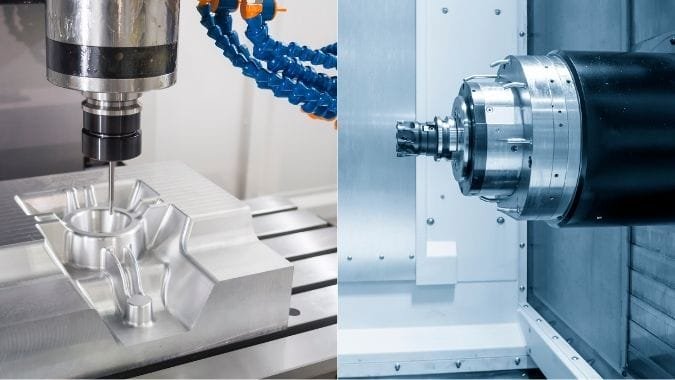
A VMC is often the first machine a shop buys. It’s affordable, has a smaller footprint, and is easy to understand. But as production grows and parts get more complex, a VMC’s limitations become obvious. That’s when the HMC enters the conversation. It’s a bigger investment—often 30-50% more for the same spec—but for the right work, it delivers an incredible return by slashing cycle times and labor costs. Let’s look at the real differences so you can make the right choice for your future.
How Does Spindle Orientation Fundamentally Define the Capabilities of a VMC vs. an HMC?
Does it really matter if the spindle is up-and-down or side-to-side? This one design difference completely changes how the machine works and what it’s good at, creating confusion for buyers.
Spindle orientation dictates how the tool addresses the part. A VMC’s vertical spindle works from the top down, which is ideal for flat surfaces and gives the operator great visibility. An HMC’s horizontal spindle works from the side, perfect for machining multiple faces of a tombstone-mounted part.
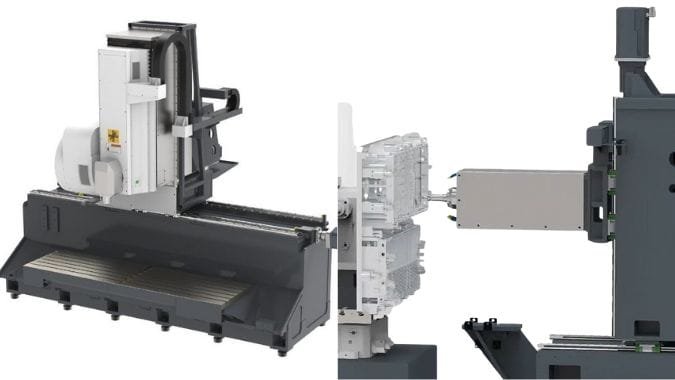
Everything comes back to the spindle. On a Vertical Machining Center1, the setup is intuitive. You look down on your workpiece, just like on a drill press. This setup is great for visibility during setup and cutting, which is why it’s so popular for molds, dies, and parts where most of the work happens on one face. The cutting forces push straight down into the table. On a Horizontal Machining Center2, the spindle is parallel to the floor. The tool comes in from the side. This might seem strange, but it opens up a world of possibilities when combined with a rotating B-axis table. This setup allows the machine to access the front, back, top, and bottom of a cubic part without anyone touching it.
Spindle Orientation and Its Impact
| Feature | Vertical Machining Center (VMC) | Horizontal Machining Center (HMC) |
|---|---|---|
| Spindle Direction | Perpendicular to the worktable (up and down). | Parallel to the worktable (side to side). |
| Workpiece Access | Primarily works on the top surface of the part. | Can access multiple sides of the part by rotating the table. |
| Operator View | Excellent direct visibility of the cutting process. | Limited visibility, relies more on automation. |
| Best Suited For | Flat parts, face milling, plates, molds, dies, and prototypes. | Box-type parts, engine blocks, hydraulic manifolds, and parts requiring machining on 4+ sides. |
Why Do HMCs Excel at High-Volume Production and Multi-Sided Machining?
Are you tired of constant setups and machine downtime between jobs? If your VMC sits idle while operators change parts, you are losing money on high-volume orders.
HMCs excel in production because they are designed for automation. Their ability to machine multiple sides in one setup, combined with Automatic Pallet Changers (APCs), dramatically increases spindle uptime and slashes labor costs, making them ideal for industries like aerospace and automotive.
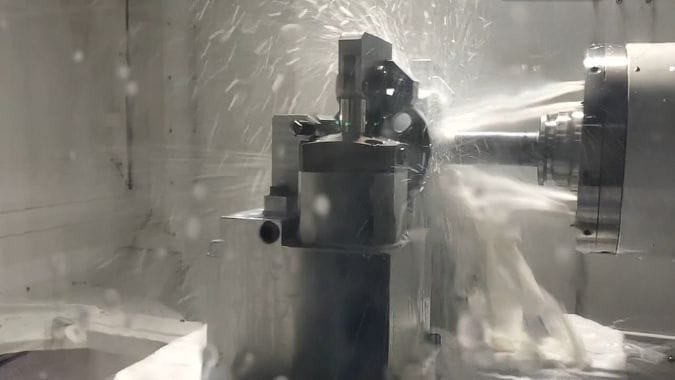
The secret weapon of the HMC is uptime. A typical VMC might only be cutting metal 25% of the time. The rest is spent on setups and part loading. An HMC completely changes this equation. The core advantage comes from its rotating B-axis and a "tombstone" fixture. This allows you to mount multiple parts on the tombstone’s four faces. The machine can then work on dozens of parts and access multiple sides of each one without stopping. The real productivity multiplier is the Automatic Pallet Changer (APC)3. An HMC with a two-pallet system never has to wait. While the machine cuts on Pallet A, an operator can safely load new material onto Pallet B. When the cycle is done, the machine swaps pallets in seconds and starts cutting again. This can push spindle uptime to over 85%. I saw an aerospace manufacturer cut their man-hours per part from 4.5 hours down to just 1.8 hours by switching to an HMC. That’s the power of automation.
The Production Advantage Explained
- Multi-Sided Machining4: An HMC’s integrated B-axis rotary table lets you machine four sides of a part in one go. This ends the need for multiple, error-prone setups.
- Automatic Pallet Changer (APC): This is the key to unattended operation. An APC allows for "lights-out" manufacturing, where the machine can run for hours on its own.
- High Rigidity: HMCs are typically built heavier and more rigidly than VMCs. This allows for more aggressive cuts, deeper holes, and faster material removal, which further reduces cycle times in production.
How Does an HMC’s Design Provide a Natural Advantage in Chip Evacuation and Tool Life?
Are you constantly fighting with chip buildup in deep pockets? Recutting chips dulls tools, ruins surface finishes, and can even break expensive cutters, bringing your production to a halt.
An HMC’s horizontal spindle allows chips to fall away from the workpiece naturally due to gravity. This superior chip evacuation prevents recutting, improves coolant flow, and directly leads to longer tool life and better part quality.
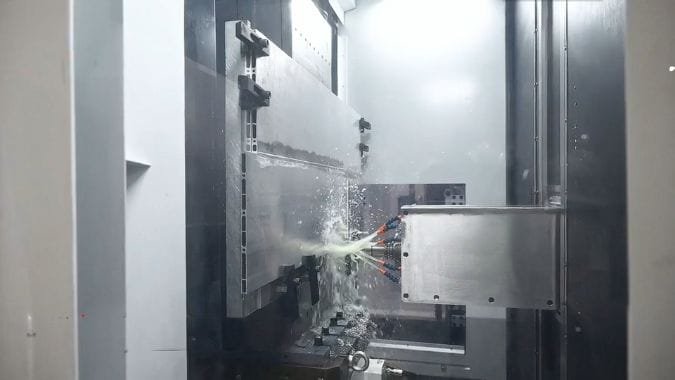
This is one of the most underrated advantages of an HMC. On a VMC, when you mill a deep pocket, the chips have nowhere to go but down. They pile up, getting in the way of the coolant and the tool. The tool ends up recutting these chips, creating extra heat and wearing out incredibly fast. With an HMC, this problem almost disappears. As the tool cuts into the side of the workpiece, gravity simply pulls the chips down and away. They fall onto sloped covers and are immediately flushed out. This clean cutting environment means the tool is always cutting fresh material. This keeps the tool cooler, helps it last much longer, and results in a much better surface finish. Because HMCs are also more rigid, they can handle higher chip loads, removing more material faster without sacrificing stability, which also contributes to better tool performance.
The Benefits of Better Chip Control
- Longer Tool Life5: By preventing the recutting of chips, the cutting edges on your tools stay sharp much longer. This reduces tooling costs and downtime.
- Improved Surface Finish6: When chips are evacuated efficiently, they don’t get trapped and scratch or mar the finished surface.
- Increased Process Reliability: Reliable chip evacuation is critical for unattended machining. You can trust the process to run for hours without a chip-related failure.
- More Aggressive Cuts: Greater rigidity combined with excellent chip control means you can push the machine harder, increasing your material removal rates.
What Questions About Parts, Volume, and Goals Should You Ask Before Choosing?
Ready to make a decision but worried about overlooking a critical detail? Choosing a machine based on just one factor like price or part size can lead to buyer’s remorse later on.
Before choosing, you must analyze your part complexity, production volume, and overall business goals. Ask: "What are my parts really like?" "What are my true production needs?" and "What is my long-term strategy?"
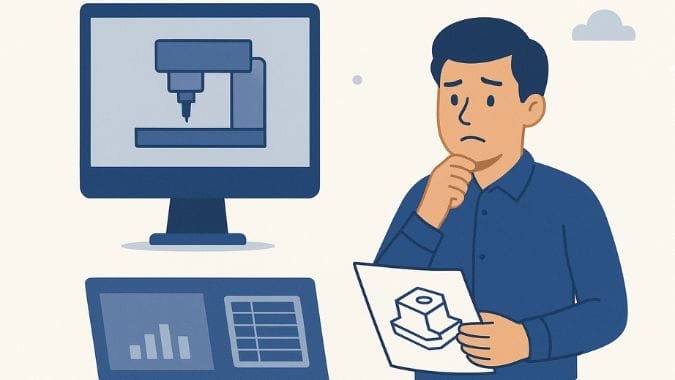
Investing in a machining center7 is a huge decision. You need to think like a strategist, not just a machinist. I always walk my clients through a series of structured questions. We look at the parts, the volume, and the bigger picture. An HMC8 might cost more upfront, but if it can make parts twice as fast with less labor, it is actually the cheaper machine in the long run. Answering these questions honestly will point you directly to the right machine for your shop.
Your Pre-Purchase Checklist
- Questions About Your Parts:
- Complexity: Do your parts require machining on four or more sides? Are you machining box-type parts like transmission cases or simple flat plates?
- Material: What materials are you cutting? An HMC’s rigidity is a major advantage for tough materials like stainless steel or large cast iron components.
- Tolerances: Are your tolerances tight? Reducing setups on an HMC eliminates the tolerance stacking errors that come from re-fixturing a part multiple times.
- Questions About Your Volume:
- Batch Size: Are you making one-offs, or are you running hundreds or thousands of the same part? For recurring production runs, an HMC’s efficiency is unmatched.
- Spindle Uptime: How much time is your current machine sitting idle? If it’s more than 50% due to setups, you need the automation an HMC offers.
- Questions About Your Goals:
- Labor: Do you want to reduce your reliance on operators for loading and unloading parts and enable lights-out manufacturing?
- Floor Space: Do you have the physical space for an HMC, which typically has a larger footprint than a VMC, especially with a pallet system?
- Future Growth: Are you buying a machine for the work you have now, or the more complex, higher-margin work you want to win in the future?
Conclusion
The choice is clear when you match the machine to the job. VMCs are perfect for versatility, prototypes, and small-batch work. HMCs are the best choice for high-volume, multi-sided parts where efficiency and automation are everything.
-
Explore the benefits of Vertical Machining Centers to understand their role in precision machining and efficiency. ↩
-
Learn how Horizontal Machining Centers enhance productivity and versatility in machining complex parts. ↩
-
Explore this link to understand how APC enhances productivity and efficiency in manufacturing processes. ↩
-
Discover the advantages of Multi-Sided Machining and how it can streamline your production process. ↩
-
Exploring this link will provide insights into how longer tool life can reduce costs and improve efficiency in machining. ↩
-
This resource will help you understand the importance of surface finish and its impact on the overall quality of machined parts. ↩
-
This resource will guide you through essential factors to consider when selecting a machining center, ensuring a smart investment. ↩
-
Explore this link to understand how HMCs can enhance efficiency and reduce costs in your machining operations. ↩

Chris Lu
Leveraging over a decade of hands-on experience in the machine tool industry, particularly with CNC machines, I'm here to help. Whether you have questions sparked by this post, need guidance on selecting the right equipment (CNC or conventional), are exploring custom machine solutions, or are ready to discuss a purchase, don't hesitate to CONTACT Me. Let's find the perfect machine tool for your needs.