

How to Choose Between Stationary Table and APC for HMC?
You buy an expensive horizontal machining center. Your machine sits idle while operators load parts. These accumulated hours of non-productive downtime represent a massive financial drain on your bottom line. You must choose the right worktable system now.
An Automatic Pallet Changer maximizes spindle uptime by allowing parallel loading and machining. A stationary table provides maximum rigidity for heavy parts but requires the spindle to stop during loading. You choose based on your part weight, production volume, and factory automation needs.
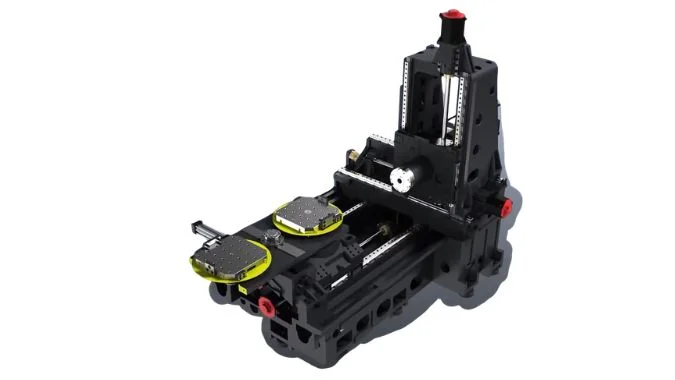
Let me explain exactly how to select the perfect worktable for your horizontal machining center so you can save your money.
How Much Can an APC Reduce Spindle Idle Time Compared to a Manual Loading Stationary Table?
Your machine spindle stops for five minutes. The operator clamps a new part slowly. Your production drops drastically. You need to eliminate this wasted time completely.
An APC reduces spindle idle time by seventy-five to ninety-three percent compared to a manual table. The APC completes an exchange in 12.5 to 45 seconds. The operator loads the next part outside while the machine cuts the current part continuously inside.
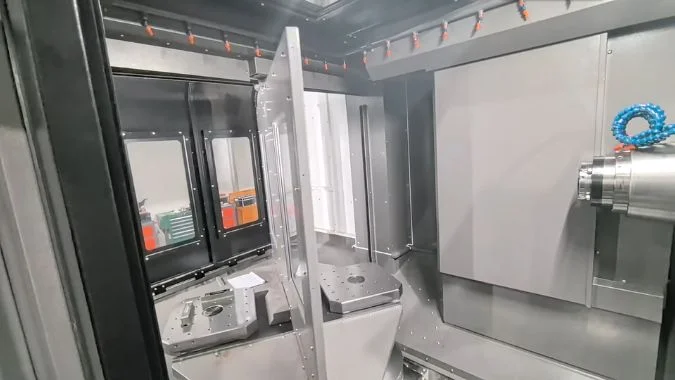
The operator opens the door. The operator unclamps the finished part. The operator cleans the metal chips. The operator loads the new raw metal. The operator tightens the clamps. This manual process takes three to five full minutes. The expensive spindle does zero work during this time. The factory loses massive profits. An Automatic Pallet Changer1 solves this problem perfectly. We call this a dual-station changer. Most modern machines use this system for medium to high volume production. The machine cuts part A inside the cabin. The operator loads part B on the outside pallet at the same exact time. The machine finishes part A. The APC swaps the two pallets in 12.5 to 45 seconds. The spindle starts cutting part B almost instantly. The spindle idle time drops by over seventy-five percent. I see new energy vehicle factories use APC systems daily. They make battery housings and car body parts. Their machine utilization rate2 jumps over eighty percent. A single-pallet stationary table machine struggles to reach sixty percent utilization. You must use an APC for high-volume recurring jobs. You save massive labor costs per part.
| Machining State | Manual Stationary Table | Automatic Pallet Changer |
|---|---|---|
| Loading process | Spindle stops completely | Spindle cuts part in parallel |
| Part change time | Takes 3 to 5 minutes | Takes 12.5 to 45 seconds |
| Spindle idle reduction | Zero time saved | Saves 75% to 93% idle time |
| Machine utilization | Usually under 60% | Jumps to over 80% |
Is a Stationary Table Better Than an APC for Machining Oversized or Extremely Heavy Workpieces?
You load a giant casting onto an APC. The pallet mechanism bends under the extreme weight. Your expensive machine breaks. You must use the correct table for heavy parts.
Yes, a stationary table is absolutely better for ultra-large or ultra-heavy workpieces. A stationary table uses an integrated solid cast bed. It provides maximum rigidity, superior load-bearing capacity, and zero exchange movement. This prevents structural deformation and cumulative positioning errors under extreme weight.
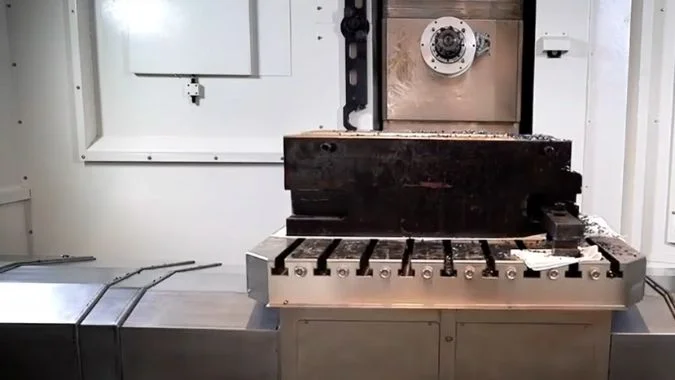
Some parts weigh over ten tons. An Automatic Pallet Changer fails under these extreme conditions. An APC contains complex moving gears, slide rails, and servo motors. APC pallets have strict maximum load limits. The changer mechanism interferes with very large part envelopes. These moving parts cannot support ultra-heavy weights safely. The APC mechanism suffers fatigue failure over time. The heavy load causes slight bends in the pallet rails. A stationary table3 handles this heavy job easily. A stationary table mounts directly to the solid iron machine bed. It has no moving exchange mechanisms underneath. It offers unmatched structural rigidity and vibration resistance. This solid foundation prevents any deformation during heavy cutting cuts. You avoid positioning errors completely. An APC moves the part. Every movement creates a tiny error risk. Ultra-large workpieces react badly to cumulative errors. A stationary table allows you to clamp the giant part once. You complete multi-sided machining in one single solid setup. The simple structure guarantees long-term stable operation. You also get easier overhead crane access. You never worry about breaking delicate exchange mechanisms. You must buy a stationary table when you machine giant engines or one-off heavy molds.
| Feature | Stationary Table | Automatic Pallet Changer |
|---|---|---|
| Structural design | Integrated solid cast bed | Complex moving rails and gears |
| Heavy load capacity | Handles ultra-heavy parts safely | Strict pallet weight limits |
| Cutting rigidity | Maximum vibration resistance | Lower rigidity due to moving parts |
| Setup strategy | One solid secure setup | Swaps parts with potential risk |
What is the Impact of Pallet Change Repeatability on the Final Precision of Complex Parts?
You machine a complex aerospace part. The finished holes do not align perfectly. You scrap a costly component entirely. You must control pallet exchange repeatability strictly.
Pallet change repeatability directly dictates your final part precision. A high-quality APC maintains positioning within 0.005 millimeters using taper cones. Poor repeatability shifts the workpiece base position during exchanges. This shift ruins multi-sided machining accuracy, destroys geometric tolerances, and increases your factory scrap rate drastically.
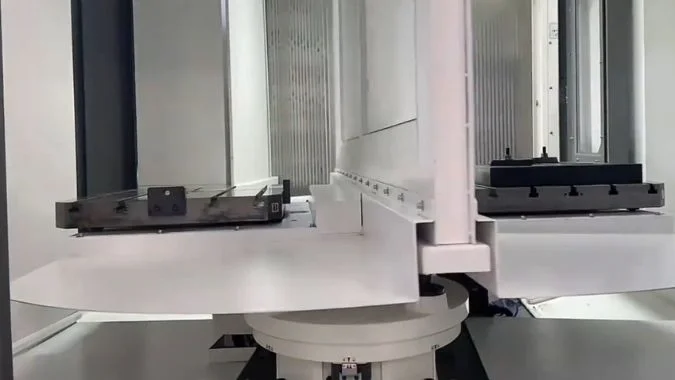
Complex parts need extreme accuracy. You cut one side of a part on a tombstone fixture. The APC swaps the pallet. You cut the other side. The pallet must lock into the exact same position every single time. We call this repeat positioning accuracy4. Modern APC systems use precise taper cones5 and air-blast chip clearing to achieve this. This accuracy acts as the foundation for your part quality. If the APC has poor repeatability, the base position of your workpiece shifts slightly. You cannot see this tiny shift with your eyes. The machine cuts the metal anyway. The final dimensions will not match your engineering drawing. The hole on the front will not align with the hole on the back. The coaxiality and perpendicularity fail inspection. This creates massive dimensional dispersion in mass production. Your scrap rate goes up. You lose materials and time. High-precision industries demand extreme accuracy. Aerospace structural components and turbine blades require tolerances under 0.005 millimeters. A top-quality APC guarantees this exact position. The pallet accuracy directly decides your final product success.
| Precision Factor | High Repeatability APC | Low Repeatability APC |
|---|---|---|
| Base position shift | Almost zero shift (under 0.005mm) | Noticeable physical base shift |
| Multi-sided accuracy | Perfect hole alignment | Fails coaxiality and perpendicularity |
| Mass production | Consistent batch quality | High scrap rate and part variation |
| Tooling features | Taper cones and air blasts | Worn mechanisms and dirt |
How Does the Maintenance Complexity of APC Compare to Stationary Table?
Your APC jams suddenly. The repair technician takes two days to fix it. Your production stops completely. You must understand the maintenance burden before you buy.
An APC requires complex and expensive maintenance. It contains servo drives, locking pins, and automation software. You must calibrate it regularly. A stationary table features a simple structure. You only clean it and lubricate the guides. The stationary table offers a much lower failure rate.
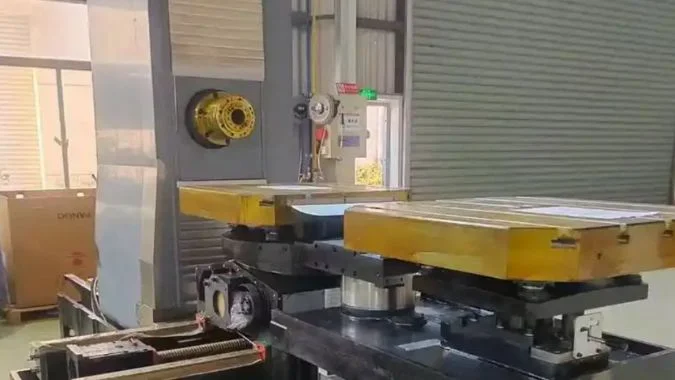
I talk to machine maintenance teams every week. They spend eighty percent of their time fixing automated systems. An Automatic Pallet Changer is a highly complex machine. It combines mechanical gears, electrical servos, and software controls. It uses taper holes, arc clamps, and push-rod springs. You must maintain all these moving parts perfectly. You must test the air-tightness of the locking mechanisms. You must check the seating alignment. You must calibrate the exact exchange precision every few months. You must protect the sensitive guide rails from sharp metal chips and dirty coolant. If chip dirt enters the locking pins, the APC fails. A stationary table makes life incredibly easy. It has zero moving exchange mechanisms. You do not calibrate any exchange precision. The maintenance focuses only on the flat surface and the metal slots. The operator cleans the table. The operator tightens the bolts. The operator adds simple oil to the guides. That is everything. The failure rate of a stationary table stays extremely low. An APC gives you high production efficiency. You pay for this efficiency with complex maintenance work.
| Maintenance Aspect | Stationary Table | Automatic Pallet Changer |
|---|---|---|
| Structural parts | Simple flat cast iron surface | Complex servos, gears, and pins |
| Calibration needs | No precision calibration needed | Requires strict regular calibration |
| Failure rate | Extremely low over many years | Higher risk due to moving parts |
| Protection needs | Basic chip cleaning | Strict sealing against coolant and chips |
Conclusion
You must select an APC for fast mass production. You must choose a stationary table for ultra-heavy parts. Choose wisely to maximize your horizontal machining center profits.
-
Explore vendor guides and case studies that show how APCs cut pallet-change times to seconds, drastically reducing spindle idle time and boosting throughput. ↩
-
Find industry metrics and examples demonstrating how APCs and process improvements can lift utilization from ~60% to over 80%, increasing output and profits. ↩
-
Learn how stationary tables provide unmatched rigidity and stability for machining large, heavy parts without positioning errors. ↩
-
Discover standards and measurement methods to ensure sub-0.005 mm repeatability, reducing scrap and guaranteeing part alignment in mass production. ↩
-
Learn how taper-cone interfaces and air-blast clearing secure exact pallet seating, directly improving part tolerances and inspection success. ↩

Chris Lu
Leveraging over a decade of hands-on experience in the machine tool industry, particularly with CNC machines, I'm here to help. Whether you have questions sparked by this post, need guidance on selecting the right equipment (CNC or conventional), are exploring custom machine solutions, or are ready to discuss a purchase, don't hesitate to CONTACT Me. Let's find the perfect machine tool for your needs.