

What Is The 4th Axis On A Vertical Machining Center?
Stuck machining only three sides of a part? Multiple setups are terribly slow and introduce costly errors. A 4th axis solves this by rotating your part for you.
A 4th axis on a vertical machining center is a rotary axis, usually an A-axis, that rotates the workpiece. This allows the machine to access multiple sides of a part in one setup, enabling complex cuts like helical grooves and multi-face features without manual re-clamping.
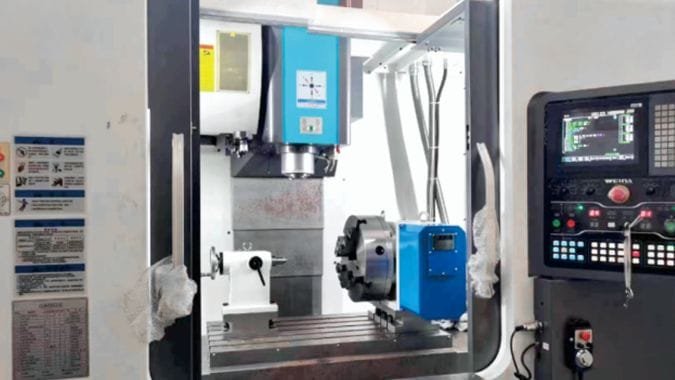
Many small shops completely transform their capabilities with this one upgrade. It’s like moving from a simple drill to a multi-tool. It opens up a whole new world of parts you can make. But it’s important to understand that not all rotary axes are the same. Some simply "index" or turn the part to a new position to be machined. Others offer "true" 4th-axis motion, rotating the part continuously while the tool is cutting. Let’s break down what a 4th axis is and what it can do for you.
What Are The Differences Between An Indexing Table And Spindle Head Rotation?
Confused by all the different rotary axis types? Choosing the wrong configuration can limit your machine’s future capability. Let’s clarify the two main ways to get a fourth axis on a VMC.
The key difference is location and function. An indexing table sits on the machine’s bed and rotates the part, typically positioning it before a cut. A rotating spindle head is part of the spindle assembly itself and rotates the tool, not the part.
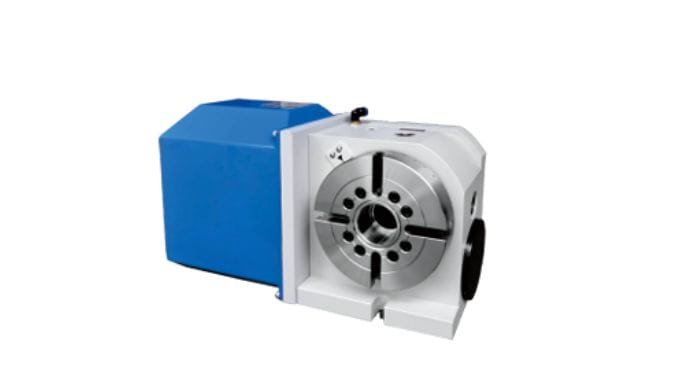
This distinction is really important because it affects what kind of work you can do. Most of the 4th-axis machines1 I see in workshops use a rotary table. It’s a versatile and common way to add rotational capability. With an indexing table, the machine rotates the part to a specific angle, locks it in place, and then begins cutting. A rotating spindle head is a more integrated and often more rigid solution, but it changes the fundamental mechanics of the machine. It moves the tool around the part, which is ideal for certain high-precision jobs. One moves the part to the tool for positioning, and the other moves the tool around the part for cutting.
Core Differences at a Glance
| Feature | 4th-Axis Rotary Table | Spindle Head Rotation2 |
|---|---|---|
| Location | Mounted on the machine’s main work table. | Integrated into the spindle assembly. |
| What Rotates | The workpiece. | The cutting tool. |
| Primary Use | Indexing part faces, machining angled holes, and cutting wrap-around features on box-type parts. | Directly machining complex curved surfaces and angled features without moving the part. |
| Best For | Improving efficiency on parts that need multi-sided machining; a cost-effective and versatile upgrade. | High-precision machining of complex spatial curved surfaces where spindle rigidity is critical. |
What Complex Shapes Can A 4th Axis Machine?
Limited to simple, blocky parts on your 3-axis machine? The most profitable jobs often require complex shapes. A 4th axis unlocks the ability to machine these intricate features easily and efficiently.
A 4th axis allows you to machine shapes that wrap around a cylinder. This includes helical gears, screw threads, augers, camshafts, and any part requiring features on multiple angled faces, all in a single clamping operation.
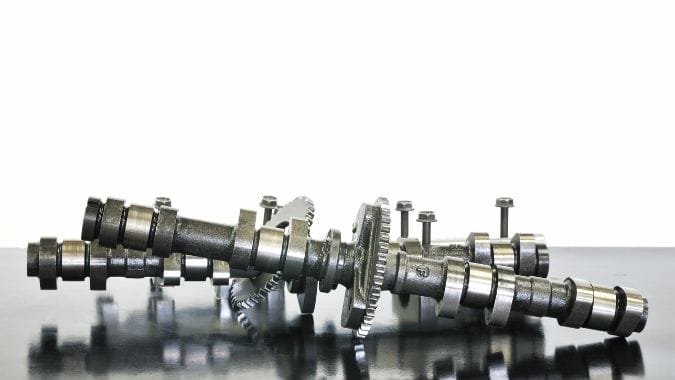
The moment you add that rotational axis, your capabilities expand dramatically. Instead of just moving left-right, forward-back, and up-down, you can now turn the part. This simple addition is a game-changer. I remember a client who made valve bodies. They used to have three separate setups on their 3-axis machine to finish one part. After adding a 4th axis3, they did it all in one clamping. Their production time was cut in half, and their accuracy went way up because they eliminated the errors from re-clamping. That’s the real power of the 4th axis. You can make parts with complex cylindrical contours, like pistons and cams, or parts that need features on many different faces, like impellers or engine housings.
Unlocking New Geometries
- Helical and Spiral Features: This is where a true 4th axis really shines. It can create spiral grooves, augers, and threads by synchronizing the part’s rotation with the machine’s linear movement.
- Multi-Faced Prismatic Parts: This is a huge efficiency gain. For a box-shaped part, you can machine the top and all four sides without ever unclamping it. The 4th axis just rotates the part to present each new face to the tool.
- Cylindrical Contours4: It allows for the machining of parts like camshafts and parts with wrap-around pockets or slots. The rotational axis continuously adjusts the part’s angle relative to the cutting tool.
Can A 4th Axis Be Added To An Existing 3-Axis VMC?
Want 4-axis capability without buying a whole new machine? The cost of a new VMC can be huge. The good news is, you can often upgrade what you already own.
Yes, a 4th axis can usually be added to an existing 3-axis VMC, as long as the machine’s control system can support an additional axis. This involves installing a rotary table on the VMC’s bed and integrating its drive and control system.
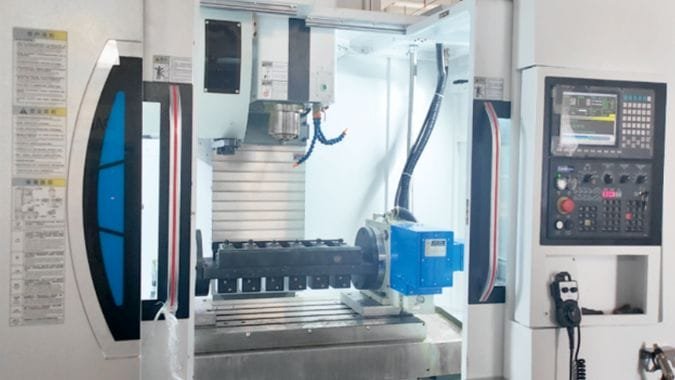
Buying a brand-new, factory-integrated 4-axis machine is great, but it’s a major capital investment. Retrofitting an existing machine provides most of the benefit for a fraction of the cost. The key is making sure your machine’s controller has the capacity for another axis drive. Most modern controls do. The installation process itself is straightforward for a qualified technician. They bolt the rotary table unit to your machine’s T-slots, run the cables to the electrical cabinet, and then configure the CNC control to recognize and command the new axis. It’s a very practical path to increasing your shop’s capabilities.
Key Factors for an Upgrade
- Control Compatibility5: This is the most important step. You must verify that your machine’s CNC controller can physically and logically support a 4th axis.
- Mechanical Installation6: The rotary table must fit on your machine’s bed without interfering with its travel limits. It needs to be bolted down and meticulously aligned.
- Electrical Integration: A technician connects the rotary table’s servo motor to a spare axis drive in your machine’s control cabinet.
- Software & Parameter Setup: The final step is to set the parameters in the control so it an send the correct motion commands and read the position feedback. Your CAM software will also need a post-processor that can output 4-axis code.
When Should A Shop Upgrade To A 4th Axis Instead Of A 5-Axis VMC?
You know you need more than 3 axes, but how far should you go? The jump from a 4-axis to a 5-axis machine is huge in both capability and cost, so making the right choice is critical.
Upgrade to a 4th axis when your main goal is to reduce setups on prismatic parts or machine features around a single axis of rotation. Choose a 5-axis machine when you must machine complex, organic surfaces that require the tool to tilt simultaneously.
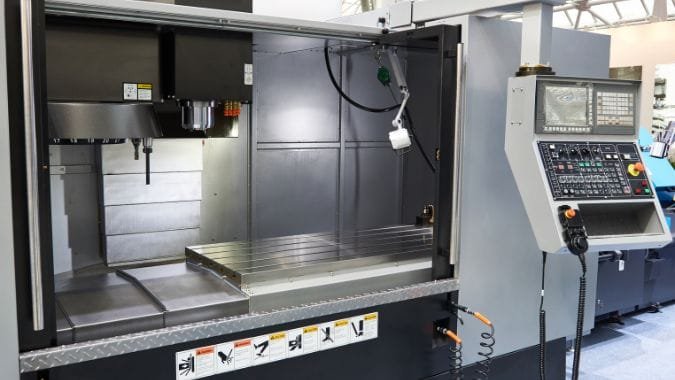
I have this conversation with shop owners all the time. Everyone is fascinated by 5-axis machining7, but frankly, most shops don’t need it. A 4th axis solves the biggest problem for most job shops: reducing setups. It lets you get to four or five sides of a part in one go. A true 5-axis machine adds another rotational axis, usually by tilting the tool or the table. This is essential for parts where the tool needs to approach the surface from an infinite number of angles, like machining the complex blades of an impeller or a propeller. But this incredible capability comes with a steep increase in machine cost, programming complexity, and the operator’s skill level. For most shops, a 4th axis is the smarter, more profitable investment.
Making the Right Choice
| Consideration | Choose 4-Axis VMC | Choose 5-Axis VMC |
|---|---|---|
| Typical Parts | Box-type parts, housings, parts with holes on multiple faces, shafts with helical grooves, gears. | Impellers, turbine blades, complex molds, medical implants, aerospace structural components. |
| Primary Goal | Reduce setups, improve accuracy by avoiding re-clamping, machine features that wrap around one axis. | Machine complex, free-form surfaces in a single setup; avoid using very long tools by tilting the part. |
| Cost & Complexity | Moderate investment. Programming is a logical step up from 3-axis and easier for operators to learn. | Significant investment. Programming and collision avoidance are much more complex and require specialized skills. |
Conclusion
A 4th axis is a powerful tool that expands your machining range, improves accuracy, and boosts efficiency. It’s often the most practical and profitable next step for a growing machine shop looking to take on more complex and valuable work.
-
Explore this link to understand the capabilities and applications of 4th-axis machines in various machining processes. ↩
-
Discover the advantages of Spindle Head Rotation for high-precision machining and how it can enhance your projects. ↩
-
Explore how a 4th axis can enhance machining efficiency and accuracy, transforming production processes. ↩
-
Learn techniques for machining cylindrical contours, crucial for creating complex parts like camshafts. ↩
-
Understanding Control Compatibility is crucial for ensuring your CNC machine can support upgrades effectively. ↩
-
Learning about Mechanical Installation will help you ensure proper setup and alignment for optimal machine performance. ↩
-
Learn about 5-axis machining to determine if its advanced capabilities are essential for your specific manufacturing needs. ↩

Chris Lu
Leveraging over a decade of hands-on experience in the machine tool industry, particularly with CNC machines, I'm here to help. Whether you have questions sparked by this post, need guidance on selecting the right equipment (CNC or conventional), are exploring custom machine solutions, or are ready to discuss a purchase, don't hesitate to CONTACT Me. Let's find the perfect machine tool for your needs.