

Why is Hand Scraping VMC Guideways Necessary?
You buy a CNC machine for micron-level precision, but standard machining cannot guarantee a perfectly flat foundation. Without manual finishing, even the most expensive VMC will suffer from alignment errors. Hand scraping is the necessary "human touch" that machines cannot replicate.
Hand scraping is a manual process using a carbide-tipped blade to remove minute amounts of metal, correcting unpredictable distortions from heat and casting stress. It ensures guideways are perfectly flat, aligned, and textured to retain oil, creating a solid foundation that enhances machine stiffness and longevity where grinding alone fails.
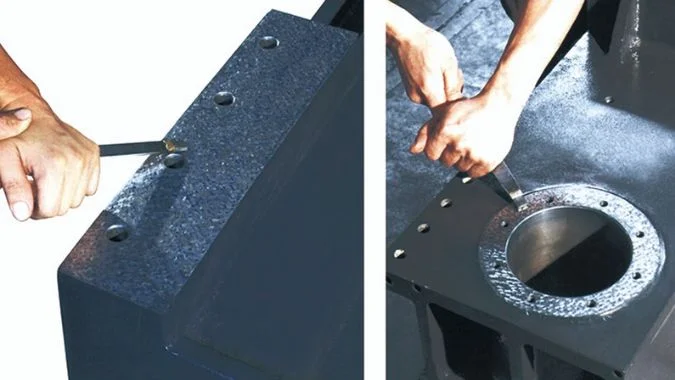
Grinding creates a visibly smooth surface, but it cannot react to the metal’s internal stress.
What is the Role of "Oil Pockets" in Scraped Guideways for Optimal Lubrication?
If two perfectly smooth metal surfaces touch, they squeeze all the oil out. This creates a vacuum, causing the parts to stick. You need "imperfections" to make the machine run smoothly.
Oil pockets are intentionally scraped depressions that utilize surface tension to retain a pool of lubricant. They ensure a continuous oil film exists between mating surfaces, preventing dry friction during startup and creating hydrodynamic lift that allows heavy components to glide effortlessly without seizing.
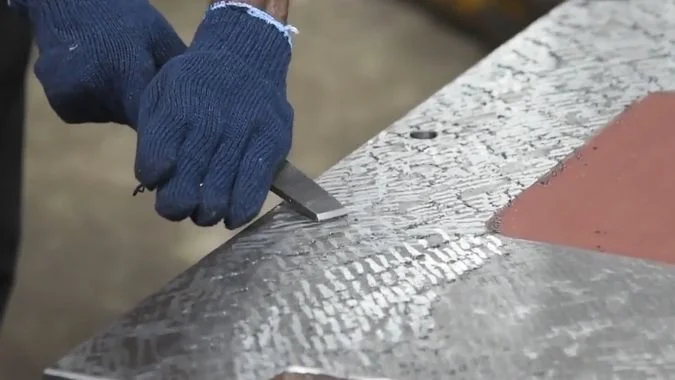
We often compare these pockets to a reservoir. Without them, you have what we call "starved lubrication1."
The Mechanics of Retention
When we scrape, we are digging small grooves. The core function of these grooves is storage. Due to surface tension, the oil sits in these low spots and does not run off. When the slider moves, it drags this stored oil up onto the "high spots" (the contact points). This creates a constant, renewable oil film.
Preventing the Vacuum Effect
If you take two precision-ground gauge blocks and slide them together, they stick. They "wring" together because there is no air or oil between them. This is great for metrology, but terrible for a moving machine. It causes high friction. Scraped oil pockets break this vacuum. They allow the oil to separate the metals.
Dealing with Contaminants
There is another hidden benefit I always mention to clients. In any shop, you have dust and tiny metal fines. On a smooth ground surface, this debris gets trapped between the slide and the rail, cutting deep scratches. With scraped ways, the debris gets pushed into the oil pockets. It sits harmlessly in the "valleys" until the next maintenance flush, protecting your accuracy.
| Feature | Function | Benefit |
|---|---|---|
| Low Spots (Pockets) | Reservoir | Stores oil, catches debris |
| High Spots (Peaks) | Contact | Supports the load, maintains geometry |
| Distribution | Flow Control | Ensures oil spreads evenly during motion |
How Does Hand Scraping Eliminate the "Stick-Slip" Effect During Precision VMC Movements?
"Stick-slip" is that jerky motion you feel when trying to make a tiny adjustment. It happens when friction is inconsistent. To stop it, you need to control the contact points.
Hand scraping eliminates the stick-slip effect by creating a uniform distribution of high points that break the surface tension and balance static and dynamic friction. This texture allows the guideway to "float" immediately upon movement, preventing the alternating sticking and slipping that ruins surface finishes during fine feeds or reversals.
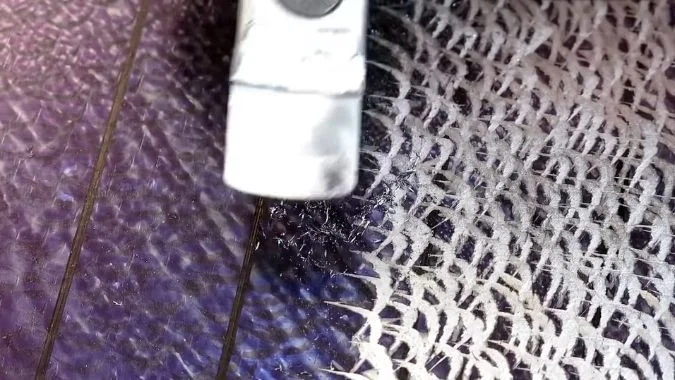
Stick-slip, or "crawling," is the enemy of precision. It happens when the force needed to start moving (static friction) is much higher than the force needed to keep moving (dynamic friction).
Breaking the Tension
Imagine pushing a heavy box across a rubber floor. You push hard, nothing happens, and then suddenly it jumps forward. That is stick-slip2. It creates vibration marks on your workpiece. By scraping, we reduce the contact area to specific high points. This lowers the initial "grab" of the surface.
The Role of Micro-Geometry
We use a marking agent, usually Prussian Blue, to see where the surfaces touch. We scrape down the high spots until we have a uniform pattern. This improves the microscopic geometry. It ensures that the friction remains constant, whether the machine is moving at 1mm per minute or 10 meters per minute.
Smoother Reversals
In VMC operations, the axis often has to stop and reverse direction (like when milling a circle). This is where stick-slip is most dangerous. A scraped surface holds oil in the pockets, ready for that split-second reversal. It creates a "dampened" feel. The motion becomes free and fluid, not jerky. This is essential for achieving mirror finishes on molds.
Why is Hand Scraping Essential for Hard Rail VMCs But Not for Linear Rail Machines?
Not every machine needs scraping. It depends entirely on the design of the friction system. You must understand the difference between sliding and rolling.
Hand scraping is mandatory for hard rail VMCs to correct casting defects and manage the large sliding contact area required for heavy-duty damping. Linear rail machines use pre-manufactured rolling elements that achieve precision through assembly, not surfacing, though the base mounting surface for linear rails often still requires scraping for alignment.
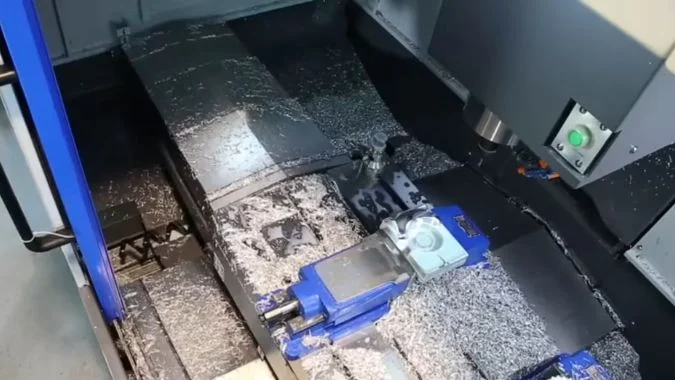
Hard rails are for heavy cutting; linear rails are for speed. Their maintenance needs are opposite.
Why Hard Rails Need the Scraper3
Hard rails (Box Ways) are often part of the main casting. Cast iron is alive. It moves as it cools. It has hard spots and soft spots. You cannot just grind it and hope for the best. Grinding wheels deflect. Hand scraping corrects these errors. It allows us to fix geometric twists that a grinder cannot see. It creates the oil retention needed for the heavy sliding friction of a box way. Without scraping, a hard rail machine would seize up under heavy loads.
The Linear Rail Approach4
Linear guides use steel balls or rollers. These are standard parts made by specialized manufacturers. They achieve zero-gap movement through rolling friction. You cannot scrape a hardened linear rail; you would ruin it. They are designed to be "plug and play." Their accuracy comes from the factory, not the machine builder’s hand.
The "Base" Exception
However, there is a catch. You cannot bolt a straight linear rail to a crooked casting. While we do not scrape the rail itself, we often hand-scrape the mounting surface (the bed) where the rail sits. This ensures the rail does not twist when we tighten the bolts. So, even in linear rail machines, the scraper’s art is still hidden underneath.
How Does Increasing the Contact Surface Area Through Scraping Improve VMC Rigidity?
You might think a smooth surface has more contact than a rough one. In the world of machining, that is a myth. Scraping actually increases the useful contact area.
Scraping improves rigidity by increasing the density of contact points—often exceeding 20 points per square inch for fine work—which distributes the load evenly across the mating surfaces. This dense contact pattern eliminates gaps caused by machining waves, creating a tighter "loop stiffness" that resists rocking, vibration, and deflection during heavy cutting.
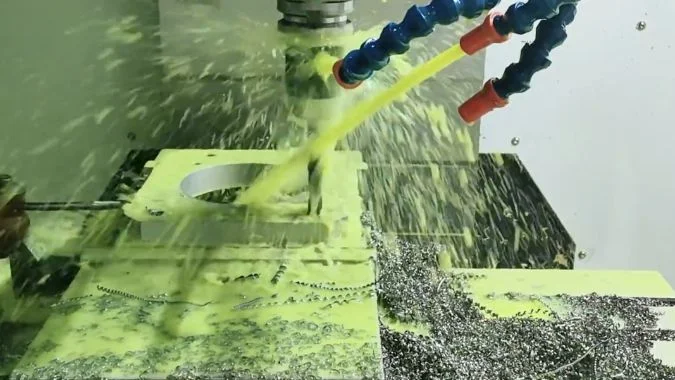
Rigidity is not just about weight. It is about connection. If your column and base do not fit perfectly, your machine is just two heavy pieces of metal held together by bolts. It will flex.
From Points to Surface
If you rely on machining alone, you get "wave" errors. When you join the parts, they only touch on the peaks of these waves. You might have only 10% actual contact. By scraping, we knock down those peaks. We bring the valleys up. We transform point contact into surface contact. For high-precision J&M machines, we aim for a high contact point density. This makes the joint behave like a single solid piece.
Improving Loop Stiffness
Engineers talk about "loop stiffness5." This is the total rigidity of the machine from the cutter, through the column, to the base, and back to the table. The weakest link is always the joints. Scraping tightens these links. It prevents the column from "rocking" when the spindle accelerates.
Internal Stress and Long-Term Stability
There is a final, critical reason. Scraping releases stress. Machining puts heat into the metal, creating tension. Scraping is a cold process. By gently removing the surface layer, we balance the internal stresses6 of the casting. This means the machine stays rigid for years. It does not warp over time. A scraped machine maintains its geometry, providing a stable platform for precision work long after the warranty expires.
Conclusion
Hand scraping is the soul of machine accuracy. It creates oil reservoirs, eliminates stick-slip, and solidifies rigidity. While linear rails rely on rolling elements, hard rail VMCs depend on this manual art for long-term precision.
-
Explore this link to understand the critical impact of starved lubrication on machine performance and longevity. ↩
-
Understanding stick-slip is crucial for improving precision in machining processes, ensuring smoother operations and better finishes. ↩
-
Explore this link to understand how scrapers enhance the performance and longevity of hard rails in machining. ↩
-
Discover the mechanics behind linear rails and their advantages in precision engineering. ↩
-
Understanding loop stiffness is crucial for ensuring machine rigidity and performance. Explore this link to learn more about its importance. ↩
-
Internal stresses can significantly impact the longevity and precision of machines. Discover how to manage them effectively. ↩

Chris Lu
Leveraging over a decade of hands-on experience in the machine tool industry, particularly with CNC machines, I'm here to help. Whether you have questions sparked by this post, need guidance on selecting the right equipment (CNC or conventional), are exploring custom machine solutions, or are ready to discuss a purchase, don't hesitate to CONTACT Me. Let's find the perfect machine tool for your needs.