

Why Minerals Can Be Chosen as Bed Castings for CNC Machining Centers?
You are chasing micron-level precision, but your machine keeps fighting you. Vibrations ruin the surface finish, and temperature changes cause your dimensions to drift. The problem might not be your settings; it might be the foundation itself.
Minerals can be chosen as bed castings because they offer vibration damping 6 to 10 times superior to cast iron. They possess high thermal inertia and low thermal expansion, which prevents accuracy drift. This material stability ensures that high-precision CNC machining centers maintain strict tolerances and extend tool life.
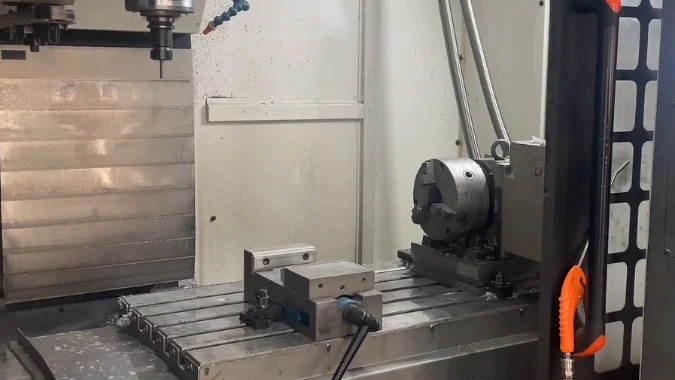
We used to rely entirely on grey cast iron. But as speeds increased and tolerances tightened, iron started to show its limits. That is why we moved toward mineral casting for our high-end equipment. Let me explain the specific reasons why this material is changing the game.
What Mineral Materials Can Be Used for CNC Machining Center Bed Castings?
You might hear "mineral casting" and think we are just pouring concrete. It is much more advanced than that. It is a precise science of mixing nature with chemistry.
The primary materials are Epoxy Resin Composite (high precision, high damping), Polymer-based Casting (cost-effective polyester matrix), and Composite Mineral Casting (combining minerals with steel inserts). These mixtures use aggregates like quartz sand and granite chips bound with resin to create a structure with high compressive strength (130–160 N/mm²).
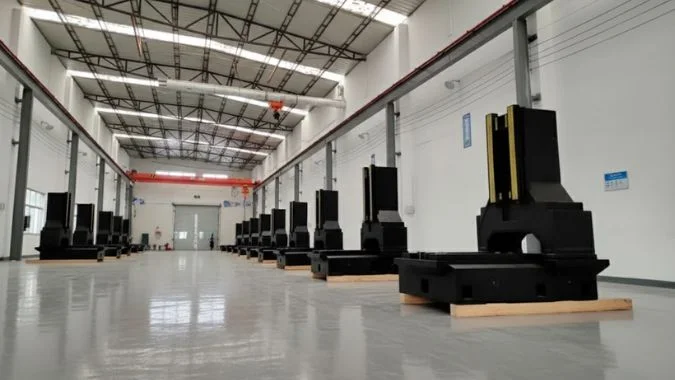
When we talk about mineral casting, we are usually referring to a composite material. It falls into three main categories based on the binder and application.
First, there is Epoxy Resin Composite Mineral Casting1. This is the gold standard for high-precision machines. We mix natural mineral particles—like quartz sand or granite chips—with a high-quality epoxy resin. The result is a material with incredibly high damping and thermal stability. Formulations like this are used for the core components of our best machines, offering compressive strengths up to 160 N/mm².
Second, we have Polymer-based Mineral Casting2. This uses a polyester resin binder. It is easier to process and costs less, but it does not handle heat quite as well as the epoxy types. We often see this in machines with moderate precision requirements.
Third, and very importantly, is Composite Mineral Casting. This is a hybrid approach. Since you cannot easily thread a bolt into a rock, we embed steel inserts into the casting. We place steel where we need high wear resistance, like rail mounts, and use mineral casting for the main body. This balances performance with practicality.
| Material Type | Composition | Key Feature | Best Application |
|---|---|---|---|
| Epoxy Resin | Quartz/Granite + Epoxy | High Damping & Strength | High-end CNC Bases |
| Polymer-based | Aggregates + Polyester | Cost-effective | Moderate Precision Parts |
| Composite | Mineral + Steel Inserts | Hybrid Performance | Rails & Mounting Points |
How Does the Damping Ratio of Mineral Castings Compare to Traditional Bed Castings?
High-speed cutting acts like a hammer hitting your machine. If the bed rings like a bell, that vibration travels straight to your tool tip and ruins the part.
Mineral casting has a damping ratio significantly higher than grey cast iron—often 6 to 10 times better, with ratios ranging from 0.0241 to 0.044. This superior absorption suppresses resonance during high-speed machining, reducing tool chatter, improving surface quality, and lowering noise levels by 20%.
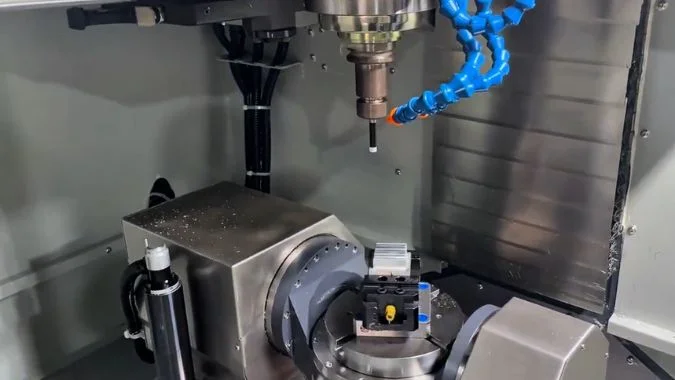
Damping is the ability of a material to "kill" vibration.
Think of grey cast iron. It is metal. When you hit it, it vibrates for a long time. In a CNC machine, rapid movements and cutting forces create these vibrations. If the bed does not stop them, they build up. This is resonance. It causes the cutter to bounce, leaving chatter marks on your workpiece.
Mineral casting is different. It is a mixture of stones and resin. It is isotropic and homogeneous. When vibration energy hits it, the energy gets lost inside the complex structure.
The numbers prove it. While cast iron has low damping, mineral casting3 boasts a damping ratio4 between 0.0241 and 0.044. This is a massive difference.
For you, this means two things. First, better parts. The tool stays steady, so the finish is smooth. Second, longer tool life. The tool is not constantly banging against the material. Also, the shop is quieter. The casting absorbs the sound, reducing the noise pressure by about 20%.
Why is Geometric Stability Improved When Using Minerals Instead of Metal for Machine Beds?
Metal has a memory. If you stress it with heat during manufacturing, it will try to move back later. This warping destroys long-term accuracy.
Mineral casting cures chemically at room temperature, creating zero internal stress. Unlike cast iron, which warps as it cools from high heat, minerals maintain their shape permanently. With a shrinkage rate of less than 2% and thick-walled designs, they offer exceptional geometric stability and rigidity.
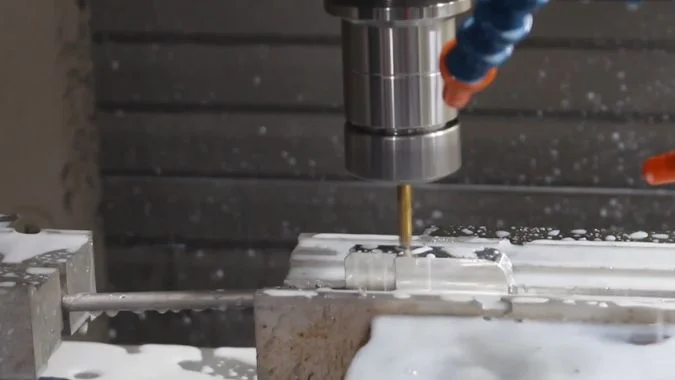
Geometric stability means the machine stays square and flat over years of use.
Traditional cast iron is melted at extreme temperatures. As it cools, it shrinks unevenly. This locks "internal stress" inside the metal. Over months, the metal relaxes, and the bed warps. You lose alignment.
Mineral casting5 solves this. We cast it at room temperature, usually below 45°C. There is no thermal shock. There is no internal stress. Once the epoxy cures, the shape is set forever.
The material is also chemically stable. It does not react with cutting fluids or coolants.
Some people worry about stiffness because rock is lighter than iron. It is true that the density is about 1/3 of iron. However, we design differently. We make the walls of a mineral bed 3 times thicker than an iron bed, or we make it solid. This gives us the same stiffness but with better stability. The high isotropy ensures the properties are the same in every direction, so there are no weak spots.
Why Does the Low Thermal Expansion Coefficient of Minerals Prevent "Accuracy Drift" During Operation?
You start the machine in the cold morning, and by noon, your parts are out of tolerance. Heat is the invisible enemy of precision manufacturing.
Mineral casting has a thermal expansion coefficient (CTE) about 1/3 that of cast iron. It reacts slowly to temperature changes due to high thermal inertia. This prevents the bed from expanding or bending when the shop gets hot, effectively stopping "accuracy drift" and maintaining tolerance.
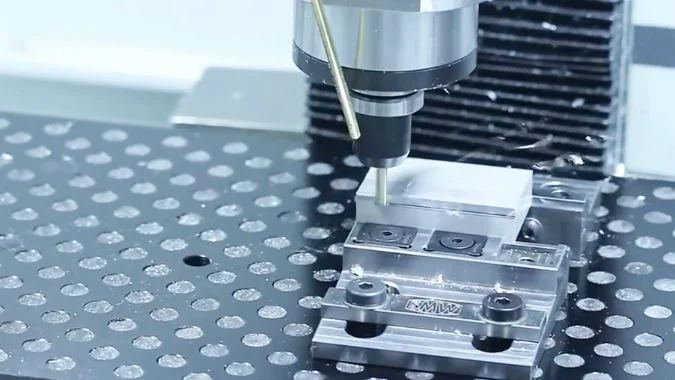
"Accuracy drift" happens when the machine changes size.
During a shift, motors generate heat. Friction creates heat. The ambient temperature rises. Metal conducts this heat very fast. If you use a cast iron bed, it expands. Even a tiny expansion moves the spindle away from the workpiece.
Mineral casting acts as a thermal buffer. Its thermal conductivity is very low—less than 5% of cast iron. It does not transfer heat easily.
It also has high heat capacity. It takes a long time to warm up. We call this "thermal inertia6." If the shop temperature fluctuates, the mineral bed barely notices.
Most importantly, its Thermal Expansion Coefficient (CTE)7 is very low. It expands only 1/3 as much as iron for the same temperature rise.
This is critical for 5-axis machines or high-precision grinders. By reducing thermal deformation at the source, we ensure that the geometric accuracy—like the straightness of rails—remains constant all day long.
Conclusion
Mineral casting outperforms metal by absorbing vibration, resisting heat, and maintaining permanent shape. It is the best choice for high-precision, long-lasting machine tool foundations.
-
Explore this link to understand why Epoxy Resin is considered the gold standard for high-precision machines. ↩
-
Discover the advantages and applications of Polymer-based Mineral Casting, especially in moderate precision machines. ↩
-
Exploring the advantages of mineral casting can help you enhance machining performance and achieve better results. ↩
-
Understanding the damping ratio is crucial for selecting materials that minimize vibrations and improve machining quality. ↩
-
Explore the advantages of mineral casting, including its stability and durability, which can enhance your machine’s performance. ↩
-
Exploring thermal inertia helps in grasping its role in maintaining consistent machine performance despite temperature fluctuations. ↩
-
Understanding CTE is crucial for precision machining, ensuring accuracy and stability in high-performance applications. ↩

Chris Lu
Leveraging over a decade of hands-on experience in the machine tool industry, particularly with CNC machines, I'm here to help. Whether you have questions sparked by this post, need guidance on selecting the right equipment (CNC or conventional), are exploring custom machine solutions, or are ready to discuss a purchase, don't hesitate to CONTACT Me. Let's find the perfect machine tool for your needs.