

What Are The Tips to Prevent Rust on CNC Deep Hole Drilling Machine?
Surface corrosion on high-value CNC equipment accelerates mechanical wear and depreciates capital assets. Implementing a strict corrosion control protocol is essential to protect expensive tooling investments and prevent costly, rust-related downtime in your machining facility.
You prevent rust on a CNC deep hole drilling machine through strict tool maintenance, controlled workshop humidity, and correct cutting fluid concentration. You must apply anti-rust oils regularly, clean the machine table daily, and maintain shop humidity between forty and sixty percent to protect bare metal.
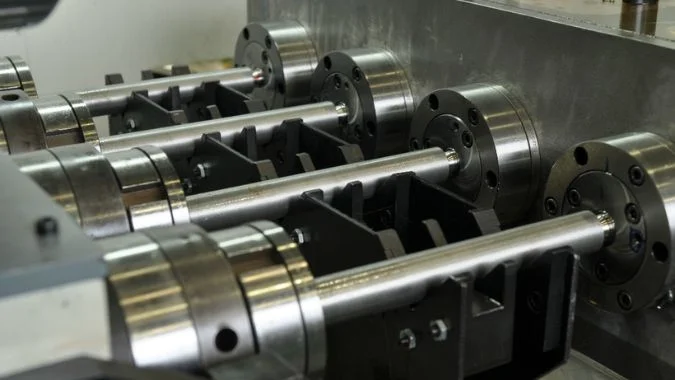
Preventing oxidation on deep hole drilling equipment requires a comprehensive, facility-wide approach, extending from fluid management to ambient climate control. The following technical guidelines outline industry-standard maintenance protocols to help your operational teams keep critical machinery completely protected and performing at peak accuracy.
What Happens When a CNC Deep Hole Drilling Machine Rusts?
Corrosion on deep hole drilling tools fundamentally compromises structural integrity and process stability. Understanding how oxidation degrades surface finish and disrupts chip evacuation is critical for maintaining consistent production and preventing catastrophic tool failures mid-cycle.
Rust on a CNC deep hole drilling machine destroys machining accuracy and shortens equipment life. Rust debris clogs chip removal channels. This blockage causes tool breakage, ruins part finishes, and increases your factory maintenance costs dramatically.
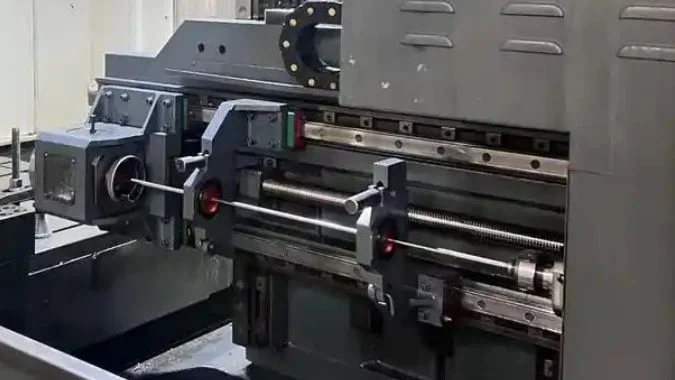
Destruction of Machining Accuracy
Rust attacks the surface of your expensive cutting tools. This corrosion increases the surface roughness of the drill1. A rough tool shakes during deep cutting. This shaking changes the hole diameter. You fail the straightness inspection. Your final surface finish looks terrible. You make bad parts.
Equipment Lifespan and Chip Removal Issues
Rust eats away the metal strength of your machine. Deep hole drilling creates extreme high load forces. A rusty spot becomes a crack very quickly2. This crack breaks the tool. It also damages main machine components. Rust flakes fall into the cutting fluid. These metal flakes block the chip removal channels. The hot chips cannot escape the deep hole. The machine stops working.
High Costs and Part Contamination
You spend too much money when your machine rusts. You buy new tools constantly. You stop production to clean the mess. The rusty flakes stick to your clean workpiece. You ruin high-precision medical parts. You must throw the expensive parts in the garbage.
| Rust Problem | Direct Effect | Factory Cost |
|---|---|---|
| Tool surface rust | Shakes during cutting | Bad hole diameter |
| Weak rusty metal | Cracks under heavy load | Broken machine parts |
| Rust flakes in fluid | Blocks chip exit | Long machine downtime |
| Flakes on workpiece | Ruins medical parts | High scrap rate |
What Tool Maintenance Routines Stop Rust Effectively?
Improper storage of exposed, untreated tooling accelerates rapid oxidation, degrading precision cutting edges within hours. Establishing a systematic tool maintenance routine—focusing on thorough moisture removal and protective oil application—is mandatory to halt degradation and maximize consumable lifespans.
Effective tool maintenance stops rust through thorough cleaning and protective oiling. You must wash away metal chips and apply high-quality anti-rust oil before storage. You should also use Titanium Nitride coated tools to block moisture and extend tool life.
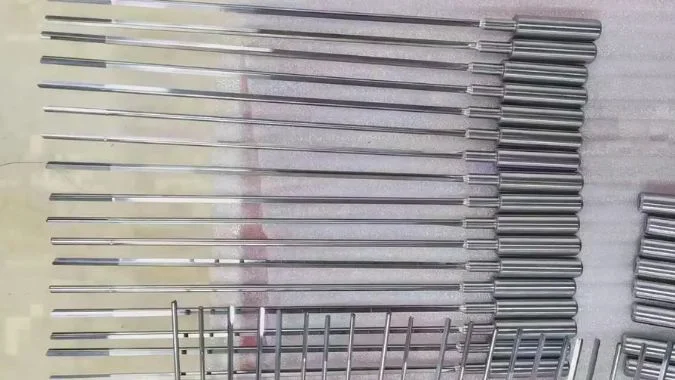
Clean and Dry Storage
You must clean your deep hole drilling tools immediately after use. You use special solvents and soft brushes. You wash away all metal chips and dirty water. Some cleaning fluids leave a thin protective film on the metal. You wipe the tool completely dry with a soft cloth. You place the dry tool on a ventilated rack. You never put tools on a wet floor.
Application of Anti-Rust Oil
You must protect tools during long storage. You apply anti-rust oil to the metal. This oil creates a thick wall against air and water. You match the oil to the tool material. High-speed steel needs mineral oil with corrosion inhibitors. Carbide tools need special oil formulas. You brush the oil over every cutting edge. You put the oiled tools in closed boxes.
Advanced Tool Coatings
You can buy tools with special protective skins. Factory coatings stop rust very well. A Titanium Nitride coating gives the tool high chemical stability3. This thin skin measures between one and five micrometers thick4. It blocks water and keeps the metal safe.
| Maintenance Step | Action Required | Protective Benefit |
|---|---|---|
| Tool Cleaning | Wash with solvent | Removes wet chips |
| Tool Storage | Dry and put on rack | Stops floor moisture |
| Oil Application | Brush on anti-rust oil | Blocks air and water |
| Tool Coating | Buy TiN coated tools | Resists chemicals |
Why Is Machine Environment Control Crucial Against Rust?
Unregulated ambient humidity and temperature fluctuations inevitably lead to condensation5 on exposed cast-iron machine beds. Strict facility climate control and routine surface protection are vital to preserve the bare metal guideways and structural components of your precision machining centers.
Machine environment control prevents rust by keeping the air dry and the surfaces clean. You must maintain workshop humidity between forty and sixty percent. You must wipe the machine table daily and use anti-rust grease on bare guideways.
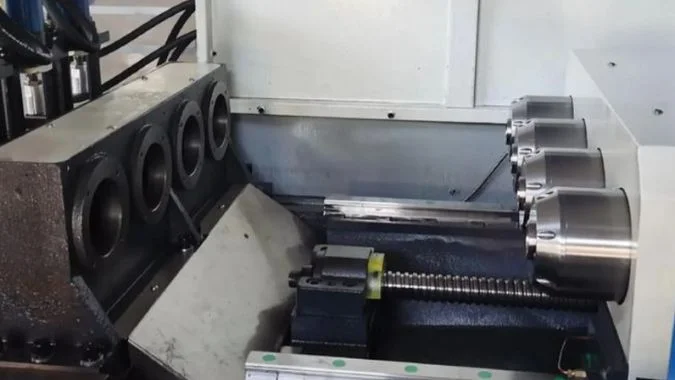
Humidity and Cleaning Rules
The air inside your factory attacks your machine. You must clean the machine table every day. You use an industrial vacuum to remove wet metal chips. You must watch the air humidity closely. You keep the room humidity between forty and sixty percent. You buy a large dehumidifier to dry the air. You check the coolant tank often. You stop leaks before they make the floor wet.
Machine Surface Protection
The bare metal bed and columns rust very easily. You must protect these large parts. The factory uses epoxy paint to cover the main body. This thick paint stops water completely. You can also use chemical phosphating. This process puts a hard protective film on the steel.
Guideway Lubrication
Your machine guideways move constantly. You cannot paint them. You must protect them with thick anti-rust grease. You pump fresh grease into the machine regularly. The grease stops water and helps the metal slide smoothly.
| Environment Factor | Control Method | Rust Prevention Goal |
|---|---|---|
| Dirty Table | Vacuum daily | Remove wet chips |
| High Humidity | Run a dehumidifier | Keep air at 50% |
| Bare Machine Bed | Apply epoxy paint | Block water totally |
| Moving Guideways | Pump thick grease | Protect bare sliding metal |
What Machining Processes Actively Prevent Rust Formation?
Suboptimal coolant chemistry directly accelerates oxidation on both the workpiece and the machine tool itself. Utilizing specialized emulsified cutting fluids with strictly monitored rust inhibitor concentrations is a foundational machining requirement to protect ferrous metals during the entire cutting cycle.
Specific machining processes prevent rust by using correct cutting fluids and workpiece pretreatments. You must maintain emulsified fluid concentration between five and ten percent. You can also phosphate steel parts before cutting to create a strong anti-rust shield.
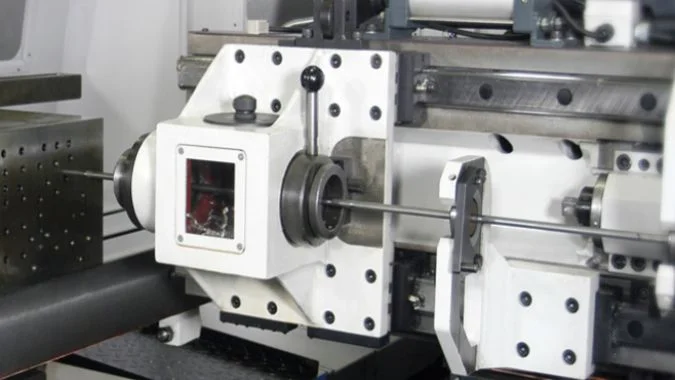
Proper Cutting Fluid Management
Your cutting fluid does more than cool the tool. Good fluid stops rust. You use emulsified cutting fluid for steel parts. This liquid contains special anti-rust chemicals. You must mix the fluid correctly. You keep the concentration between five and ten percent. A weak mix lets water attack the metal. You pump a massive amount of fluid into the hole. The heavy flow washes the wet chips away fast.
Pretreatment of Raw Workpieces
Some steel blocks rust very easily. You can treat the raw metal before you start drilling. You put the raw steel through a phosphating process6. This chemical bath forms a hard skin on the steel block. You can also use a passivation process. This creates a dense oxide layer to block water.
Processing Benefits
These pretreatments stop the part from rusting during the long drilling cycle. A clean part protects the tool. A rusty block grinds against the tool and destroys the cutting edge. Good fluids and clean parts make your job easy.
| Process Step | Correct Action | Protection Result |
|---|---|---|
| Fluid Selection | Use emulsified oil | Adds chemical rust shield |
| Fluid Mixing | Keep at 5% to 10% | Stops water damage |
| Flow Control | Pump high volume | Washes wet chips away |
| Raw Part Prep | Use phosphating first | Hardens part surface |
Conclusion
You must clean tools, control workshop humidity, and mix fluids correctly to stop rust. These simple steps protect your CNC deep hole drilling machine and save your factory money.
-
"Effect of Surface Roughness on Pitting Corrosion of 2205 Duplex …", https://pmc.ncbi.nlm.nih.gov/articles/PMC6427386/. A materials-corrosion source should describe how rusting produces roughened oxide layers, pitting, or uneven surface topography on steel surfaces. Evidence role: mechanism; source type: paper. Supports: Corrosion increases the surface roughness of a steel drill.. Scope note: This supports the effect of corrosion on metal surfaces generally, not measured roughness changes on the article’s specific drill tools. ↩
-
"[PDF] Effect of cyclic loadings on the stress corrosion crack growth rate in …", https://www.osti.gov/etdeweb/servlets/purl/20666493. A fatigue-corrosion or corrosion-pitting source should support that pits and corrosion defects can act as stress concentrators and initiate cracks under cyclic or high-load conditions. Evidence role: mechanism; source type: paper. Supports: A rusty or pitted area can become a crack initiation site under heavy loads.. Scope note: The phrase “very quickly” is process-dependent and would require operating-load data to quantify for a specific machine. ↩
-
"Effect of Laser Heating on the Life of Cutting Tools Coated with Single", https://pmc.ncbi.nlm.nih.gov/articles/PMC9182158/. A materials-science source should support that titanium nitride coatings are chemically stable and widely used as hard protective coatings on cutting tools. Evidence role: general_support; source type: paper. Supports: Titanium Nitride coating provides chemically stable protection for cutting tools.. Scope note: Chemical stability does not by itself prove complete rust prevention for every coated tool geometry or damaged coating. ↩
-
"Coating Thickness Conversion Table – BryCoat", https://brycoat.com/brycoat-resources/coating-thickness-conversion-table/. A coating-engineering or materials source should document typical TiN physical vapor deposition coating thicknesses for cutting tools in the low-micrometer range. Evidence role: statistic; source type: paper. Supports: TiN tool coatings commonly have thicknesses between one and five micrometers.. Scope note: Actual coating thickness varies by deposition process, tool type, and manufacturer specification. ↩
-
"Dew Point vs Humidity – National Weather Service", https://www.weather.gov/arx/why_dewpoint_vs_humidity. A building-science or psychrometrics source should explain that condensation occurs when a surface temperature falls below the dew point of surrounding humid air. Evidence role: mechanism; source type: education. Supports: Temperature fluctuations can lead to condensation on machine surfaces when surfaces fall below the dew point.. Scope note: The word “inevitably” is too absolute; condensation depends on relative humidity, surface temperature, and ventilation. ↩
-
"Phosphate conversion coating – Wikipedia", https://en.wikipedia.org/wiki/Phosphate_conversion_coating. A corrosion-engineering source should support that phosphating forms a conversion coating on steel that can improve corrosion resistance and provide a protective surface for subsequent processing or coating. Evidence role: mechanism; source type: paper. Supports: Phosphating steel creates a protective conversion coating that helps resist corrosion.. Scope note: Phosphate coatings vary in protection level and often perform best with oil, paint, or other sealants. ↩

Chris Lu
Leveraging over a decade of hands-on experience in the machine tool industry, particularly with CNC machines, I'm here to help. Whether you have questions sparked by this post, need guidance on selecting the right equipment (CNC or conventional), are exploring custom machine solutions, or are ready to discuss a purchase, don't hesitate to CONTACT Me. Let's find the perfect machine tool for your needs.