

Is Faster Spindle Speed Always Better on CNC Lathe?
Running a CNC lathe at maximum RPM in pursuit of shorter cycle times often leads to premature tool failure and scrapped parts. Understanding the mechanical limits of spindle speed is essential for maintaining process stability, rather than assuming faster always equals better.
Faster spindle speed is not always better on a CNC lathe. High speed works well for finishing small parts. Heavy cutting and hard metals require low speed and massive torque. You must match your speed to your specific material and cutting depth to avoid breaking tools.
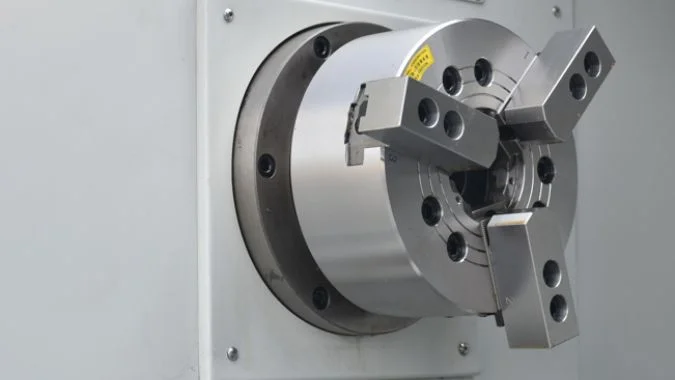
The common misconception that higher RPM inherently guarantees higher productivity often leads to suboptimal CNC programming.1 A detailed technical analysis of how spindle speed interacts with machine torque, material properties, and tool wear is necessary to configure cutting parameters that genuinely maximize both factory output and equipment lifespan.
Why Is High-Torque More Important Than High-RPM for Heavy-Duty Turning?
Attempting aggressive material removal on heavy steel forgings with high spindle speeds can easily stall the machine and ruin expensive raw materials. Heavy-duty roughing operations require prioritizing massive spindle torque over sheer RPM to maintain a continuous, stable cutting force.
High torque pushes the tool through hard metal without stalling. Speed drops as torque rises because machine power stays constant. Heavy cutting needs this raw pushing power to remove thick metal chips safely without causing terrible machine vibration.
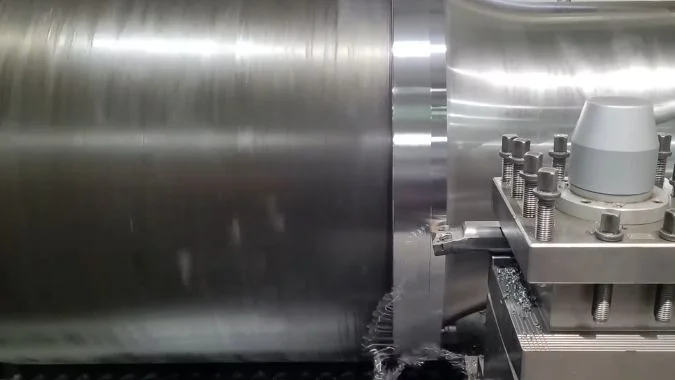
Torque provides the actual cutting force during turning. A tool pushes against the workpiece to remove metal. This action requires massive contact pressure. High torque gives the tool enough power to push through large depths of cut. Fast spindle speed cannot provide this pushing power. You will stall the machine if you use high speed for heavy cuts.
Machine power follows a strict physical rule. Power equals torque multiplied by rotational speed.2 Your lathe has a fixed motor power. You must lower the speed to get high torque.3 You need this high torque to maintain stability during heavy roughing. You cut large steel forgings with low speed and high torque.
Low speed also helps you manage heat and metal chips.4 Heavy cutting makes thick chips and massive heat. Low speed allows the chips to fall away cleanly. It stops the chips from wrapping around the tool. The heat spreads out slowly. The tool stays cool and holds its shape. High torque keeps the cut smooth and safe.
| Cutting Requirement | High Torque Benefit | High Speed Result |
|---|---|---|
| Heavy Roughing | Pushes tool safely | Stalls the spindle |
| Heat Control | Keeps metal cool | Burns the tool |
| Chip Removal | Drops chips cleanly | Wraps chips on tool |
| Cut Stability | Stops vibration | Breaks the insert |
How Should You Determine the Optimal Spindle Speed for Different Workpiece Materials?
Applying the same cutting parameters to soft aluminum and hardened steel will immediately destroy cutting inserts through excessive heat generation. Spindle speed calculations must strictly account for the specific metallurgy and hardness of the workpiece to optimize the cutting environment.
Determine spindle speed by checking the workpiece hardness and the tool material. Soft metals like aluminum require high speeds. Hardened steel needs low speeds. Carbide tools run faster than high-speed steel tools. You must always calculate speed based on the part diameter.
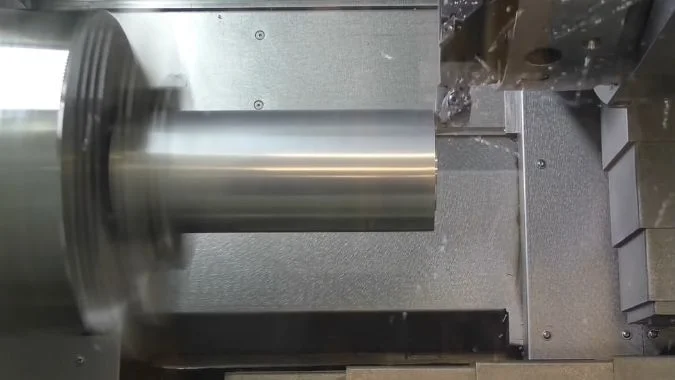
Workpiece material acts as the most important factor for spindle speed.5 You face high cutting resistance when you cut hard steel. High speed generates too much heat and breaks the tool. You must use low speeds for hard materials. Soft materials like copper and aluminum cut easily. You can use high speeds to stop soft metal from sticking to the tool.6
Your cutting tool material also limits your maximum speed. High-speed steel tools melt at high temperatures.7 You must run them between ten and thirty meters per minute. Carbide tools resist heat much better. You run carbide tools between thirty and one hundred meters per minute. Ceramic tools can spin even faster.
You must also look at your machining stage. Roughing removes metal fast. You use a moderate speed to protect the tool. Finishing makes the final surface smooth. You use a different speed to ensure perfect dimensions. You must always do the math. You use the workpiece diameter to find the true rotational speed.8 A large part needs a very slow rotation to match the correct cutting speed.
| Material Type | Material Hardness | Spindle Speed Choice |
|---|---|---|
| Aluminum | Very Soft | High Speed |
| Mild Steel | Medium | Moderate Speed |
| Hardened Steel | Very Hard | Low Speed |
| Superalloys | Extremely Hard | Very Low Speed |
Does Increasing Spindle Speed Lead to Faster Tool Wear and Increased Consumable Costs?
Excessive spindle speeds drastically accelerate thermochemical wear, melting cutting edges and driving up daily consumable costs. Protecting a facility’s profit margins requires identifying the precise speed threshold where material removal rates do not outpace tool degradation.
Faster spindle speed often causes faster tool wear. High speed creates extreme heat. This heat softens the cutting edge and destroys the tool. But correct high speeds with good coolant and proper tool materials can maintain tool life. You must balance speed to control costs.
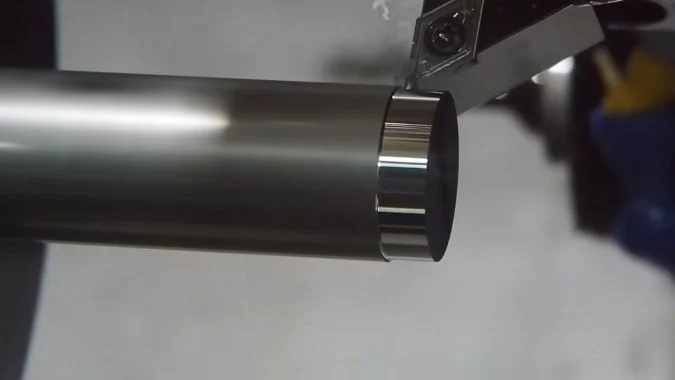
High speed often creates massive heat during metal cutting. This heat causes thermochemical wear.9 The tool material softens and loses its shape. Abrasive wear also increases at high speeds. The tool rubs against the metal too fast. This shortens the life of your expensive cutting inserts. You change tools more often. Your consumable costs go up.
But high speed does not always guarantee tool damage. Tool wear comes from many different factors combined together. You must look at the cutting force. High speed does not always mean high cutting force. You can take light cuts at high speeds safely. You must also use good coolant. Coolant washes the heat away.
Your tool material choice changes everything. High-performance ceramic tools actually prefer high speeds. Cheap tools die instantly at those same speeds. You pay hidden costs when you wear tools out too fast. You stop the machine constantly to change inserts. You use more electricity. You create more bad parts. You must control your speed to protect your bank account.
| Wear Factor | Effect at High Speed | How to Control It |
|---|---|---|
| Cutting Heat | Softens the tool | Use strong coolant flow |
| Abrasive Friction | Grinds the tool edge | Use harder tool materials |
| Mechanical Shock | Chips the tool | Take lighter cuts |
| Consumable Cost | Forces frequent changes | Find the balance point |
How to Balance Spindle Speed and Feed Rate for Maximum Machining Efficiency?
Blindly increasing both spindle speed and feed rate simultaneously often triggers severe machine chatter and workpiece deflection. Achieving true machining efficiency requires precisely balancing these two parameters to control cutting forces and ensure final dimensional accuracy.
Balance speed and feed by checking the workpiece material and your cutting goals. Use low speed and high feed for heavy roughing. Use high speed and low feed for final finishing. Proper combinations lower cutting forces and keep the tool safe.
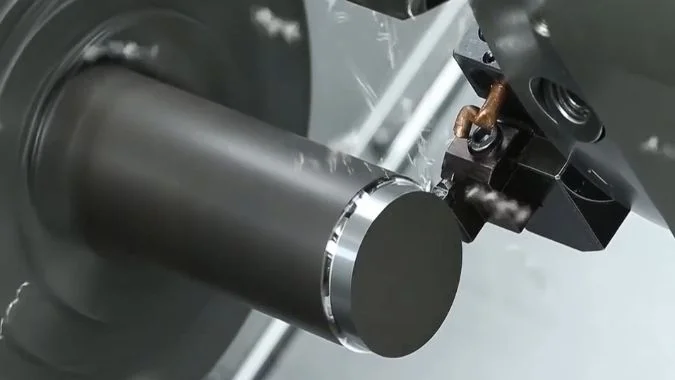
Spindle speed and feed rate work together. You cannot change one without thinking about the other. Feed rate controls how fast the tool moves across the part. Speed controls how fast the part spins. You use them together to manage cutting forces. Reasonable settings lower the cutting temperature. This keeps your tool sharp for a long time.
You adjust these settings based on your current job. You perform roughing to remove heavy metal. You set a deep cut and a high feed rate. You must lower the spindle speed. The low speed gives you the torque needed for the deep cut. You protect the machine from stalling.
You perform finishing to make the part look perfect. You set a very light cut and a slow feed rate. You increase the spindle speed. The high speed cuts the metal cleanly. It leaves a shiny surface. You must always listen to the machine. A loud machine means bad settings. You change the speed and feed until the cutting sounds smooth. This balance saves your money and finishes parts faster.
| Machining Stage | Spindle Speed | Feed Rate | Depth of Cut |
|---|---|---|---|
| Heavy Roughing | Low | High | Deep |
| Semi-Finishing | Medium | Medium | Medium |
| Final Finishing | High | Low | Very Light |
| Threading | Matched to pitch | Fixed | Light |
Conclusion
Faster spindle speeds only work for light finishing and soft metals. You must use low speeds and high torque for heavy cutting to protect tools and save money.
-
"Study of Effects of Machining Parameters on Tool Life – Academia.edu", https://www.academia.edu/38778291/Study_of_Effects_of_Machining_Parameters_on_Tool_Life. A manufacturing-engineering source on optimizing cutting parameters would support that productivity in CNC turning depends on coordinated speed, feed, depth of cut, tool life, and machine limits rather than spindle speed alone. Evidence role: expert_consensus; source type: education. Supports: Higher RPM alone does not guarantee higher productivity in CNC turning and can lead to poor parameter selection.. Scope note: The source would contextualize the claim; it may not specifically measure how often programmers make this misconception. ↩
-
"Torque – Wikipedia", https://en.wikipedia.org/wiki/Torque. A physics or engineering mechanics reference would support the rotational-power relation P = τω, showing that mechanical power is the product of torque and angular velocity. Evidence role: definition; source type: education. Supports: Mechanical rotational power equals torque multiplied by angular speed.. ↩
-
"Understanding DC Motor Characteristics – This is lancet.mit.edu.", http://lancet.mit.edu/motors/motors3.html. A machine-tool spindle or motor-characteristics reference would support that, within a fixed-power region, available torque is inversely related to rotational speed. Evidence role: mechanism; source type: education. Supports: For a fixed-power spindle, reducing speed increases available torque.. Scope note: This applies most directly in constant-power operating ranges; motor drives can also have constant-torque regions at lower speeds. ↩
-
"[PDF] Chip formation, cutting forces, and tool wear in turning of Zr-based …", http://wumrc.engin.umich.edu/wp-content/uploads/sites/51/2013/08/04_MTM_BMG_turning_mechanics.pdf. A machining reference on chip formation and cutting temperature would support that cutting speed affects heat generation and chip behavior during turning. Evidence role: mechanism; source type: education. Supports: Lower cutting speed can help manage heat and chip behavior in heavy turning.. Scope note: Chip evacuation is also strongly influenced by tool geometry, chipbreaker design, feed, depth of cut, coolant, and material ductility. ↩
-
"[PDF] ME-215 Engineering Materials and Processes", https://mie.njit.edu/sites/mie/files/me215-20-fall2017.pdf. A machining handbook or university manufacturing text would support that cutting-speed selection is strongly governed by workpiece material properties, including hardness, strength, and machinability. Evidence role: expert_consensus; source type: education. Supports: Workpiece material is a primary factor in selecting spindle speed for turning.. Scope note: Other factors such as tool material, tool geometry, setup rigidity, coolant, and surface-finish requirements also materially affect speed selection. ↩
-
"(PDF) An investigation of cutting speed effects on geometric …", https://www.academia.edu/120696698/An_investigation_of_cutting_speed_effects_on_geometric_tolerances_in_turning_of_AA_7075_aluminum_alloy. A machining reference on built-up edge and machinability would support that ductile materials such as aluminum can form built-up edge and that appropriate higher cutting speeds can reduce adhesion under some conditions. Evidence role: mechanism; source type: education. Supports: Higher cutting speeds can help reduce sticking or built-up edge when machining some soft ductile metals.. Scope note: Built-up edge control also depends on tool coating, rake angle, lubrication, alloy composition, and feed rate. ↩
-
"[PDF] high-temperature tempering of high-speed steels", https://journal.uctm.edu/node/j2017-4/2_17-03_Barchukov_p621-625.pdf. A materials or machining reference comparing tool materials would support that high-speed steel loses hardness at elevated temperatures and therefore has lower allowable cutting speeds than cemented carbide or ceramics. Evidence role: mechanism; source type: education. Supports: High-speed steel tools are limited at high cutting temperatures because they lose hardness and cutting ability.. Scope note: The word “melt” may overstate the mechanism; performance loss often occurs through softening, tempering, or loss of hot hardness before actual melting. ↩
-
"[PDF] Turning Equations", https://www.montana.edu/jdavis/met314/documents/homework/Turning%20Examples.pdf. A manufacturing-process reference on turning calculations would support that spindle RPM is calculated from cutting speed and workpiece diameter, commonly using N = V/(πD) with consistent units. Evidence role: definition; source type: education. Supports: Workpiece diameter is required to convert desired cutting speed into spindle RPM.. Scope note: The formula gives nominal RPM; actual settings may be adjusted for machine limits, workholding, balance, and process stability. ↩
-
"The Research of Tool Wear Mechanism for High-Speed Milling …", https://pmc.ncbi.nlm.nih.gov/articles/PMC7956700/. A tribology or machining research source would support that elevated cutting temperatures promote diffusion, oxidation, and other thermochemical wear mechanisms in cutting tools. Evidence role: mechanism; source type: paper. Supports: Heat generated at high cutting speeds can contribute to thermochemical wear of cutting tools.. Scope note: Thermochemical wear is one category of tool wear; flank wear, crater wear, abrasion, adhesion, and chipping may dominate depending on the tool-workpiece pair and cutting conditions. ↩

Chris Lu
Leveraging over a decade of hands-on experience in the machine tool industry, particularly with CNC machines, I'm here to help. Whether you have questions sparked by this post, need guidance on selecting the right equipment (CNC or conventional), are exploring custom machine solutions, or are ready to discuss a purchase, don't hesitate to CONTACT Me. Let's find the perfect machine tool for your needs.