

Is Larger Tool Magazine Capacity Always Better for CNC Machining Center?
Specifying the tool magazine capacity on a new CNC machining center is a critical capital investment decision. Defaulting to the largest available option can introduce unnecessary mechanical complexity and inflate your initial expenditure. You must carefully calculate required tool slots to balance manufacturing flexibility with long-term machine reliability.
A larger tool magazine option on your CNC machining center is not always better. A massive magazine increases machine cost and mechanical failures. You should configure a small magazine for simple parts and choose a large chain magazine only for complex aerospace parts to balance efficiency.
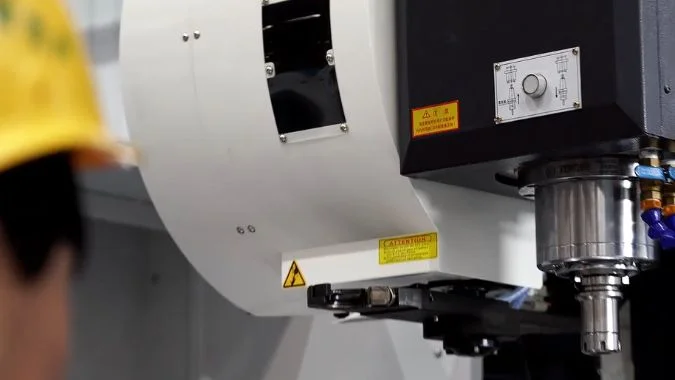
Determining the optimal tool magazine capacity requires a strategic evaluation of your specific production mix, maintenance bandwidth, and facility layout. The following technical breakdown will help your team objectively evaluate different magazine configurations and match them to your actual machining requirements.
How Tool Magazine Capacity Improves Machining Efficiency?
Maximizing spindle uptime relies heavily on efficient, automated tool management. A precisely specified tool magazine eliminates the need for operator intervention during complex cycles1, enabling continuous, unattended production and ensuring your actual cycle times consistently meet your quoted estimates.
Tool magazine capacity improves your machining center efficiency by eliminating manual tool changes. A large magazine holds all required tools at once. The CNC changes tools automatically. This creates continuous unmanned production and allows one-stop machining without moving the part.
Reducing Non-Cutting Time
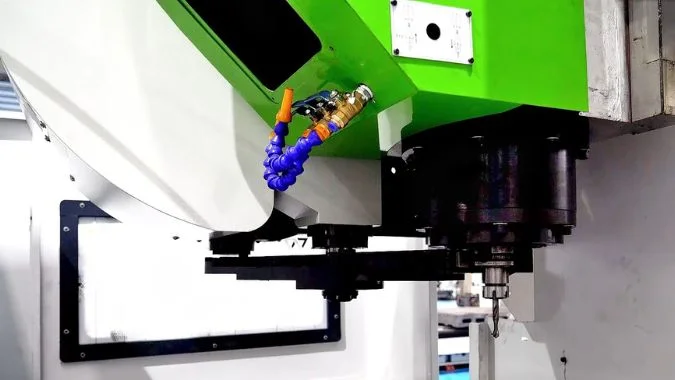
Manual tool changes kill factory efficiency. A CNC machining center with a small basic magazine forces the operator to stop frequently. They must swap roughing mills and drills by hand. This stops production completely. A right-sized magazine option holds all the tools at once. The machining center runs all night without human help. This creates continuous unmanned production. You make parts faster and reduce human errors.
Expanding Process Coverage
A larger capacity option gives you one-stop machining. You can machine complex molds or aerospace housings in a single setup on one machine. You do not need to move the part. You load ball-end mills, form cutters, and micro-drills together. This prevents positioning errors from moving the part.2 Your dimensional accuracy improves greatly when you finish the whole part in one place.
Synergy With Tool Change Speed
Capacity alone does not guarantee high output. You must also look at the machine’s tool change speed. A one-second tool change speed compresses the waiting time perfectly. A massive magazine with a slow tool arm creates a new bottleneck.3 You need fast tool changes to make a large magazine option profitable.
| Efficiency Factor | Small Magazine Impact | Large Magazine Impact |
|---|---|---|
| Machine Uptime | Low due to manual swaps | High due to automatic swaps |
| Process Setup | Needs multiple machines | One-stop machining |
| Part Accuracy | Lower due to part moving | Higher due to single setup |
| Ideal Speed Need | Standard tool change fine | Needs high-speed tool arm |
Why Should Your Part Complexity Determine Your Tool Capacity?
Capital equipment configurations should strictly mirror your facility’s production portfolio. Specifying a high-capacity chain magazine for low-operation, simple components results in stranded asset value. You must match the magazine size to the actual geometric complexity and setup variability of the target workpieces.
Part complexity dictates your tool capacity choice because complex parts need many different operations in one setup. Simple parts only need a few tools. Matching the magazine option to the part complexity prevents wasted money on unused CNC machine features.
Simple Parts Need Small Magazines
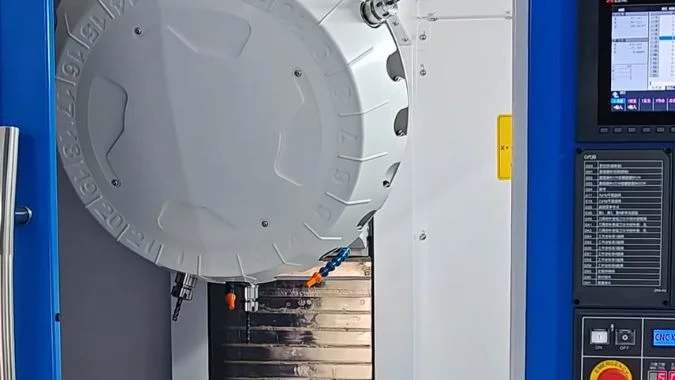
Simple brackets and cover plates need very few tools. When you configure your CNC machining center, a simple disc-type magazine with twelve to sixteen tools works perfectly4. A massive magazine option wastes money here. You leave dozens of tool slots empty. You pay for mechanical capacity you never use. A small magazine keeps your initial equipment cost low.
Batch Production Sweet Spot
Medium-complexity housings need more tools. A twenty-four to forty tool magazine fits this work perfectly.5 This size offers high cost-performance for your machining center. It balances good tool change speed with enough capacity for different hole sizes. You can run batch production easily. You keep the machine running without paying for extreme aerospace-level tool chains.
Complex Automated Scenarios
Aerospace parts and mold cavities require extreme setups. You might need sixty to one hundred tools. You select these massive magazine options for flexible manufacturing cells. You can store tools for five different jobs at once. You switch programs instantly without loading new tools. This drops your changeover time to zero.
| Part Complexity | Recommended Magazine Size | Best Machine Application |
|---|---|---|
| Simple brackets | 12 to 16 tools | Standalone milling machines |
| Medium housings | 24 to 40 tools | Standard batch production |
| Aerospace molds | 60 to 120 tools | Flexible manufacturing cells |
| High-mix low-volume | 40+ tools | Quick changeover jobs |
What Are the Hidden Costs of Investing in an Oversized Tool Magazine?
When evaluating high-capacity magazines, you should calculate the Total Cost of Ownership (TCO) beyond the initial invoice.6 Oversized systems demand a larger factory footprint, introduce longer tool-search times that can fractionally extend cycle times, and require more sophisticated tool-life management software to track offset data effectively.
An oversized tool magazine creates hidden costs through higher initial CNC machine purchase prices and complex tool management software. A massive magazine requires more floor space and slows down tool change paths. You also spend more money fixing complex mechanical parts.
Increased Mechanical Failure Rates
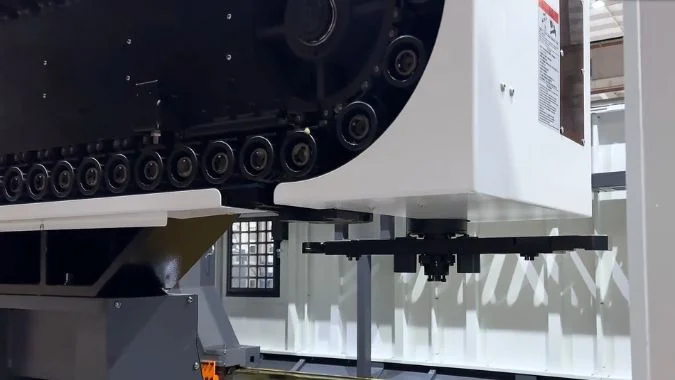
A huge tool magazine adds massive mechanical complexity to your CNC machining center. More moving parts mean more things break.7 A small umbrella magazine runs simply. A massive chain magazine uses hundreds of links and sensors. When you select too much capacity, you buy unnecessary machine breakdowns. You pay repair technicians more often.
Longer Tool Change Paths
A sixty-tool magazine takes up a lot of physical space on the machine frame. The tool chain must rotate a long way to find the right tool.8 This longer path slows down the tool change process. You waste seconds on every single tool change. This lowers your total efficiency on simple parts. A small magazine rotates instantly.
Heavy Tool Management Burden
Large magazines make tool management very difficult. You must track tool life for sixty different cutters in the CNC system.9 You must update tool offsets constantly. In small batch production, this over-configuration wastes the operator’s time. They spend more time managing the computer than cutting metal. You need expensive software to track everything.
| Hidden Cost Type | Problem Description | Impact on Factory |
|---|---|---|
| Mechanical breaks | More parts fail over time | High machine repair bills |
| Speed loss | Long chains take time to spin | Cycle times increase |
| Tool tracking | Hard to track many offsets | Operator wastes setup time |
| Floor space | Big magazines need room | Less space for other machines |
What Are the Maintenance Challenges Associated With High-Capacity Chain Magazines?
High-capacity chain magazines inherently introduce a higher volume of mechanical and electrical variables into the machine’s architecture. To maintain target Overall Equipment Effectiveness (OEE) metrics, maintenance departments must factor in the rigorous preventive upkeep required for chain tensioning, hydraulic seals, and proximity sensor calibration.
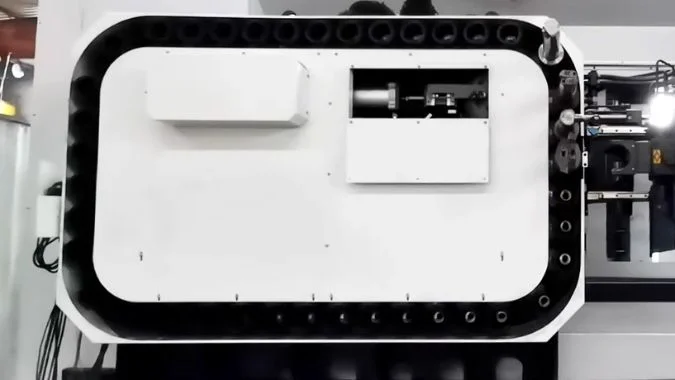
High-capacity chain magazines on CNC machining centers suffer from chain elongation, loose guide rails, and sensor signal drift. The heavy chain stretches over time. Hydraulic seals leak and pneumatic pressure drops. You must perform strict daily maintenance to prevent tool jams.
Mechanical Wear and Tear
The heavy chain acts as the main carrier on your machining center. Over time, the chain stretches. A loose chain causes tool jams. The guide rails dry out without grease. You must clean the rails and add specialized grease regularly. A loose origin bolt ruins the tool numbering completely. The machine grabs the wrong tool and crashes the spindle.
Fluid and Air Leaks
Large magazines use hydraulic oil and air pressure. Dirty oil wears out the pump. Low system pressure stops the tool arm from moving. Rubber seals crack over time. Broken seals leak oil into your clean coolant. You must replace seals to stop leaks. You must tighten all air pipe connections to stop vibration leaks.
Electrical Signal Errors
Proximity sensors detect the tool position. A dirty sensor sends bad signals to the CNC control. The machine grabs the wrong tool. Bad macro programs cause the tool arm to crash into the spindle. You must clean sensors and check system codes often. A bad encoder creates positioning deviations during fast tool changes.
Daily Operational Mistakes
Operators cause many failures. They load tools that weigh too much. Heavy tools break the gripper fingers. They use cheap copy parts instead of original factory parts. You must perform strict daily checks to stop these simple mistakes. You must check chain tension every month.
| System Area | Common Failure Mode | Required Maintenance |
|---|---|---|
| Mechanical | Chain stretches and sags | Check tension monthly |
| Hydraulic | Low pressure from dirty oil | Change oil twice a year |
| Electrical | Dirty proximity sensors | Clean sensor gaps quarterly |
| Operator Use | Loading overweight tools | Enforce strict tool limits |
Conclusion
Match your CNC machining center’s tool magazine capacity to your part complexity. Avoid oversized options to reduce maintenance and hidden costs. Choose the right size to maximize factory profits.
-
"Control Device for Tool Magazine Drives of Vertical Machining …", https://ui.adsabs.harvard.edu/abs/2020hora.conf…38M/abstract. A manufacturing-engineering source describing automatic tool changers can support that CNC machines use magazines and programmed tool changes to reduce manual intervention during multi-operation machining cycles. Evidence role: mechanism; source type: education. Supports: Tool magazine capacity and automatic tool changing can reduce operator intervention during complex machining cycles.. Scope note: This supports reduced intervention during tool changes, not fully unattended production under all operating conditions. ↩
-
"[PDF] Effect of Casting Form Variability on Machining Fixturing Error", https://dr.lib.iastate.edu/bitstreams/a950e874-9e58-42a1-b4db-214b16ae011d/download. A source on machining setup error or datum relocation can support that removing and re-fixturing a workpiece can introduce positioning variation, making single-setup machining advantageous for dimensional consistency. Evidence role: mechanism; source type: paper. Supports: Machining a part in one setup can reduce positioning errors associated with moving or re-fixturing the workpiece.. Scope note: The source would support the principle of re-fixturing error; the magnitude of accuracy improvement depends on fixturing, probing, and process control. ↩
-
"Cycle Time Reduction for CNC Machining Workcells in High-Mix …", https://dspace.mit.edu/handle/1721.1/157243. A production-engineering source on CNC cycle-time analysis can support that non-cutting time, including tool-change time and tool-search time, can become a throughput constraint when it is large relative to cutting time. Evidence role: mechanism; source type: paper. Supports: Large tool capacity does not guarantee output gains if tool-change or tool-search time becomes a bottleneck.. Scope note: This is contextual support; whether a specific magazine becomes a bottleneck depends on the part program and frequency of tool changes. ↩
-
"Tool Magazine in CNC Machining Centers – Drake Machinery", https://www.drake-machinery.com/tool-magazine/. A machine-tool handbook or educational source listing common machining-center magazine capacities can contextualize 12- to 16-tool disc or drum magazines as typical lower-capacity configurations for simpler work. Evidence role: general_support; source type: education. Supports: Simple parts often can be handled with relatively small 12- to 16-tool magazine configurations.. Scope note: The wording ‘works perfectly’ is application-specific; a source can only substantiate that this range is common for low-tool-count machining, not universally optimal. ↩
-
"Fadal Maintenance Manual Section 05: Automatic Tool Changers", https://www.academia.edu/24308254/Fadal_Maintenance_Manual_Section_05_Automatic_Tool_Changers. A neutral manufacturing source describing standard vertical machining-center magazine capacities can support that 24- to 40-tool magazines are common mid-range configurations for multi-operation batch machining. Evidence role: general_support; source type: education. Supports: Medium-complexity batch work is often matched with mid-range tool magazines of roughly 24 to 40 tools.. Scope note: The source would contextualize the range as common practice, not prove it is optimal for every medium-complexity housing. ↩
-
"[PDF] LIFE-CYCLE COSTING MANUAL – NIST Technical Series Publications", https://nvlpubs.nist.gov/nistpubs/Legacy/hb/nisthandbook135-1995.pdf. A source on manufacturing equipment life-cycle costing can support that capital equipment evaluation commonly includes acquisition, operation, maintenance, downtime, and facility-related costs rather than purchase price alone. Evidence role: expert_consensus; source type: government. Supports: High-capacity CNC magazine decisions should be evaluated using total cost of ownership rather than purchase price alone.. Scope note: The source would support the TCO framework generally, not a CNC-tool-magazine-specific cost model unless the source is specialized. ↩
-
"[PDF] A Partial Safety Factor Method for System Reliability Prediction with …", https://scholarworks.indianapolis.iu.edu/bitstreams/ecca9e3b-aabb-4d2f-a00f-156f8a2cdf94/download. A reliability-engineering source can support that increasing the number of components and interfaces in a mechanical system generally increases potential failure points and affects system reliability. Evidence role: mechanism; source type: education. Supports: Higher mechanical complexity can increase the number of potential failure points in a CNC tool magazine.. Scope note: This is a general reliability principle; actual failure rates depend on component quality, duty cycle, maintenance, and design redundancy. ↩
-
"Working Principle and Applications of Automatic Tool Changer", https://cncwmt.com/qa/working-principle-and-applications-of-automatic-tool-changer-systems/. A technical source on chain-type automatic tool changers can support that tool selection may require indexing or rotating the magazine to bring the selected pocket to the exchange position, contributing to non-cutting time. Evidence role: mechanism; source type: education. Supports: Large chain magazines may add tool-search or indexing travel before a tool change.. Scope note: The amount of added time varies by magazine architecture, shortest-path indexing, preselection, and controller logic. ↩
-
"(PDF) Tool Life Management for CNC Machine – Academia.edu", https://www.academia.edu/96600983/Tool_Life_Management_for_CNC_Machine. A source on CNC tool management can support that tool-life data, offsets, and replacement status are tracked in CNC controls or tool-management systems, and that larger tool populations increase data-management requirements. Evidence role: mechanism; source type: research. Supports: Large tool magazines increase the amount of tool-life and offset information that must be managed.. Scope note: The source may describe the management functions generally; the administrative burden depends on software automation and shop procedures. ↩

Chris Lu
Leveraging over a decade of hands-on experience in the machine tool industry, particularly with CNC machines, I'm here to help. Whether you have questions sparked by this post, need guidance on selecting the right equipment (CNC or conventional), are exploring custom machine solutions, or are ready to discuss a purchase, don't hesitate to CONTACT Me. Let's find the perfect machine tool for your needs.