

What Are the Advantages of a Five-Axis Machining Center Compared to a Four-Axis One?
Complex parts create clamping errors, tool interference, poor finish, and long cycle time. A wrong machine choice can turn one job into many risky steps.
A five-axis machining center adds one more rotary axis than a four-axis machine. This allows five-axis simultaneous movement, single-setup multi-face machining, better tool angle control, shorter tools, better surface finish, and higher efficiency on complex surfaces and high-precision parts.
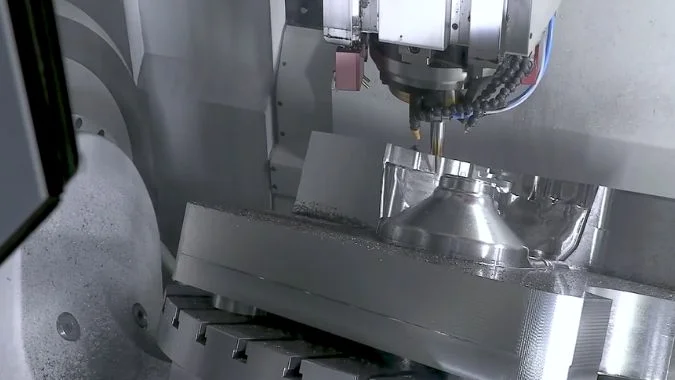
A five-axis machining center is not only a four-axis machine with one more motion. The added rotary freedom changes how the tool reaches the workpiece. A four-axis machine normally rotates around one axis. It is strong for indexing, side holes, simple multi-face milling, and regular rotary parts. A five-axis machine has two rotary axes. It can adjust the tool direction during cutting. This makes it suitable for free-form surfaces, deep cavities, impellers1, turbine parts2, medical implants3, mold cavities, and aerospace structural parts. The main value is not only faster cutting. The main value is fewer setups, lower datum conversion error, better surface continuity, stronger interference avoidance, and a shorter process chain. The best choice depends on part geometry, tolerance, batch size, budget, and operator skill.
Why Does 5-Axis Machining Allow for Shorter Cutting Tools Compared to 4-Axis Machining?
Long tools reduce rigidity, increase vibration, and create tool deflection4. In deep cavities, this can quickly damage accuracy and surface finish.
Five-axis machining allows shorter cutting tools because two rotary axes can tilt the tool away from interference. Four-axis machining often needs long tool overhang to avoid holders, fixtures, or workpiece walls because it has only one rotary axis.
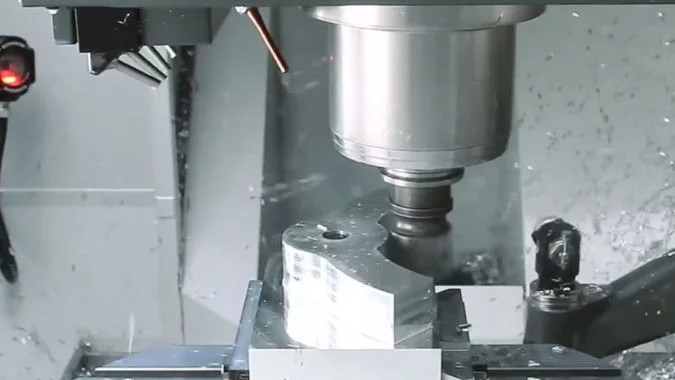
The key difference is tool attitude freedom. A four-axis machine can rotate the workpiece or table around one axis. This helps with indexing and simple side machining. It does not always solve collision problems in deep cavities, steep walls, or undercut areas. When the tool holder may hit the workpiece, the usual solution is a longer tool. This creates a long overhang. A long overhang lowers rigidity. It also increases vibration and tool bending.
A five-axis machine uses two rotary axes to adjust the tool axis. The tool can tilt while the cutting point stays on the required surface. The holder can move away from walls, ribs, and fixtures. This means a shorter tool can reach the same feature. This is often described as trading spatial attitude for tool length. Four-axis machining often trades tool length for space.
| Item | Four-axis machining | Five-axis machining |
|---|---|---|
| Rotary freedom | One rotary axis | Two rotary axes |
| Collision avoidance method | Long tool overhang and retracting | Tool tilting and rotating |
| Tool rigidity | Lower when long tools are needed | Higher because shorter tools can be used |
| Deep cavity machining | More risk of holder interference | Better access to steep and hidden areas |
| Cutting stability | More vibration risk | Lower vibration risk |
| Tool life | Shorter under poor rigidity | Longer under stable cutting |
Short tools create several direct gains. The tool becomes stiffer. Tool deflection becomes smaller. Chatter becomes easier to control. A stronger cutting system can use higher feed rates and deeper cuts. The material removal rate can increase. Surface marks can decrease because the cutting edge does not vibrate as much. The risk of tool breakage also falls.
This advantage is important in molds, impellers, blades, and medical parts. These parts often include narrow spaces and complex surfaces. A four-axis machine may need several setups and long tools to reach all areas. A five-axis machining center can tilt the tool into a safer angle. The cutting point stays efficient, and the tool body avoids interference. This improves both machining quality and process safety.
How Does the Surface Finish Quality of 5-Axis Machining Compare to 4-Axis Machining?
Poor tool angle causes cutter marks, stair steps, and vibration. These defects raise polishing cost and reduce the value of precision machining.
Five-axis machining usually gives better surface finish on complex surfaces because it can keep the tool at an optimal cutting angle. It reduces zero-speed cutting at the ball-end mill tip, lowers vibration, improves texture continuity, and can reach Ra 0.8 μm or better in suitable conditions.
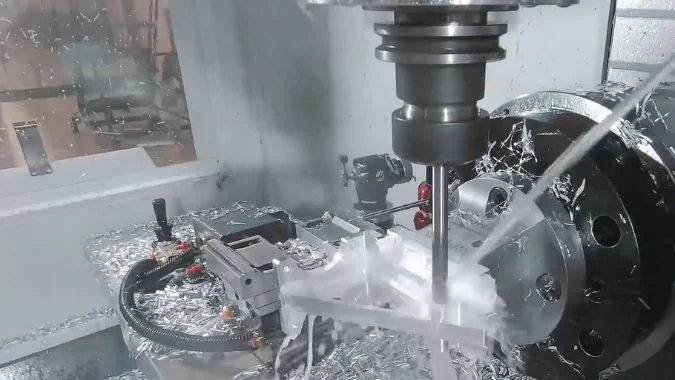
Surface finish depends on tool angle, tool rigidity, path continuity, machine accuracy, and cutting parameters. Five-axis machining has a clear advantage when the part has free-form surfaces, complex cavities, blades, or irregular angles. The machine can change the tool direction in real time. This keeps the cutting edge in a better contact condition. A ball-end mill can avoid cutting mainly with its center point. The center of a ball-end mill has very low cutting speed. This can create rubbing, rough texture, and poor finish. Five-axis tilting moves the cutting contact away from this weak point.
Four-axis machining has less freedom. The tool angle is more limited. On complex surfaces, the part may need segmented tool paths or multiple setups. These steps can leave cutter marks, step lines, or discontinuous texture. A four-axis machine can still make good surfaces on flat parts, hole patterns, simple rotary surfaces, and regular side features. The finish gap becomes much larger when the surface is not simple.
| Surface quality factor | Four-axis machining | Five-axis machining |
|---|---|---|
| Tool angle control | Limited by one rotary axis | Tool axis can be optimized |
| Ball-end mill tip problem | More likely on complex surfaces | Reduced by tool tilting |
| Typical complex-surface roughness | Often around Ra 1.6 μm | Often Ra 0.8 μm or better |
| Texture continuity | May need split-face machining | More continuous tool path possible |
| Vibration control | Long tools may be needed | Shorter tools improve rigidity |
| Manual polishing demand | Often higher on complex parts | Often lower after machining |
Five-axis machining also improves texture continuity. A smooth tool path can flow across a surface without repeated datum changes. This reduces marks from repositioning. It also reduces small mismatches between machined areas. In mold cavities, this can reduce later polishing work. In aerospace blades, this helps airflow quality. In medical implants, this supports better surface consistency.
The result still depends on the machine and process. A low-quality five-axis machine without strong RTCP5 control may not produce better parts. RTCP means the control system keeps the tool center point correct while rotary axes move. Calibration, thermal stability, servo response, tool balance, and CAM strategy also matter. A high-precision four-axis machine can outperform a poor five-axis machine on simple parts. For complex surfaces, a well-calibrated five-axis machining center usually gives a better and more stable surface.
What Is the Cycle Time and Production Efficiency Difference Between 4-Axis and 5-Axis Machining?
Cycle time is not only cutting time. Setup, positioning, tool changes, inspection, polishing, and rework can decide the real production cost.
Four-axis machining improves efficiency on regular multi-face parts through indexing in one setup. Five-axis machining improves total cycle time on complex parts by reducing setups, avoiding layered cutting, using shorter tools, lowering polishing demand, and completing more features in one continuous process.
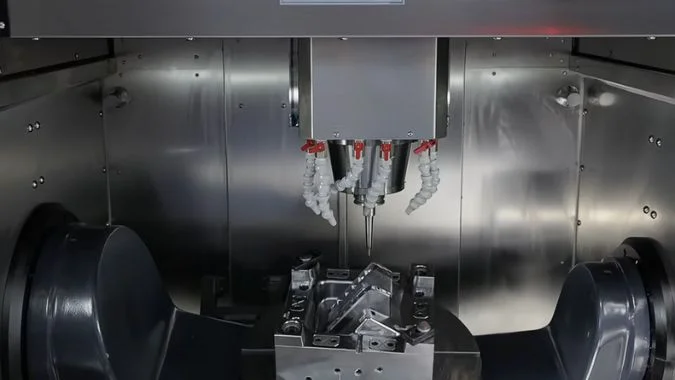
Four-axis and five-axis machines save time in different ways. A four-axis machining center mainly reduces auxiliary time for regular parts. It can rotate the workpiece to machine several sides without full reclamping. This is useful for flanges, housings, camshafts, simple rotary parts, and parts with side holes. The programming is usually simpler. The setup is also easier. For high-volume standard parts, four-axis machining can be very efficient and cost-effective.
Five-axis machining reduces the whole process chain for complex parts. It can finish multiple faces, curves, slopes, and undercuts in one setup. It can also reduce tool changes because short rigid tools can reach more areas. It can reduce air cutting because the tool can approach the part at better angles. It can reduce manual polishing because the surface is more continuous. For complex parts, the total cycle can often be 30% to 50% shorter6 than a four-axis route, especially when repeated clamping and polishing are removed.
| Efficiency factor | Four-axis machining | Five-axis machining |
|---|---|---|
| Best efficiency area | Regular multi-face and rotary parts | Complex surfaces and difficult angles |
| Setup time | Low for simple indexed parts | Low for complex parts after one setup |
| Programming time | Usually shorter | Usually longer |
| First-piece debugging | Easier | More complex |
| Cutting access | Limited on undercuts and deep cavities | Better due to tool tilting |
| Tool changes | More likely when access is limited | Often fewer on complex parts |
| Manual polishing | May be higher for free-form surfaces | Often lower |
| Total cycle on complex parts | Can become long | Often much shorter |
Hidden time is important. Four-axis machining may look faster during one operation. It can still lose time when a part needs several setups, custom fixtures, angle corrections, and extra inspection. Each repositioning step adds non-cutting time. It also adds the risk of cumulative error7. If rework or polishing is needed, the total cycle grows again.
Five-axis machining has higher preparation cost. CAM programming is more complex. Collision checking is stricter. The first part may take more time to prove out. Skilled operators and programmers are required. This means five-axis machining may not be efficient for a simple bracket or plate. The benefit appears when complex geometry would otherwise need many operations. In small-batch high-value parts, the single-setup advantage is often more important than the longer programming time. In stable batch production, the first-piece programming cost is spread across many parts, and the efficiency gain becomes even stronger.
Is 5-Axis Machining Center Always Better Than 4-Axis Machining Center?
Advanced equipment does not always mean better results. A poor match between machine and part can raise cost and slow production.
A five-axis machining center is not always better than a four-axis machining center. Five-axis is better for complex, high-precision, multi-angle parts. Four-axis is more economical for simple multi-face parts, disk parts, shaft parts, regular holes, and mass production with stable geometry.
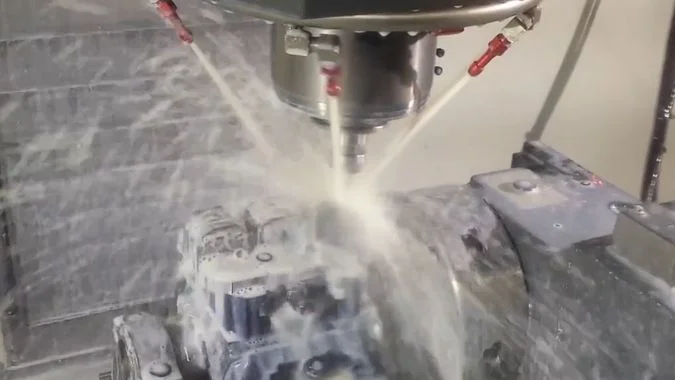
There is no absolute winner between four-axis and five-axis machining. The correct choice depends on the part. A five-axis machine has stronger geometric capability. It can machine complex surfaces, deep cavities, undercuts, turbine blades, impellers, precision mold cavities, and medical implants. It can also complete multi-face machining in one setup. This reduces datum conversion errors and improves coaxiality8, positional accuracy, and surface continuity.
A four-axis machine has clear advantages in cost and simplicity. The structure is simpler. The machine price is lower. Maintenance is easier. Programming is easier. Operators can be trained faster. For disk parts, shaft parts, housings, flanges, simple side holes, and repeated indexed features, four-axis machining can offer excellent cost-performance. The purchase and maintenance cost of a four-axis solution may be only about 30% to 50% of a comparable five-axis solution9, depending on machine size and specification.
| Selection dimension | Four-axis machining center | Five-axis machining center |
|---|---|---|
| Best part type | Regular multi-face, shaft, disk, flange, housing | Free-form surface, blade, impeller, mold, implant |
| Machine cost | Lower | Higher |
| Maintenance cost | Lower | Higher |
| Programming difficulty | Lower | Higher |
| Operator skill demand | Medium | High |
| Setup error control | Good for indexed parts | Better for complex multi-face parts |
| Surface capability | Good on simple geometry | Strong on complex geometry |
| Risk of overinvestment | Low | High if parts are simple |
Five-axis machining can even be slower for simple work. The rotary head or table may add air movement. Programming may take longer. Collision checks may take more time. A high-end machine may also create high depreciation cost for each part. If a simple part can be finished on a three-axis or four-axis machine with stable quality, a five-axis machine may not reduce total cost.
Machine quality also matters. Some low-end “five-axis” machines cannot perform true simultaneous five-axis machining well. Some may lack strong RTCP control, accurate calibration, or stable rotary-axis accuracy. In those cases, a high-precision four-axis machine may produce better results for regular parts. Five-axis should be selected when the part needs its core strengths. These strengths are simultaneous tool attitude control, single-setup complex machining, interference avoidance, and high surface continuity. Four-axis should be selected when the part is regular, the tolerance is moderate, and cost per part is the main target.
Conclusion
Five-axis machining brings stronger capability for complex precision parts. Four-axis machining remains the better value for regular parts, simple features, and cost-sensitive production.
-
"5 Axis Machining – Blade/Impeller", https://camworks.com/blog/5-axis-machining-blade-impeller/. Five-axis machining is the standard method for manufacturing centrifugal and axial impellers with complex blade geometries, enabling continuous tool paths across twisted surfaces and tight inter-blade channels. Evidence role: case_reference; source type: research. Supports: the use of five-axis machining for impeller production. ↩
-
"CAM – 5-axis Milling – Turbine Blade – Open Mind Technologies", https://www.openmind-tech.com/en-us/cam/5-axis-milling/turbine-blade/. Five-axis machining is extensively used in aerospace and power generation for turbine blades and vanes, where complex twisted geometries and tight tolerances require simultaneous multi-axis control. Evidence role: case_reference; source type: research. Supports: the use of five-axis machining for turbine component manufacturing. ↩
-
"How 5-Axis CNC Machining Is Redefining Medical Industry?", https://www.phillipscorp.com/india/innovative-applications-of-5-axis-machining-in-medical-device-manufacturing/. Five-axis machining is employed for orthopedic and dental implants requiring complex anatomical contours, precise surface finish, and biocompatible material processing, particularly for titanium and cobalt-chrome alloys. Evidence role: case_reference; source type: research. Supports: the application of five-axis machining in medical implant production. ↩
-
"Machining – Wikipedia", https://en.wikipedia.org/wiki/Machining. Tool deflection increases with the cube of the overhang length according to beam deflection theory, directly affecting machining accuracy and surface finish. Evidence role: mechanism; source type: encyclopedia. Supports: the mechanical relationship between tool overhang length and deflection in machining. Scope note: This describes the general mechanical principle rather than specific machining outcomes ↩
-
"Rotation tool center point (RTCP)", https://infosys.beckhoff.com/content/1033/tccncprogramming/15557242507.html. RTCP is a control function that maintains the programmed tool center point position constant while rotary axes move, compensating for geometric offsets introduced by axis rotation. Evidence role: definition; source type: encyclopedia. Supports: the definition and function of RTCP (Rotation Tool Center Point) in CNC machining. ↩
-
"Cycle Time Reduction Secrets Revealed: Optimizing Non-Cut Time", https://www.makino.com/en-us/resources/content-library/articles/cycle-time-reduction-secrets-revealed. Studies on aerospace and mold manufacturing report total cycle time reductions of 25–60% when switching from three- or four-axis to five-axis machining for complex geometries, primarily through setup elimination and improved tool access. Evidence role: statistic; source type: research. Supports: cycle time reduction achieved by five-axis machining compared to conventional methods. Scope note: Actual savings vary significantly based on part complexity, batch size, and process optimization ↩
-
"User Guide – NOAA/NOS’s VDatum", https://vdatum.noaa.gov/docs/userguide.html. Each workpiece repositioning introduces potential alignment errors that can accumulate through the manufacturing process, affecting final part accuracy and requiring tighter tolerance control at each step. Evidence role: general_support; source type: education. Supports: how multiple setups introduce cumulative positioning errors in machining. Scope note: The magnitude of error depends on fixturing quality, machine accuracy, and measurement methods ↩
-
"Steps and Methods for Measuring Coaxiality of CNC Machine Tools", https://www.taikanmachine.com/steps-and-methods-for-measuring-coaxiality-of-cnc-machine-tools.html. Machining multiple features in a single setup maintains a common datum reference frame, reducing alignment errors and improving geometric relationships such as coaxiality, perpendicularity, and positional accuracy. Evidence role: general_support; source type: education. Supports: how single-setup machining improves geometric tolerances like coaxiality. ↩
-
"3-Axis vs 4-Axis vs 5-Axis CNC Machines: Key Differences", https://www.campro-usa.com/post/3-axis-vs-4-axis-vs-5-axis-cnc-machines-what-the-difference-means-in-practice. Industry surveys indicate four-axis machining centers typically cost 40–60% of equivalent five-axis machines, with additional differences in maintenance, programming, and operator training expenses. Evidence role: statistic; source type: other. Supports: relative cost differences between four-axis and five-axis machining centers. Scope note: Actual cost ratios vary widely based on machine size, brand, configuration, and regional market factors ↩

Chris Lu
Leveraging over a decade of hands-on experience in the machine tool industry, particularly with CNC machines, I'm here to help. Whether you have questions sparked by this post, need guidance on selecting the right equipment (CNC or conventional), are exploring custom machine solutions, or are ready to discuss a purchase, don't hesitate to CONTACT Me. Let's find the perfect machine tool for your needs.