

What Happens If a Tool Is Loaded Incorrectly on a Tapping Center?
A small loading error can become a serious machining fault. Poor clamping, wrong length, or dirty contact surfaces may damage parts, tools, and the spindle.
If a tool is loaded incorrectly on a tapping center, it can cause size errors, overcutting, surface scratches, chatter marks, rapid tool wear, tool breakage, tool changer failure, and even machine collision. Correct cleaning, clamping, locking, and tool length setting are needed before machining.
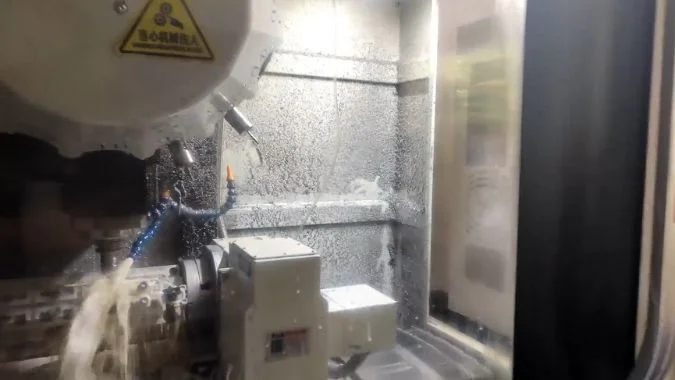
Incorrect tool loading is not a small shop-floor detail. It directly affects machining accuracy, surface finish, cutting stability, tool life, and machine safety. A tapping center often runs at high spindle speed and fast tool change speed1. Because of this, a small amount of dirt on the tool holder taper, a wrong collet size, or an incorrect tool offset can create a large problem during production. The workpiece may show hole size deviation, contour error, abnormal tool marks, or rough surface texture. The tool may wear too fast, chip at the edge, or break completely. In more serious cases, the tool holder may not lock well, the tool changer arm may jam, or the spindle may collide with the fixture or workpiece2. These problems reduce yield and may damage the spindle, tool magazine, gripper system, and fixture. A stable tapping center process starts before the cycle begins, and correct tool loading is one of the most important steps.
What Should You Prepare Before Tool Loading on a Tapping Center?
Tool loading starts before the tool enters the spindle. If cleaning and inspection are skipped, dust, oil, and chips can become hidden sources of runout.
Before tool loading on a tapping center, the spindle taper, tool holder taper, flange face, collet, nut, and cutting tool should be cleaned and inspected. Any dust, oil film, chip, rust, or burr may cause runout, weak clamping, poor accuracy, and abnormal tool wear.
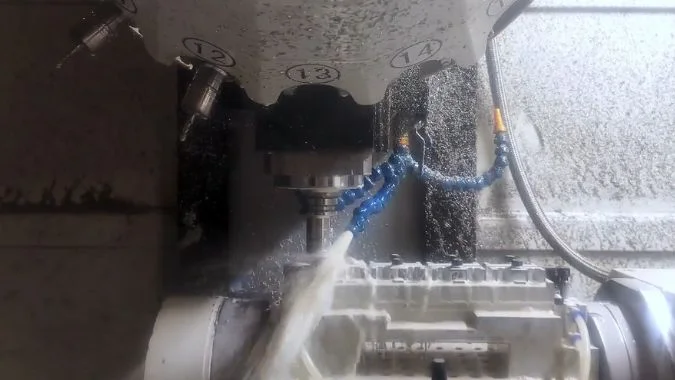
Cleaning is the first accuracy control point
The core rule before tool installation is simple: where there is dust, there is error. A tapping center depends on close contact between the spindle taper and the tool holder taper. Even a tiny chip can keep the holder from seating correctly. This creates radial runout.3 Runout then becomes uneven cutting force. Uneven cutting force leads to chatter marks, hole oversize, poor thread quality, and faster tool wear.4
The spindle taper should be wiped with a clean white cloth or non-woven fabric. A suitable cleaning agent can be used in a small amount. The cloth should remove oil, fine chips, and dirt from the taper surface. Compressed air should not be used as the main cleaning method. Air may blow chips into spindle gripper gaps instead of removing them.5 It can also spread oil mist and fine dust across the work area.
| Preparation item | What should be checked | Risk if ignored |
|---|---|---|
| Spindle taper | Oil, chips, rust, burrs | Poor seating and radial runout |
| Tool holder taper | Dirt, dents, wear marks | Tool eccentricity and vibration |
| Flange face | Chips and impact marks | Poor tool changer positioning |
| Collet | Cracks, wrong size, dirt | Weak clamping and tool slip |
| Tool shank | Oil film, wear, chips | Pull-out and unstable cutting |
| Pull stud | Tightness and damage | Tool locking failure |
Cleaning should not become careless washing. Large amounts of cutting fluid should not be poured into the spindle taper. Liquid left on the taper can cause rust if it is not dried quickly. Rust then damages the taper surface and reduces long-term spindle accuracy. Proper cleaning means wiping, inspecting, drying, and confirming. This step looks simple, but it often decides whether the tapping center can keep stable accuracy during fast production.
What Is the Standard Procedure for Tool Loading on a Tapping Center?
A tapping center needs a stable and repeatable loading process. Random tool clamping often causes unstable tool length, weak holding force, and poor machining results.
The standard tool loading procedure on a tapping center includes selecting the correct collet, inserting the tool into the holder, controlling tool extension, pre-tightening the assembly, placing the holder into the spindle, pressing clamp, and confirming that the tool holder is fully locked.
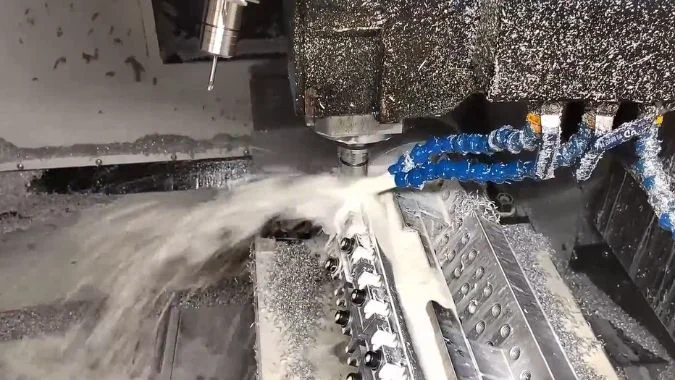
Step-by-step tool loading process
The first step is selecting the correct collet. The collet size must match the tool shank diameter. A 10 mm milling cutter needs a 10 mm collet. A smaller tool should not be forced into a larger collet.6 For example, placing a 6 mm tool into an 8 mm collet gives poor clamping contact. The tool may slip, vibrate, or break. The collet may also lose accuracy after being misused.
The next step is inserting the collet into the nut and tool holder correctly. In many ER collet systems7, the collet should snap into the nut before the nut is screwed onto the holder. Then the tool is inserted into the collet. The clamping length should be as long as possible within the process limits. Longer clamping contact improves rigidity. At the same time, enough flute length must remain outside the holder for cutting and chip evacuation. As a common rule, the tool extension length should not exceed four times the tool shank diameter8 when the process allows it.
The holder should be tightened with a professional tool locking fixture. The holder should not be clamped directly in a bench vise or placed on a common platform for tightening. That can damage the positioning surface and destroy tool holder accuracy.
For manual loading, the tool holder should be supported while the unclamp and clamp button is operated. After the clamp command, the spindle grippers should lock the pull stud securely. A clear locking sound may be heard on many machines. A gentle downward pull can confirm that the holder is locked and has no looseness. For BT taper systems9, the keyway must engage correctly with the spindle drive dogs. If the holder is installed eccentrically or not seated fully, the tool changer may malfunction, and machining accuracy will suffer immediately.
What Needs to Be Done After the Tools Are Loaded?
Tool loading is not finished when the holder is clamped. The control system must know the true tool length and tool position before cutting starts.
After tools are loaded on a tapping center, tool length compensation should be measured and entered, tool offsets should be checked, runout should be inspected when needed, and a safe dry run or single-block check should be performed before production machining.
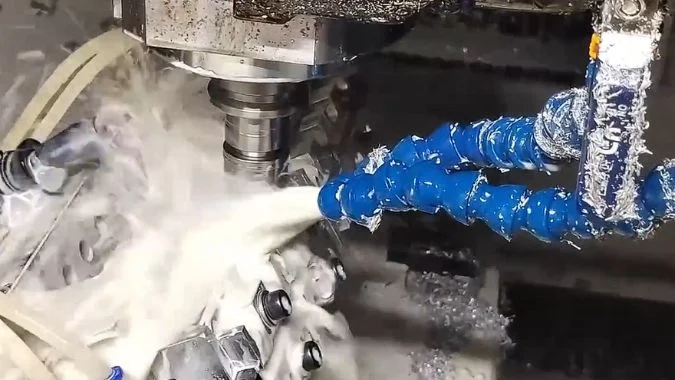
Tool setting and offset confirmation
| After-loading task | Why it matters | Possible issue if skipped |
|---|---|---|
| Tool length measurement | Sets correct Z-axis position | Overcutting or shallow cutting |
| Offset number check | Links tool to program correctly | Wrong tool compensation |
| Tool runout check | Confirms concentric rotation | Poor hole accuracy and chatter |
| Tool extension check | Confirms rigidity and clearance | Vibration or fixture interference |
| Dry run or single block | Confirms safe motion path | Collision risk |
| First-piece inspection | Confirms actual machining result | Batch scrap risk |
What Are the Common Pitfalls or Errors During the Tool Loading Process?
Most tool loading errors look small at first. During high-speed cutting, they can become broken tools, bad surfaces, tool changer faults, or machine crashes.
Common tool loading errors include poor cleaning, wrong collet selection, excessive tool extension, weak tightening, damaged holder surfaces, incorrect heat-shrink operation, missed tool length setting, wrong offset entry, and failure to confirm spindle locking before machining.
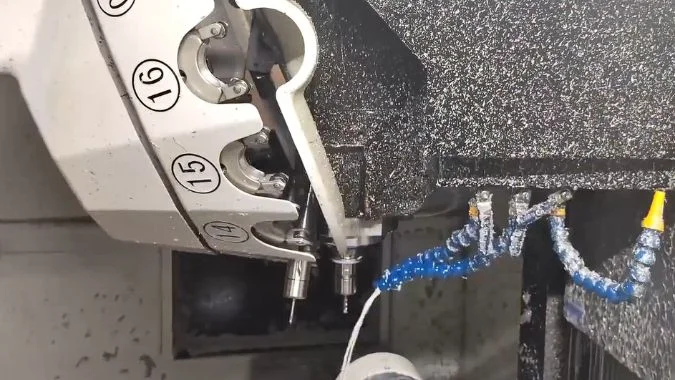
Common mistakes and production results
One common mistake is poor cleaning. Chips, oil, or dust on the spindle taper or holder taper create runout. Runout causes micro-vibration during high-speed rotation. The workpiece surface may show ripples, scratches, or chatter marks. Hole size may become unstable. Tool wear also becomes uneven.
Another mistake is excessive cleaning with the wrong method. Some operators rinse the spindle taper with large amounts of cutting fluid. The taper may look clean, but residual liquid may remain. If the taper is not dried well, rust can appear. Rust damages precision contact surfaces and may create long-term spindle accuracy problems.
Wrong collet selection is also common. A tool must match the collet size. A mismatched collet gives poor contact and weak clamping. The tool may slip during drilling or milling. Tool slip changes cutting depth and can break the tool. It may also overcut the workpiece and cause scrap.
Excessive tool extension is another frequent cause of vibration. A long tool overhang reduces rigidity. During high-speed feed, the tool bends more easily. Chatter then appears, especially during side milling or deep hole operations10. The surface becomes rough, and the cutting edge may chip.
Heat-shrink holders need special care. Heating time and temperature must follow the holder specification.11 Overheating can deform the inner hole. After cooling, the clamping force may become weak. Insufficient heating can stop the tool from reaching the correct depth. In both cases, the tool may not be held safely. During high-speed machining, this can cause tool pull-out or sudden breakage.
Tool changer problems can also start from poor loading. If the tool holder flange is dirty, damaged, or not seated correctly, the robotic arm may not grip or exchange the tool smoothly. The machine may alarm, jam, or stop in the middle of production. In severe cases, the tool changer arm, magazine pocket, or spindle gripper may be damaged. For this reason, tool loading should always include holder condition checks, locking confirmation, offset confirmation, and safe test movement before cutting.
Conclusion
Incorrect tool loading on a tapping center can cause scrap parts, broken tools, tool changer faults, spindle damage, and collision. Clean contact, correct clamping, and accurate offsets prevent most failures.
-
"Speeds and feeds – Wikipedia", https://en.wikipedia.org/wiki/Speeds_and_feeds. Tapping centers typically operate at spindle speeds ranging from 5,000 to 20,000 RPM with tool change times under 2-3 seconds, though specific values vary by machine class and manufacturer. Evidence role: general_support; source type: education. Supports: typical operational speed ranges for tapping centers. Scope note: Specific speed ranges depend on machine model and application ↩
-
"9 – Tool Changer – Troubleshooting Guides – Haas Automation Inc.", https://www.haascnc.com/service/online-manuals/mill-tool-changer—service-manual/tool-changer-troubleshooting-guides.html. Machine tool maintenance literature documents that improper tool loading—including contaminated interfaces, incorrect seating, and wrong tool length offsets—contributes to automatic tool changer malfunctions and collision incidents through positioning errors and mechanical interference. Evidence role: case_reference; source type: education. Supports: common failure modes related to improper tool loading. Scope note: Multiple factors beyond tool loading can cause these failures ↩
-
"5 Practical Ways to Reduce Tool Holder Runout and Extend Tool Life", https://www.butlerbros.com/post/5-practical-ways-to-reduce-tool-holder-runout-and-extend-tool-life. Research on spindle-tool holder interfaces demonstrates that particulate contamination as small as 10-20 micrometers on taper surfaces can produce measurable radial runout exceeding 5 micrometers, affecting machining precision. Evidence role: mechanism; source type: research. Supports: the relationship between taper contamination and radial runout. Scope note: Runout magnitude depends on contamination location, particle size, and taper geometry ↩
-
"Generic Cutting Force Modeling with Comprehensively Considering …", https://pmc.ncbi.nlm.nih.gov/articles/PMC9697499/. Studies on cutting dynamics show that radial runout creates periodic variation in cutting forces and chip thickness, contributing to surface finish degradation, dimensional errors, vibration, and accelerated tool wear through uneven load distribution. Evidence role: mechanism; source type: paper. Supports: the relationship between tool runout and machining defects. Scope note: Defect severity depends on runout magnitude, cutting parameters, and workpiece material ↩
-
"[PDF] Using compressed air for cleaning – Oregon OSHA", https://osha.oregon.gov/OSHAPubs/factsheets/fs77.pdf. Machine tool maintenance guidelines recommend wiping methods over compressed air for spindle taper cleaning, as high-pressure air can force contaminants into internal mechanisms and spread particles rather than removing them effectively. Evidence role: general_support; source type: education. Supports: proper spindle cleaning methods and compressed air limitations. Scope note: Specific cleaning protocols vary by spindle design and manufacturer recommendations ↩
-
"Collet – Wikipedia", https://en.wikipedia.org/wiki/Collet. Collet systems are designed for specific size ranges with minimal clearance (typically 0.01-0.05mm), and using mismatched sizes reduces contact area and clamping force, compromising concentricity and grip strength during machining operations. Evidence role: expert_consensus; source type: education. Supports: proper collet-to-tool size matching practices. Scope note: Some collet types have limited size ranges, while others accommodate narrow tolerance bands ↩
-
"Collet – Wikipedia", https://en.wikipedia.org/wiki/Collet. ER collets are a standardized spring collet system widely used in CNC machining, featuring a conical design with longitudinal slots that provide clamping force when compressed by a threaded nut, available in sizes from ER8 to ER50. Evidence role: definition; source type: encyclopedia. Supports: the definition and characteristics of ER collet systems. ↩
-
"[PDF] Helical – MACHINING GUIDEBOOK", https://web.mae.ufl.edu/designlab/Advanced%20Manufacturing/Helical_Machining_Guidebook.pdf. Machining handbooks commonly recommend limiting tool overhang to 3-4 times the shank diameter to maintain adequate rigidity and minimize deflection, though specific ratios vary with material, operation type, and required precision. Evidence role: expert_consensus; source type: education. Supports: recommended tool extension ratios for machining stability. Scope note: Optimal ratios depend on cutting forces, material properties, and required tolerances ↩
-
"Machine taper – Wikipedia", https://en.wikipedia.org/wiki/Machine_taper. BT (Japanese MAS403) tapers are a steep-taper tool holder standard featuring dual-contact design with both taper and flange face contact, plus drive keys for torque transmission, commonly used in Asian-manufactured machining centers. Evidence role: definition; source type: encyclopedia. Supports: the design and engagement mechanism of BT taper systems. ↩
-
"Drilling Vibration Monitoring and Control System | netl.doe.gov", https://www.netl.doe.gov/node/3788. Machining stability research indicates that operations with lateral cutting forces (side milling) or long tool-workpiece engagement (deep hole operations) are particularly sensitive to tool overhang, as reduced stiffness amplifies regenerative vibration and chatter onset. Evidence role: mechanism; source type: paper. Supports: the relationship between tool extension and chatter in specific operations. Scope note: Chatter susceptibility also depends on cutting parameters, material properties, and machine dynamics ↩
-
"[PDF] 00450 SHRINKSTATION OPERATIONS MANUAL – Techniks", https://www.techniksusa.com/downloads/00450_ShrinkStation_Manual.pdf. Heat-shrink tool holders use controlled thermal expansion (typically heating to 300-400°C) to expand the bore for tool insertion, then provide interference-fit clamping upon cooling, with precise temperature and time control necessary to achieve specified clamping force without material degradation. Evidence role: mechanism; source type: education. Supports: the operating principles and requirements of heat-shrink tool holders. Scope note: Specific parameters vary by holder material, size, and manufacturer specifications ↩

Chris Lu
Leveraging over a decade of hands-on experience in the machine tool industry, particularly with CNC machines, I'm here to help. Whether you have questions sparked by this post, need guidance on selecting the right equipment (CNC or conventional), are exploring custom machine solutions, or are ready to discuss a purchase, don't hesitate to CONTACT Me. Let's find the perfect machine tool for your needs.