

Can a Tapping Center Mill a Steel Workpiece?
Forcing a lightweight machine to cut tough metals causes expensive breakdowns. Milling steel on tapping machines remains a temporary workaround rather than a recommended daily practice.
A tapping center can mill steel workpieces occasionally using light cuts and small tools, but it is not suitable for regular steel processing. The weak BT30 spindle and light machine frame lack the rigidity needed for continuous heavy steel milling.
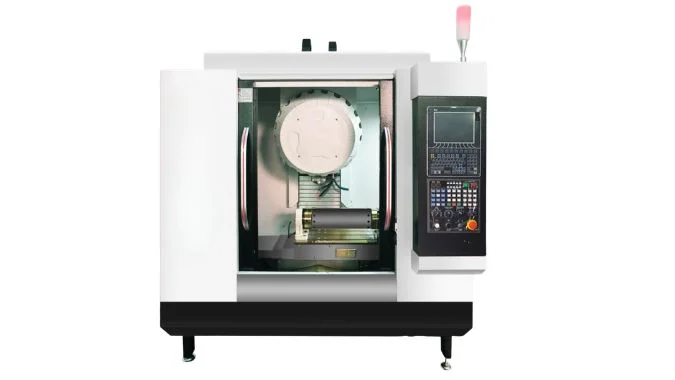
Machine shops often try pushing light equipment beyond its original design limits. Understanding the exact mechanical boundaries prevents destroying delicate spindles on tough materials. Implementing strict process limits keeps the equipment safe during temporary steel jobs.
Can a BT30 Spindle Handle the Torque Required for Steel Milling?
Low spindle power causes sudden tool stalling inside hard materials. A broken tool stuck in a solid metal block ruins the whole job quickly.
A standard BT30 spindle lacks the heavy torque required for continuous steel milling. The low-power motor handles soft metals perfectly but stalls easily during steel cuts. Thread milling must replace rigid tapping for any internal holes larger than M6.
Spindle Power and Heat Challenges
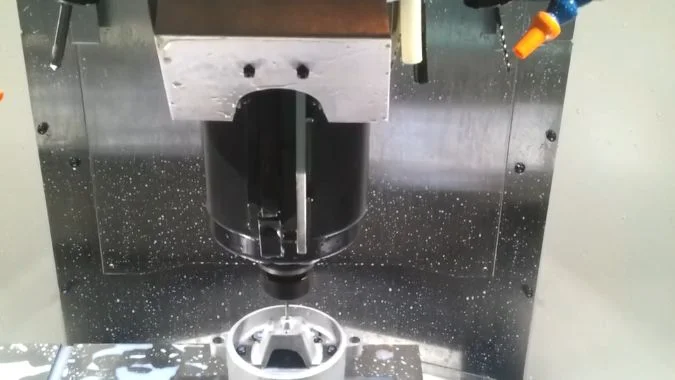
Tapping centers feature lightweight spindles designed for extreme speed rather than raw power. These motors usually provide around 5.5 kilowatts of power1. High rotational speeds reach 24,000 revolutions per minute easily2. Fast rotation works perfectly for soft aluminum or copper parts. Steel requires a massive twisting force called torque to shear the solid material. The standard BT30 design simply lacks this heavy torque capability. Continuous steel milling generates extreme heat inside the spindle bearings. Tapping center spindles heat up several times faster than heavy vertical machining centers. Long continuous cuts destroy the delicate bearing grease very quickly.
Thread Processing Solutions
Cutting internal threads into steel demands huge torque. A standard rigid tap larger than M6 often stalls the weak spindle completely. Past shop failures showed me that stalling ruins both the cutting tool and the expensive workpiece. Switching to a thread milling tool solves this power problem. Thread mills carve the thread slowly using circular motions instead of forcing a tap straight down into the hard metal.
| Machining Factor | Aluminum Performance | Steel Machining Limit |
|---|---|---|
| Spindle Torque | Plentiful | Extremely weak |
| Bearing Heat | Stable | Rises dangerously fast |
| Rigid Tapping | Works well | Fails above M6 size |
What Types of Steel Are Safe to Mill on a CNC Tapping Center?
Cutting hardened tool steel on light machines causes massive vibrations. Violent shaking destroys linear guide rails quickly and guarantees terrible part quality.
Only general steel parts with a hardness below HRC30 are relatively safe to mill on tapping centers. Mild carbon steel and thin-walled parts work best. Machining hardened mold cavities or high-alloy metals will permanently damage the machine frame.
Safe Material Selection
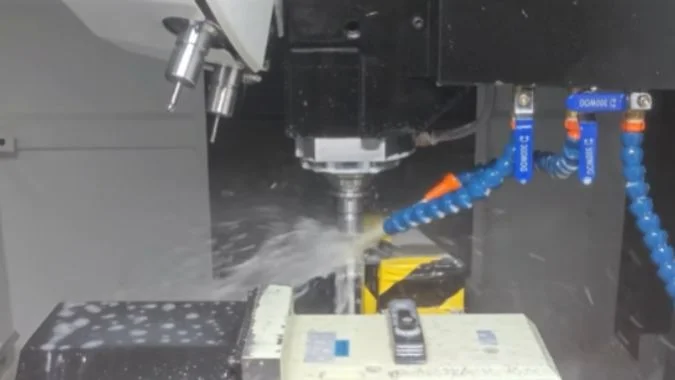
Choosing the right metal dictates whether the machine survives the job for my clients. Soft carbon steels like 1018 or standard A3 cut somewhat smoothly. These mild metals generate lower cutting resistance against the tool edge. Light machines handle this mild resistance without violent shaking. Small hardware parts made of unhardened steel fit the equipment limitations reasonably well. Thin-walled steel boxes also process acceptably because they only need very light surface cuts.
Dangerous Steel Types
Hardened steels destroy light machine tools rapidly. Mold cavities often reach a hardness above HRC503. Cutting these hard metals requires massive structural rigidity. Tapping centers use thin linear guide rails instead of heavy cast-iron box ways. Linear rails cannot absorb the violent shocks from hard metal cutting4. Heavy shocks transfer straight into the machine bed and cause permanent alignment damage. Trying to cut hard alloys simply guarantees expensive repair bills. Soft steel remains the only acceptable option for this lightweight equipment.
| Steel Material Type | Hardness Level | Machining Recommendation |
|---|---|---|
| Mild Carbon Steel | Below HRC20 | Acceptable |
| Structural Steel | HRC20 to HRC30 | Requires light cuts |
| Hard Tool Steel | HRC40+ | Will cause damage |
| Hardened Mold Steel | HRC50+ | Strictly forbidden |
How to Compensate for Limited Rigidity through Process Optimization in Tapping Centers?
Weak machine rigidity creates terrible surface chatter marks on steel parts. Changing the specific milling strategy completely becomes necessary to prevent nasty vibration problems.
Process optimization requires using small-diameter end mills and dynamic milling paths to compensate for limited machine rigidity. Keeping the cutting depth under two millimeters at higher feed rates prevents heavy structural vibrations and protects the weak spindle.
Tool Selection Strategies
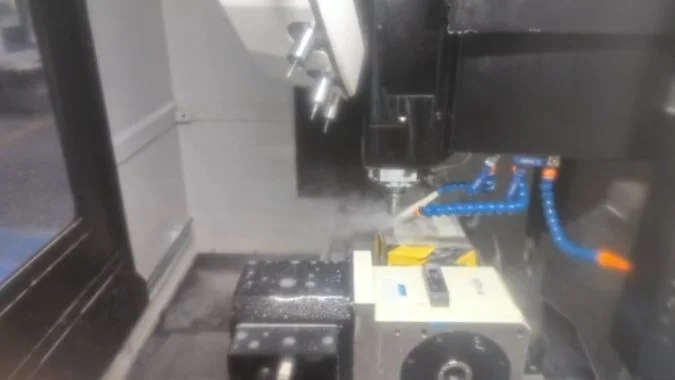
Large cutting tools create massive pushing forces against the weak spindle. A large face mill requires huge horsepower to turn inside solid steel blocks. Replacing large cutters with small-diameter end mills solved the resistance problem for my machinists. Tools under twenty millimeters cut freely without straining the machine frame. High-helix angle tools slice the metal gently instead of smashing into it5. Heavy depth cuts bend the tool and shake the entire machine structure.
Depth and Speed Rules
Setting a very shallow cut depth keeps the process relatively stable. A maximum depth of two millimeters prevents deep chatter marks. Precise jobs require a tiny 0.2-millimeter cut depth. Spindle speeds must drop significantly for steel applications. Running between 3,000 and 6,000 revolutions per minute prevents the tool edges from burning6. Modern dynamic milling software creates smooth circular tool paths7. Constant light loads protect the weak machine structure completely from sudden overload conditions.
| Milling Parameter | Standard Setup | Optimized Steel Setup |
|---|---|---|
| Tool Diameter | 50mm face mill | Under 20mm end mill |
| Cut Depth | 5.0mm | 0.2mm to 2.0mm |
| Spindle Speed | 12,000 RPM | 3,000 to 6,000 RPM |
When Can Tapping Centers Be Used for Milling Steel Workpieces?
Choosing the wrong machine for a job wastes valuable production time. Forcing a light machine to do heavy work causes extremely expensive mechanical breakdowns.
Tapping centers should only mill steel during occasional small-batch runs of light parts. Factories focusing on regular steel processing must invest in heavier vertical machining centers. Tapping centers serve merely as a short-term compromise for occasional steel milling needs.
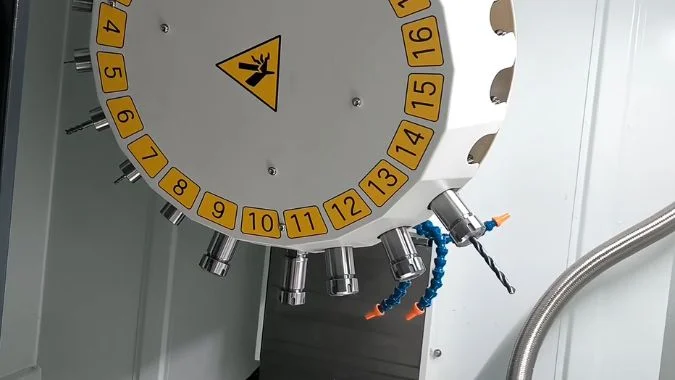
Acceptable Production Scenarios
Certain specific jobs match the machine limitations acceptably in my daily experience. Parts needing dozens of drilled holes run fast on a tapping center because of rapid tool changes. Adding a very light milling pass cleans the part surface easily. Production runs of less than two hundred pieces make sense as a temporary workaround. Occasional steel jobs require some basic machine upgrades to survive the process. Adding oil mist sprayers helps lubricate the tool during tough jobs8.
Situations to Avoid
Continuous heavy milling ruins lightweight machines very fast. Large blocks of steel need proper heavy vertical machining centers. Buying a second-hand box-way machine handles heavy cuts much better than forcing a new tapping center to cut steel9. Mold making requires massive metal removal rates. A light machine simply takes too many passes to finish a large mold cavity. These machines remain specialized tools for non-ferrous metals, completely unsuited for heavy steel manufacturing.
| Job Requirement | Tapping Center Result | Heavy Machining Center |
|---|---|---|
| High Drilling Volume | Highly efficient | Too slow |
| Heavy Metal Removal | Machine breakdown | Perfect choice |
| Hard Mold Cavities | Fails completely | Standard practice |
Conclusion
Tapping centers handle light steel milling only through strict process optimization and extreme caution. Using these lightweight machines for regular steel production causes severe damage and remains highly discouraged.
-
"Spindles for CNC Milling Machines – Haas Automation Inc.", https://www.haascnc.com/productivity/spindles.html. Tapping centers commonly feature spindle motors in the 3.7 to 7.5 kW range, with many standard configurations utilizing motors around 5.5 kW for high-speed drilling and tapping operations in non-ferrous materials. Evidence role: statistic; source type: education. Supports: typical power ratings for tapping center spindles. Scope note: Power specifications vary significantly across manufacturers and machine models ↩
-
"How To Calculate Speeds and Feeds (Inch Version)", https://www.youtube.com/watch?v=zzzIpC39WUg. Modern high-speed tapping centers are designed with spindle speeds ranging from 15,000 to 30,000 RPM, optimized for rapid drilling and tapping operations in aluminum and other soft materials rather than heavy cutting. Evidence role: statistic; source type: education. Supports: typical maximum spindle speeds for tapping centers. Scope note: Maximum speeds depend on specific machine design and spindle bearing configurations ↩
-
"Rockwell hardness test", https://en.wikipedia.org/wiki/Rockwell_hardness_test. Hardened tool steels used in injection molds are commonly heat-treated to hardness levels between HRC48 and HRC62, depending on the application requirements for wear resistance and durability. Evidence role: statistic; source type: education. Supports: typical hardness levels of hardened mold steels. Scope note: Actual mold hardness varies based on steel grade, heat treatment, and specific application requirements ↩
-
"Vibration Damping Analysis of Lightweight Structures in Machine …", https://pmc.ncbi.nlm.nih.gov/articles/PMC5503333/. Linear guide rails provide lower damping capacity compared to traditional sliding box ways because they have minimal contact area and lack the oil film damping effect, making them more susceptible to vibration transmission during heavy cutting operations. Evidence role: mechanism; source type: education. Supports: the damping characteristics of linear guide rails compared to traditional box ways. Scope note: Damping performance varies with specific rail designs, preload settings, and installation quality ↩
-
"The Effect of Clearance Angle on Tool Life, Cutting Forces, Surface …", https://pmc.ncbi.nlm.nih.gov/articles/PMC10383058/. Higher helix angles create a more gradual cutting action with reduced instantaneous chip load per tooth, which can lower peak cutting forces and improve surface finish, though they may increase axial thrust forces on the spindle. Evidence role: mechanism; source type: education. Supports: how helix angle affects cutting action and forces. Scope note: The optimal helix angle depends on material properties, cutting conditions, and specific application requirements ↩
-
"[PDF] common milling speeds (rpm) – Olin shop", https://machineshop.olin.edu/files/machine-shop/files/mill_commons_chart_draft4.pdf. Spindle speeds for steel milling are calculated based on cutting speed recommendations (typically 50-150 m/min for steel with carbide tools) and tool diameter, with smaller diameter tools requiring higher RPM to achieve proper surface speeds, though speeds must be reduced to prevent excessive heat generation in low-power applications. Evidence role: general_support; source type: education. Supports: appropriate spindle speed ranges for steel milling with small diameter tools. Scope note: Optimal speeds vary significantly based on tool material, coating, diameter, steel grade, and cooling method ↩
-
"Dynamic Toolpaths to Optimize CNC Machining – DATRON", https://www.datron.com/resources/blog/dynamic-toolpaths-to-optimize-cnc-machining/. Dynamic or adaptive milling strategies employ curved toolpaths with constant tool engagement angles to maintain consistent chip loads and cutting forces, reducing peak loads and vibration compared to conventional linear toolpaths with variable engagement. Evidence role: mechanism; source type: education. Supports: how dynamic milling strategies use curved toolpaths to control cutting forces. Scope note: Implementation and effectiveness depend on specific CAM software capabilities and machining conditions ↩
-
"[PDF] GETTING THE FACTS ON OIL MIST LUBRICATION By Don Ehlert …", https://turbolab.tamu.edu/wp-content/uploads/2018/08/Tutorial-08.pdf. Minimum quantity lubrication through oil mist systems provides boundary lubrication at the tool-chip interface, reducing friction and heat generation while improving tool life and surface finish, particularly beneficial when machining difficult materials with limited machine power. Evidence role: mechanism; source type: education. Supports: the benefits of oil mist lubrication in machining operations. Scope note: Effectiveness varies with oil type, application method, material being machined, and cutting parameters ↩
-
"[PDF] Topic 16 Rolling element linear motion bearings – MIT", https://web.mit.edu/2.70/Lecture%20Materials/Documents/Week%2004/PMD%20Topic%2016%20Rolling%20linear.pdf. Traditional box-way (sliding way) machine tools provide higher static and dynamic stiffness due to larger contact areas and superior damping characteristics compared to linear guide systems, making them better suited for heavy cutting operations that generate high forces and vibration. Evidence role: mechanism; source type: education. Supports: the structural rigidity advantages of box-way machines for heavy cutting. Scope note: Performance differences depend on specific machine designs, maintenance condition, and the quality of implementation of either guideway type ↩

Chris Lu
Leveraging over a decade of hands-on experience in the machine tool industry, particularly with CNC machines, I'm here to help. Whether you have questions sparked by this post, need guidance on selecting the right equipment (CNC or conventional), are exploring custom machine solutions, or are ready to discuss a purchase, don't hesitate to CONTACT Me. Let's find the perfect machine tool for your needs.