

How to Choose the Right Cutting Fluid for a 5-Axis Machining Center?
High speeds, changing tool angles, and long coolant circuits place cutting fluids under severe stress. A poor match can cause corrosion, tool wear, foam, and downtime.
The right cutting fluid must match the workpiece material, cutting load, machine design, tooling, and filtration system. It should provide stable cooling, lubrication, corrosion protection, low foaming, material compatibility, and safe long-term operation at the supplier’s recommended concentration and pH.
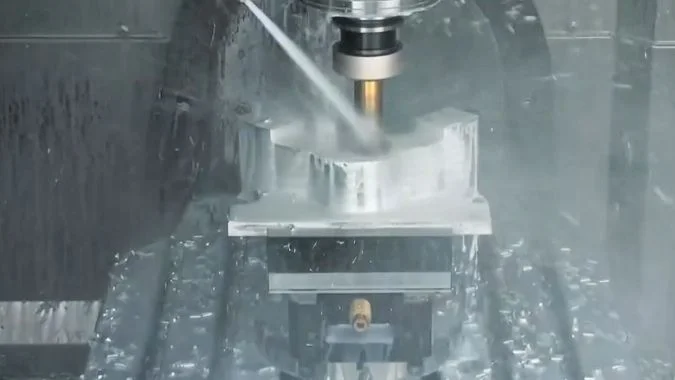
A five-axis machining center creates coolant demands that may not appear in simpler operations. The tool orientation changes, the contact zone moves, and the coolant must reach surfaces from several directions. High spindle speeds can also produce foam and mist1. Internal coolant passages, rotary joints, seals, probes, and sensors add more compatibility requirements.
What Are the Core Performance Requirements for Cutting Fluid in a 5-Axis Machining Center?
Five-axis cutting generates concentrated heat in changing contact zones. Weak cooling or lubrication can cause dimensional drift, built-up edge, rapid wear, and poor surface quality.
Cutting fluid for a five-axis machining center requires effective cooling, pressure-resistant lubrication, strong wetting, corrosion protection, low foaming, good filtration, microbial stability, and compatibility with machine materials. These properties must remain stable during long cycles and high-pressure circulation.
Why Are Cooling and Lubrication Both Important?
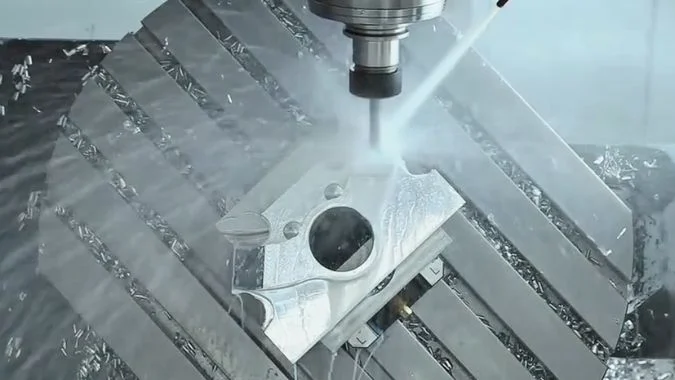
Cooling removes heat from the cutting zone, tool, chips, and workpiece. This function helps control thermal expansion and protects dimensional accuracy during long machining cycles2. Water-miscible fluids usually offer better heat removal than straight cutting oils because water transfers heat efficiently3.
Lubrication reduces friction between the cutting edge, chip, and workpiece. This function becomes important during tapping, heavy milling, deep-hole drilling, and the machining of stainless steel or other difficult materials. Suitable extreme-pressure and anti-wear additives can form a protective film under heavy contact4. The additive system must still remain compatible with the workpiece and machine.
Five-axis motion also creates a delivery problem. The tool angle may change continuously, so a fixed external nozzle may not always reach the contact area. Good wetting and penetration help, but machine delivery remains equally important. Through-spindle coolant, adjustable nozzles, sufficient pressure, and adequate flow can improve access.
| Performance requirement | Function in five-axis machining | Risk from poor performance |
|---|---|---|
| Cooling capacity | Controls heat and dimensional change | Thermal drift and shorter tool life |
| Lubricity | Reduces friction and edge damage | Chipping, wear, and built-up edge |
| Wetting ability | Helps coolant reach the cutting interface | Dry cutting zones and unstable finishes |
| Low foaming | Maintains pump flow and tank capacity | Cavitation and interrupted coolant delivery |
| Corrosion protection | Protects parts, tables, and machine components | Rust, staining, and rejected parts |
| Filtration behavior | Supports chip and fine-particle removal | Scratching, blocked nozzles, and pump wear |
| Biological stability | Limits odor and fluid breakdown | Short sump life and poor working conditions |
How Do Cleanliness and Machine Compatibility Affect Selection?
A five-axis machining center may contain long coolant lines, rotary unions, through-spindle passages, small nozzles, and enclosed areas with limited circulation. Fine chips, sludge, and biological deposits can restrict these passages. The fluid should release trapped air, separate unwanted tramp oil when required, and work with the installed filtration system.
Low-foam performance is especially important in high-speed circulation. Excess foam reduces effective tank volume and can starve the pump5. Soft water, unsuitable surfactants, excessive concentration, air leaks, and high return velocity can all increase foaming.
The selected fluid must also be compatible with seals, hoses, paint, windows, guideway materials, rotary joints, and measuring equipment. A chemically strong product may provide good cutting performance while damaging elastomers or painted surfaces. Machine and fluid suppliers should therefore confirm compatibility before full use.
Operator safety matters as well. A suitable product should have low odor, controlled misting, and clear safety documentation. Modern formulas should comply with local rules for restricted substances and waste disposal. Ventilation, enclosure maintenance, and skin-contact controls remain necessary even when a fluid is marketed as environmentally considerate.
How Should Cutting Fluid Formulas Be Matched to Materials Such as Aluminum or Steel?
A fluid that protects steel may stain aluminum, while a mild aluminum formula may lack the lubrication needed for heavy steel cutting6. Material mismatch can damage both parts and tools.
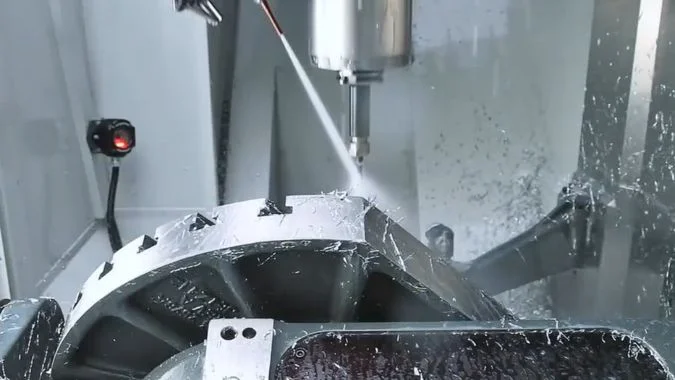
Aluminum generally needs a low-staining, non-active, moderate-alkalinity fluid with strong cooling and built-up-edge control. Steel usually needs stronger lubrication and ferrous-metal rust protection. Stainless steel requires greater anti-wear performance, while cast iron requires effective fine-particle control.
| Material | Main machining concern | Preferred fluid characteristics |
|---|---|---|
| Aluminum alloy | Staining and built-up edge | Non-staining, moderate pH, strong cooling |
| Carbon steel | Rust and tool wear | Ferrous rust protection and balanced lubricity |
| Stainless steel | Heat, work hardening, and edge wear | Higher anti-wear and extreme-pressure performance |
| Cast iron | Fine abrasive particles and rust | Good settling or filtration and corrosion control |
| Titanium alloy | Concentrated heat and tool wear | Strong cooling, lubricity, and low-foam delivery |
| Mixed-metal production | Cross-material compatibility | Supplier-approved multi-metal formulation |
What Daily Maintenance and pH Monitoring Routines Extend the Life of 5-Axis Cutting Fluids?
Even a high-quality fluid can fail when chips, tramp oil, bacteria, and incorrect concentration remain uncontrolled. Neglected coolant causes odor, corrosion, foam, and blocked passages.
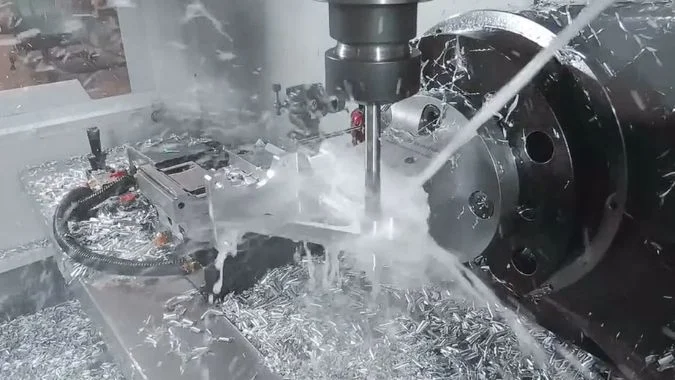
Daily maintenance should include level, concentration, pH, odor, foam, tramp-oil, and chip checks. Filtration, skimming, circulation, and documented corrective actions help extend sump life. All pH and concentration limits should follow the fluid manufacturer’s specified operating range.
Which Checks Should Be Completed Each Day?
Concentration should be checked with a clean, calibrated refractometer7. The displayed value must be multiplied by the product’s refractometer factor when required. An incorrect concentration can weaken rust protection and biological control. An excessive concentration can increase cost, residue, foam, skin irritation, and staining.
Fresh makeup fluid should be premixed at the correct ratio. Concentrate should normally be added to water, not water to concentrate, unless the supplier gives another instruction. A proportioning unit provides better consistency than manual mixing. Plain water should not be added without considering the resulting concentration.
Tramp oil should be removed with a skimmer, coalescer, or another suitable separator. Surface oil restricts oxygen transfer and can support anaerobic bacterial growth8. Chips should also be removed before they break into fine particles or react with the fluid.
| Frequency | Maintenance task | Main purpose |
|---|---|---|
| Every shift or daily | Check fluid level and visible condition | Detect leakage, loss, foam, and contamination |
| Daily | Measure concentration | Preserve cooling, lubrication, and corrosion protection |
| Daily or as specified | Measure and record pH | Detect chemical or biological change |
| Daily | Remove tramp oil and accumulated chips | Reduce bacteria, deposits, and fluid breakdown |
| Weekly | Inspect filters, tank zones, and nozzles | Maintain clean and stable coolant delivery |
| Periodically | Check microbial load and corrosion protection | Confirm fluid health |
| Before replacement | Clean the tank, pipes, and biofilm | Prevent immediate contamination of new fluid |
How Should pH Changes Be Handled?
A calibrated pH meter provides better precision than broad-range strips. Test strips can still support routine checks when their range and resolution match the product. Measuring equipment should be cleaned and calibrated according to its instructions.
The correct pH range depends on the fluid formula and the metals being machined. Many water-miscible products operate in a mildly alkaline range9, but a universal target should not replace the technical data sheet. Aluminum-compatible products may require a lower limit than products designed mainly for ferrous metals.
A falling pH can indicate bacterial activity, low concentration, contamination, or exhausted reserve alkalinity10. A rising pH can indicate excessive concentrate, chemical contamination, or incorrect makeup practices. Raw alkaline chemicals should not be added without supplier approval. Such additions can create skin hazards, destabilize the fluid, or corrode aluminum.
Persistent odor, rapid pH decline, heavy slime, unstable emulsion, or failed corrosion tests may justify professional treatment or complete replacement. Biocide use must follow local law and supplier instructions. During extended shutdowns, periodic circulation or aeration can reduce stagnant zones. Raising concentration before a shutdown should occur only when the product supplier specifically recommends that action.
Filtration should match the chip type. Magnetic separators work for ferrous particles, not aluminum chips. Paper-band filters, bag filters, hydrocyclones, or centrifuges may suit non-ferrous fines. Fine through-spindle nozzles can require more precise filtration than external flood coolant.
How Does the Right Cutting Fluid Improve Tool Life and Reduce Total Operating Costs?
Concentrate price represents only one part of coolant cost. Tool failures, scrap, cleaning, downtime, and waste disposal can cost far more than the original fluid.
The correct cutting fluid reduces friction, heat, built-up edge, corrosion, and chip recutting. These effects extend tool life, improve surface quality, lower scrap, stabilize cycle times, reduce machine cleaning, and lengthen fluid-change intervals, which can reduce total operating cost.
How Does Fluid Performance Protect Cutting Tools?
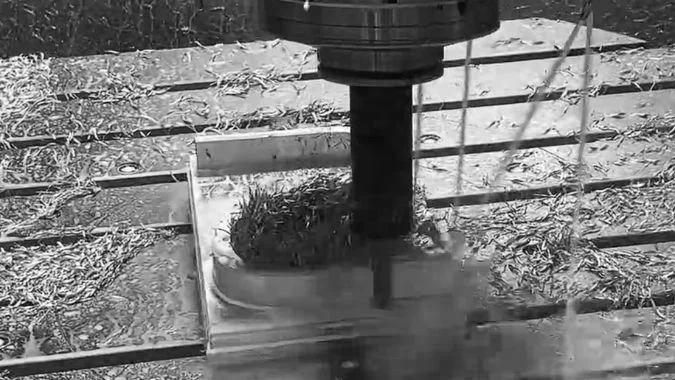
A stable coolant film reduces friction at the tool-chip interface. Lower friction can reduce cutting force, edge temperature, and adhesive wear. This protection is valuable for ball-end mills and other tools that experience changing contact conditions during five-axis contouring.
Effective cooling also limits thermal cycling. A cutting edge that repeatedly heats and cools can develop cracks, especially during interrupted milling11. The delivery method must remain consistent because irregular coolant flow may create stronger thermal shock than either controlled wet cutting or a qualified dry process.
Good chip evacuation prevents chips from being cut again. Recutting can scratch the finished surface and damage the cutting edge. Clean fluid and suitable pressure help move chips away from deep cavities and complex part features.
Tool-life improvement cannot be expressed as one fixed percentage for every operation. Gains depend on the former fluid, tool material, coating, cutting parameters, alloy, delivery pressure, and machine condition. Controlled trials should compare tool wear, surface finish, cycle time, concentration use, and part quality before a plant-wide change.
Which Costs Should Be Included in the Evaluation?
The lowest fluid purchase price may not produce the lowest cost per part. A complete comparison should include concentrate consumption, water, filtration, tools, labor, downtime, cleaning, rejected parts, ventilation, maintenance, and waste treatment.
| Cost area | Effect of correct fluid selection |
|---|---|
| Cutting tools | Less wear, chipping, and built-up edge |
| Scrap and rework | Better dimensional and surface consistency |
| Machine downtime | Fewer blocked lines, fluid failures, and emergency cleanouts |
| Fluid consumption | Stable concentration prevents unnecessary overuse |
| Maintenance labor | Cleaner tanks and controlled contamination reduce cleaning |
| Waste disposal | Longer sump life reduces disposal volume |
| Energy and ventilation | Low-mist, low-foam operation may reduce support demands |
| Production output | Stable cutting supports predictable cycle times |
Automatic dosing can hold concentration within a narrow range and prevent manual over-addition. Oil separation and staged filtration can also extend fluid service life. A typical system may combine tramp-oil removal with magnetic separation for steel chips and fine filtration for smaller particles. The final filter rating should match the spindle, tooling, and nozzle requirements rather than an arbitrary value.
A trial period offers the safest selection method. The trial should use representative materials, tools, programs, and production hours. Records should include concentration, pH, water hardness, tool life, finish, foam, mist, corrosion, bacterial condition, and concentrate consumption. This evidence shows whether a new fluid reduces total operating cost instead of merely shifting expense from one category to another.
Conclusion
The right five-axis cutting fluid balances cooling, lubrication, material compatibility, cleanliness, safety, and maintenance stability while protecting tools, parts, machines, and production costs.
-
"Metalworking fluid-related aerosols in machining plants", https://pubmed.ncbi.nlm.nih.gov/20229391/. Increased spindle speeds create greater shear forces and air entrainment in cutting fluids, promoting both foam formation through air incorporation and mist generation through mechanical atomization at the tool-workpiece interface. Evidence role: mechanism; source type: research. Supports: the relationship between rotational speed and aerosol generation in machining operations. Scope note: Mist and foam levels also depend on fluid formulation, delivery pressure, and enclosure design. ↩
-
"Dimensional Accuracy and Measurement Variability in CNC …", https://pmc.ncbi.nlm.nih.gov/articles/PMC12194426/. Metals exhibit linear thermal expansion coefficients ranging from approximately 10 to 25 μm/m·°C, meaning temperature variations of even a few degrees during machining can produce dimensional errors exceeding typical tolerance requirements for precision parts. Evidence role: mechanism; source type: research. Supports: how thermal expansion in workpiece materials affects dimensional tolerances during machining. ↩
-
"Specific Heats of Oil and Water", https://sciencedemonstrations.fas.harvard.edu/presentations/specific-heats-oil-and-water. Water exhibits a thermal conductivity approximately four times higher than mineral oil and a specific heat capacity roughly twice that of petroleum-based fluids, enabling water-miscible cutting fluids to remove heat more effectively from the cutting zone. Evidence role: mechanism; source type: research. Supports: the superior thermal conductivity and specific heat capacity of water compared to petroleum-based oils. Scope note: Heat removal effectiveness also depends on flow rate, concentration, and delivery method, not thermal properties alone. ↩
-
"Wear Mechanisms, Composition and Thickness of Antiwear …", https://pmc.ncbi.nlm.nih.gov/articles/PMC11122858/. Extreme-pressure additives containing sulfur, phosphorus, or chlorine compounds undergo thermally activated reactions with metal surfaces under high contact pressure and temperature, forming sacrificial inorganic films that prevent metal-to-metal contact and reduce friction. Evidence role: mechanism; source type: research. Supports: the tribochemical mechanism by which EP and AW additives create protective surface layers. Scope note: Film formation effectiveness depends on contact temperature, pressure, surface chemistry, and additive concentration. ↩
-
"Air Entraining Admixtures for Concrete", https://www.fhwa.dot.gov/pavement/concrete/trailer/resources/hif20085.pdf. Foam layers occupying tank surface area reduce the available liquid volume for pump intake, while entrained air bubbles in the suction line can cause pump cavitation, reducing flow rate and potentially damaging pump components through vapor collapse. Evidence role: mechanism; source type: research. Supports: how foam and entrained air affect pump performance in fluid circulation systems. ↩
-
"CORROSION INHIBITION OF ALUMINUM PIGMENTS … – HERO", https://hero.epa.gov/reference/6603026/. Aluminum is amphoteric and reacts with both strong acids and bases; cutting fluids formulated with higher alkalinity for ferrous corrosion protection can cause aluminum oxidation and surface staining, while lower-pH formulations suitable for aluminum typically contain fewer extreme-pressure additives needed for steel machining. Evidence role: mechanism; source type: research. Supports: the chemical reactivity of aluminum with alkaline cutting fluid components. ↩
-
"(PDF) Refractive indices of metal working fluid emulsion …", https://www.academia.edu/27341556/Refractive_indices_of_metal_working_fluid_emulsion_components. Refractometers measure the refractive index of a fluid, which increases proportionally with dissolved and emulsified solids concentration; for cutting fluid emulsions, the refractive index correlates with the concentration of oil and additives, allowing rapid field estimation when calibrated with a product-specific factor. Evidence role: mechanism; source type: research. Supports: the optical principle underlying refractometric concentration measurement. Scope note: Refractometer readings can be affected by temperature, contamination, and dissolved solids, requiring calibration factors and temperature compensation. ↩
-
"Effect of the interfacial surfactant layer on oxygen transfer …", https://pubmed.ncbi.nlm.nih.gov/18600637/. Hydrocarbon films on aqueous surfaces create a diffusion barrier that significantly reduces oxygen transfer from air to water, lowering dissolved oxygen concentrations in the bulk fluid and creating favorable conditions for anaerobic sulfate-reducing bacteria that produce malodorous hydrogen sulfide. Evidence role: mechanism; source type: research. Supports: how surface oil films impede gas exchange and create anaerobic conditions. ↩
-
"Cutting Fluid Management: Small Machining Operations", https://scholarworks.uni.edu/context/iwrc_facbook/article/1005/viewcontent/CuttingFluidManagement.pdf. Most water-miscible cutting fluids are formulated to operate in a pH range of 8.5 to 9.5, providing sufficient alkalinity for ferrous corrosion protection and microbial control while remaining compatible with common machine materials and avoiding excessive aluminum reactivity. Evidence role: general_support; source type: research. Supports: the typical pH range for water-miscible metalworking fluids. Scope note: Optimal pH varies by specific formulation, with aluminum-compatible products often operating at lower pH (8.0-9.0) than ferrous-focused formulations. ↩
-
"Ways to improve biocides for metalworking fluid – PMC", https://pmc.ncbi.nlm.nih.gov/articles/PMC7921375/. pH decline in cutting fluids results from multiple mechanisms: bacterial metabolism producing organic acids, dilution reducing buffer concentration, contamination with acidic materials, and gradual consumption of alkaline reserves through neutralization of acidic byproducts and carbon dioxide absorption from air. Evidence role: mechanism; source type: research. Supports: the processes that reduce pH in water-miscible cutting fluids during use. ↩
-
"Fundamental Approach to the Thermal Crack of Cermet …", https://www.sciencedirect.com/science/article/pii/S0007850607608932. Repeated thermal cycling during interrupted cutting creates alternating tensile and compressive stresses in the tool edge due to differential thermal expansion; these cyclic stresses can exceed the material’s fatigue strength, nucleating and propagating cracks perpendicular to the cutting edge, particularly in brittle tool materials like cemented carbides and ceramics. Evidence role: mechanism; source type: research. Supports: how cyclic thermal stress induces crack formation in tool materials. ↩

Chris Lu
Leveraging over a decade of hands-on experience in the machine tool industry, particularly with CNC machines, I'm here to help. Whether you have questions sparked by this post, need guidance on selecting the right equipment (CNC or conventional), are exploring custom machine solutions, or are ready to discuss a purchase, don't hesitate to CONTACT Me. Let's find the perfect machine tool for your needs.