

What Causes Thermal Deformation of a Tapping Center?
Maintaining tight tolerances across continuous production shifts requires strict thermal management. As ambient and internal machine temperatures fluctuate, thermal deformation can severely impact your process capability index (Cpk)1. Understanding the mechanics of thermal growth is critical for manufacturing engineers to eliminate unpredictable scrap rates and ensure consistent part quality.
Three major heat sources cause thermal deformation in a tapping center. Moving parts like bearings create internal friction. The cutting process drives heavy heat into the machine. Daily workshop temperature changes expand the metal. These heat sources ruin your accuracy.
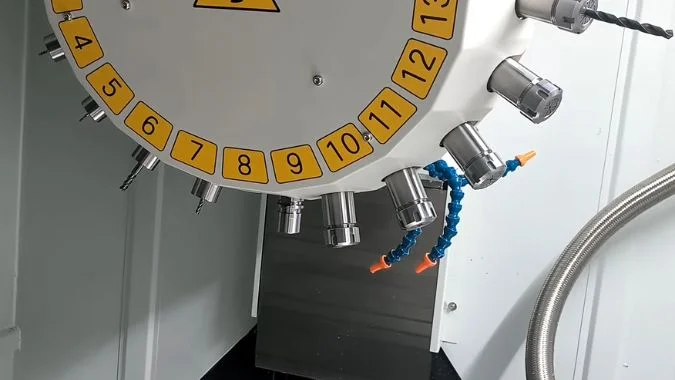
Unmanaged thermal expansion remains one of the leading causes of dimensional variation in high-speed tapping operations. By breaking down the specific mechanics of thermal deformation, engineering and maintenance teams can implement targeted strategies to stabilize their machining processes. Let’s examine the exact physical impact of thermal growth and the systematic methods used to control it.
How Does Spindle Thermal Growth Specifically Affect Tapping Depth and Accuracy?
Spindle thermal elongation is a primary factor in Z-axis drift during continuous operation2. A machine that calibrates perfectly during a cold setup can experience measurable thermal expansion by mid-shift, causing rigid tapping cycles to over-travel. Production teams must account for this dynamic shift to prevent dimensional non-conformance in high-volume batches.
Spindle thermal growth directly pushes the cutting tool deeper into the part. A hot spindle expands downward along the Z-axis. You program a five-millimeter hole. The hot machine cuts five point one millimeters. This elongation destroys your dimensional accuracy and surface finish.
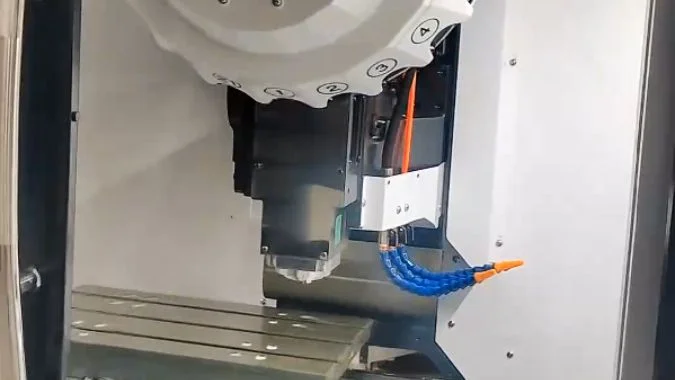
The spindle acts like a piece of hot plastic. It stretches when it gets hot. We call this thermal elongation.
Z-Axis Offset and Batch Consistency
The high-speed bearings create massive friction. This friction heats the solid steel spindle3. The hot steel expands straight down toward your table. This causes a direct Z-axis coordinate offset. You program a precise blind hole. The stretched spindle pushes the tap too deep. You run a big batch of parts. The first ten parts pass inspection perfectly. The machine runs for four hours and gets very hot. The last ten parts fail because the holes are too deep. You lose batch consistency completely.
Dimensional and Shape Accuracy
This heat also bends the spindle slightly. This bending causes radial runout4. The tool wobbles in a circle. This wobble makes your holes too wide. It ruins your shape accuracy. The wobbly tool vibrates against the metal. This vibration creates ugly marks on your walls. Your surface roughness gets much worse. You must stop this stretching to make good parts.
| Machining Defect | Direct Cause | Result on Workpiece |
|---|---|---|
| Hole too deep | Z-axis spindle stretch | Fails depth gauge test |
| Hole too wide | Radial bending and runout | Fails pin gauge test |
| Poor batch match | Heat builds over time | First and last parts differ |
| Rough walls | Tool vibration from heat | Fails surface finish test |
How Do We Deal With Thermal Deformation of a Tapping Center?
When quality inspections reveal an emerging trend of thermal drift during an active production run, process engineers must implement immediate compensation strategies. Rapid thermal diagnostics and real-time CNC offsets allow operators to stabilize the process and maintain part compliance without halting the entire manufacturing cell.
Deal with thermal deformation using fast diagnosis and real-time corrections. Use an infrared thermal imager to find hot spots. Apply software offsets to the Z-axis instantly. Pre-cool sensitive workpieces. These quick steps correct the heat errors right away.
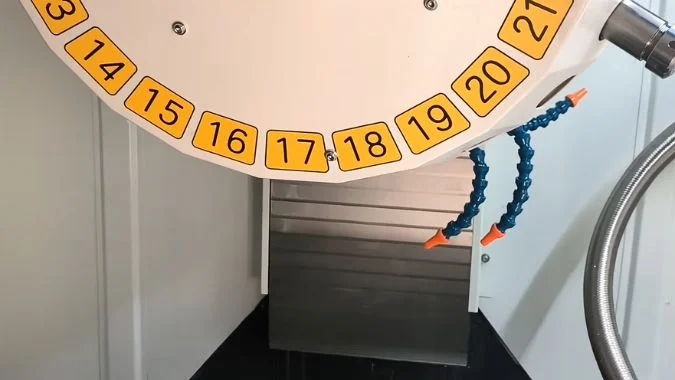
You cannot wait for the machine to cool down. You must deal with the heat immediately.
Fast Heat Diagnosis
Grab the infrared thermal imager first. We point this camera at the machine head. We see exactly where the heat lives. The spindle shaft often shows a temperature fifteen degrees hotter than the machine bed. We also use a laser interferometer5 during planned stops. This laser builds a thermal database for the machine. We know exactly how much the machine bends at different temperatures.
Emergency Correction Steps
You must use the CNC software to fight the heat. We use the spindle thermal extension compensation function6. The spindle heats up ten degrees. The software automatically lifts the Z-axis offset by zero point one millimeters. This keeps the tool tip in the exact same spot. We also look at the workpiece material. Some metals expand very fast. We put these sensitive parts in a cool area before machining. We pre-cool them to fifty degrees Celsius. This stops the part from moving while the tool cuts it.
| Response Action | Tool Required | Expected Result |
|---|---|---|
| Find hot spots | Infrared thermal imager | Locates exact heat source |
| Measure metal bend | Laser interferometer | Creates heat database |
| Fix hole depth | CNC software Z-offset | Lifts tool to correct spot |
| Stop part expansion | Cold storage area | Keeps raw material stable |
How Do We Prevent Thermal Deformation of a Tapping Center?
During the capital equipment procurement phase, evaluating a machine’s inherent thermal stability is just as critical as assessing its rapid traverse rates. Engineering teams must specify tapping centers with built-in thermal mitigation technologies—like active cooling and thermally symmetrical castings—to guarantee long-term process capability and maximize ROI.
You prevent thermal deformation through smart machine design and good cutting habits. You buy machines made with low-expansion Invar metal. You use closed-loop oil chillers to cool the spindle. You lower your cutting speeds and use oil mist lubrication to stop heat from starting.
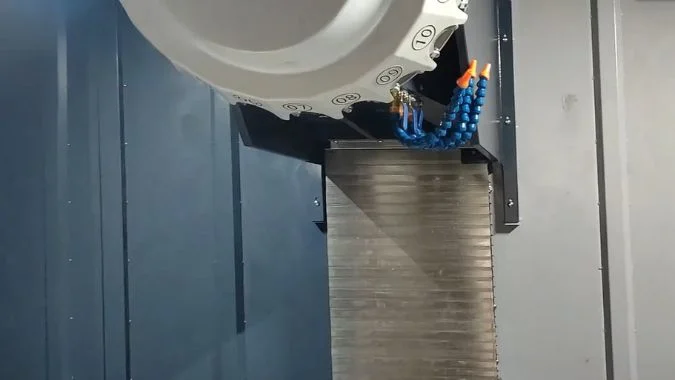
You must stop the heat before it starts.
Smart Structural Design
A good machine uses a thermal symmetry design. The column and spindle box mirror each other perfectly. The heat spreads out evenly. The machine stays straight. Good builders use Invar alloy or ceramic parts. Invar metal barely grows when it gets hot7. They also put ceramic insulation plates between the hot motor and the cold spindle. This blocks the heat completely.
Cooling and Cutting Tricks
You must use an active cooling system. We always select machines with closed-loop oil chillers. Cold oil pumps around the hot spindle and motor. The machine stays at room temperature all day. You also must change how you cut metal. High speed creates high heat8. We use a low-speed, high-feed strategy. We slow my speed from two hundred to one hundred fifty meters per minute. The part stays thirty percent cooler. We also use minimum quantity lubrication9. We spray a tiny mist of nano-oil onto the tool. This cools the cut by fifty percent.
| Prevention Method | System or Strategy | Direct Benefit |
|---|---|---|
| Stop metal growth | Invar alloy parts | Material does not expand |
| Block motor heat | Ceramic insulation plates | Stops heat transfer |
| Cool the spindle | Closed-loop oil chiller | Removes heat constantly |
| Reduce cutting heat | Oil mist lubrication spray | Cools tool by fifty percent |
How to Perform Long-Term Maintenance to Mitigate the Impact of Thermal Deformation?
As CNC equipment ages, the natural degradation of cooling systems and spindle bearings increases the machine’s thermal load. Implementing a rigorous preventative maintenance (PM) schedule is essential to counteract this wear. Systematic care ensures the machine maintains its original thermal baseline and continues to produce tight-tolerance components year after year.
Perform strict long-term maintenance to keep the machine cool over years. Balance the spindle every five hundred hours. Clean all coolant pipes every month. Replace the five-micron water filters. A clean and balanced machine runs cold and stays accurate.
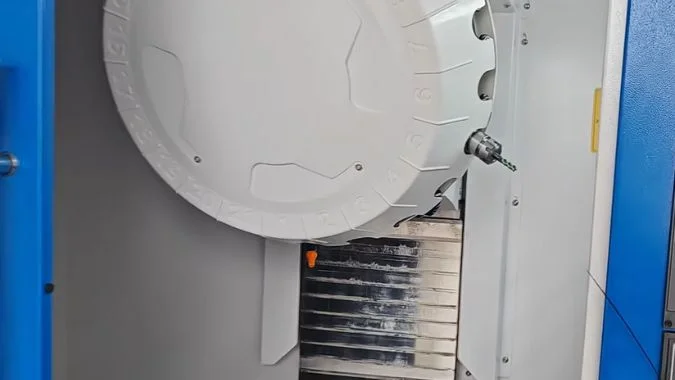
A dirty, vibrating machine generates massive heat. You must follow a strict plan to fix this.
Spindle Balance Correction
A fast spindle must spin perfectly smooth. Tiny vibrations destroy the bearings slowly. Bad bearings grind together and make huge amounts of heat. I check the spindle dynamic balance every five hundred running hours. I use a special vibration tool. I add tiny weights to the spindle to make it spin perfectly. A balanced spindle runs completely cold.
Coolant System Care
Your cooling system acts like the blood of the machine. It removes heat every second. The dirty coolant thickens over time. It clogs the small pipes inside the machine block. I clean every single coolant pipe once a month. I force clean water through the lines to clear the mud. I also change the filter elements often. I use a five-micron filter. This catches tiny metal dust. Clean coolant flows fast. Fast coolant carries heat away quickly.
| Maintenance Task | Timing Schedule | Heat Reduction Result |
|---|---|---|
| Check spindle balance | Every five hundred hours | Stops bearing friction heat |
| Clean coolant pipes | Every single month | Keeps cooling fluid flowing |
| Change water filters | When gauge shows pressure | Removes heat-trapping mud |
| Check chiller oil | Every six months | Keeps oil pump cold |
Conclusion
Understand machine heat sources. Compensate for Z-axis thermal stretch immediately. Prevent heat with smart machine design and slow cutting speeds. Maintain your coolant system to ensure perfect hole depths.
-
"Research on Thermal Error Compensation Technology of CNC …", https://ui.adsabs.harvard.edu/abs/2021imce….4…60J/abstract. Scholarly sources on machine-tool thermal errors describe temperature-induced deformation as a major contributor to dimensional error in precision machining, which can reduce statistical process capability when part dimensions drift relative to specification limits. Evidence role: general_support; source type: paper. Supports: Thermal deformation can significantly reduce machining process capability as measured by Cpk.. Scope note: The source may support the relationship between thermal error and dimensional variation rather than quantify the exact effect on Cpk for tapping centers. ↩
-
"Prediction of Machine Tool Spindle’s Dynamics Based on a Thermo …", https://www.academia.edu/143674096/Prediction_of_Machine_Tool_Spindle_s_Dynamics_Based_on_a_Thermo_Mechanical_Model. Experimental studies of machine-tool spindles report that spindle temperature rise produces axial displacement or elongation, providing a mechanism for Z-axis drift during prolonged operation. Evidence role: mechanism; source type: paper. Supports: Spindle thermal elongation can cause Z-axis drift during continuous machine operation.. Scope note: The magnitude and direction of drift depend on the specific spindle structure, bearing arrangement, cooling system, and duty cycle. ↩
-
"[PDF] A Methodology for Measuring Thermal Properties of Bearings in …", https://tfaws.nasa.gov/TFAWS04/Website/program/paper/TFAWS04_YTakeuchi_HW.pdf. Machine-tool spindle and rolling-bearing literature identifies bearing friction and high rotational speed as sources of heat generation that raise spindle temperature. Evidence role: mechanism; source type: paper. Supports: Friction in high-speed spindle bearings generates heat that raises spindle temperature.. Scope note: The source may address spindle assemblies broadly and may not isolate a solid steel spindle shaft as the only heated component. ↩
-
"Modeling of thermal errors for dual-spindle turning-milling … – PMC", https://pmc.ncbi.nlm.nih.gov/articles/PMC12753745/. Research on thermal deformation in machine-tool spindles shows that asymmetric temperature fields can produce angular or radial displacement at the tool point, which is associated with runout-like machining errors. Evidence role: mechanism; source type: paper. Supports: Thermal bending of a spindle can contribute to radial displacement or runout at the tool.. Scope note: The source may support thermal radial displacement generally; actual measured runout depends on spindle geometry, bearings, tool holder, and measurement method. ↩
-
"Development of a spatial accuracy compensation method based on …", https://pmc.ncbi.nlm.nih.gov/articles/PMC12078488/. Metrology references describe laser interferometers as instruments for measuring linear displacement errors in machine tools, including position changes that can be evaluated under varying thermal conditions. Evidence role: definition; source type: institution. Supports: A laser interferometer can be used to measure machine-tool displacement errors relevant to thermal drift characterization.. Scope note: A laser interferometer measures displacement directly; using it to build a thermal database requires repeated measurements correlated with temperature data. ↩
-
"Hybrid optimization algorithm for thermal displacement … – PMC", https://pmc.ncbi.nlm.nih.gov/articles/PMC10450280/. Machine-tool thermal-error compensation literature describes model-based or sensor-based CNC compensation methods that adjust axis commands or offsets to reduce thermally induced tool-center-point error. Evidence role: mechanism; source type: paper. Supports: CNC thermal compensation can offset spindle thermal extension by adjusting machine-axis positioning.. Scope note: The source supports the general principle of compensation; implementation details and availability vary by controller and machine model. ↩
-
"Invar", https://en.wikipedia.org/wiki/Invar. Materials references identify Invar, an iron-nickel alloy, as having an unusually low coefficient of thermal expansion near room temperature compared with ordinary steels. Evidence role: definition; source type: encyclopedia. Supports: Invar has a very low coefficient of thermal expansion and therefore expands much less than typical machine-tool steels over relevant temperature ranges.. Scope note: Invar is low-expansion over a limited temperature range and its practical use in machine tools is constrained by cost, stiffness, and design requirements. ↩
-
"Optimizing Cutting Parameters for Enhanced Control of Temperature …", https://pmc.ncbi.nlm.nih.gov/articles/PMC11901140/. Machining science literature shows that cutting speed is a key variable affecting cutting temperature, because higher speed generally increases the rate of mechanical work converted into heat at the tool-chip interface. Evidence role: mechanism; source type: education. Supports: Higher cutting speeds generally increase cutting heat in machining operations.. Scope note: The temperature response is also influenced by feed, depth of cut, tool material, workpiece material, coolant, and chip formation conditions. ↩
-
"a review on minimum quantity lubrication (mql) for sustainable …", https://www.academia.edu/40182532/A_REVIEW_ON_MINIMUM_QUANTITY_LUBRICATION_MQL_FOR_SUSTAINABLE_MACHINING_PROCESSES_AND_ITS_APPLICATION. Research on minimum quantity lubrication reports that MQL can reduce friction and heat generation at the cutting zone compared with dry machining in many operations, improving tool-workpiece thermal conditions. Evidence role: expert_consensus; source type: paper. Supports: Minimum quantity lubrication can reduce cutting-zone friction and heat in machining under suitable conditions.. Scope note: Cooling effectiveness varies by material, tool geometry, lubricant, flow rate, and operation; a universal percentage reduction is not established. ↩

Chris Lu
Leveraging over a decade of hands-on experience in the machine tool industry, particularly with CNC machines, I'm here to help. Whether you have questions sparked by this post, need guidance on selecting the right equipment (CNC or conventional), are exploring custom machine solutions, or are ready to discuss a purchase, don't hesitate to CONTACT Me. Let's find the perfect machine tool for your needs.