

What Happens if the Tool Changer Stalls in a Tapping Center?
A stalled tool changer stops production at once. Alarms lock the machine. If the fault is forced, tool damage, spindle collision, or safety accidents may follow1.
When a tapping center tool changer stalls, the machine usually stops automatically, triggers an ATC alarm, and locks the tool change sequence. Common risks include tool jamming, wrong tool identification, spindle taper damage, tool arm damage, production delay, and possible operator safety hazards.
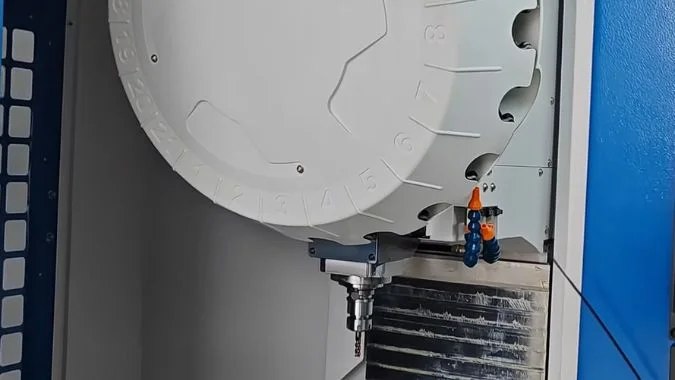
A tool changer stall is not just a small machine pause. It is a warning that the mechanical, pneumatic, hydraulic, or control system is no longer synchronized. Correct handling can protect the spindle, tools, magazine, and production schedule.
What Are the Main Causes of Tool Change Stalls in Tapping Center?
Tool change stalls often start as small faults. A dry guide rail, weak air pressure, worn fork, or unstable sensor signal can slowly become a serious ATC failure.
Tool change stalls in a tapping center mainly come from mechanical wear, unstable pneumatic or hydraulic pressure, wrong spindle orientation, abnormal sensor signals, servo parameter drift, or tool change origin errors. These faults prevent the tool arm, spindle, and magazine from matching positions correctly.
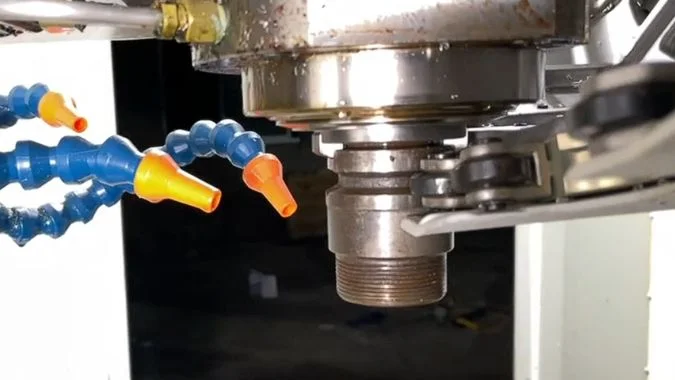
Mechanical causes
Mechanical problems are among the most common causes. A tapping center performs many high-speed tool changes every day. After long use, the magazine fork, tool arm claw, locating pin, and tool pot can wear2. When the gap between the fork and the tool holder becomes too large, the tool holder may tilt during tool change. This small tilt can make the tool jam between the spindle and the manipulator.
Lubrication also plays a direct role. If the guide rail, cam, or moving parts lack grease or oil, friction increases. The tool arm then moves slowly or unevenly. The CNC system may detect a timeout and stop the machine. Chips around the magazine can also block motion. Small chips can sit between the tool holder and tool pot and cause poor seating.
Pneumatic, hydraulic, and electrical causes
Many tapping centers use air pressure for tool unclamping and tool pot movement. If pressure falls below the required range, usually around 0.5 to 0.7 MPa in many workshops3, the tool may not release fully from the spindle. Air leaks, water in the air line, clogged filters, and aging seals can all weaken the system.
Electrical and control faults can also stop tool change. A sensor may fail to confirm that the arm has returned home. A PLC signal may be delayed. Servo parameters may shift after long operation4. Incorrect spindle orientation is another key reason. If the spindle key does not align with the manipulator keyway, the arm cannot pull or insert the tool smoothly5.
| Fault area | Common cause | Result |
|---|---|---|
| Mechanical system | Worn fork, dry guide rail, chip buildup | Jamming or slow tool change |
| Pneumatic system | Low pressure, air leak, wet air | Weak unclamp or delayed action |
| Hydraulic system | Dirty oil, low oil level, seal aging | Unstable movement |
| Electrical control | Sensor fault, PLC signal error | ATC alarm or wrong sequence |
| Spindle orientation | Wrong M19 angle or belt shift | Tool arm cannot align |
How Can Tool Change Stalls Be Diagnosed and Fixed?
Random reset can make the fault worse. Forced recovery can bend the tool arm, damage the fork, or destroy the spindle taper in a few seconds.
Tool change stalls should be diagnosed by following “mechanical before electrical, static before dynamic.” The correct process is safe stop, visual inspection, pressure check, sensor signal check, spindle orientation check, and controlled manual recovery according to the machine manual.
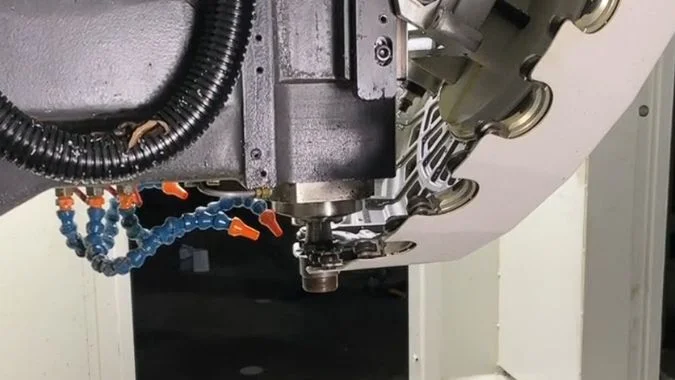
Safe shutdown and first inspection
The first step is to stop automatic operation and keep the machine locked in a safe state. Common alarms include “tool change incomplete,” “manipulator not returned to origin,” “tool change timeout,” and “unclamp or clamp detection abnormal.” These alarms mean the ATC sequence has not finished. Repeated alarm reset without inspection can create a new fault. In some cases, the CNC tool number and the real magazine position may lose synchronization6.
The tool position must be checked before any manual action. The tool may still be half-clamped in the spindle. It may also be held partly by the manipulator. If air or brake release is done at the wrong time, the tool may drop. Soft padding should be placed on the fixture or worktable before emergency recovery. Hands must stay away from the arm swing area and tool drop zone.
Troubleshooting order
The mechanical relationship between the spindle, tool arm, and magazine should be checked first. The tool holder must be aligned with the spindle taper and the tool pot. Any visible interference, bent part, chip buildup, or abnormal tool angle must be corrected before motion is resumed.
Next, the pneumatic or hydraulic system should be checked. The air pressure gauge should stay stable. Air leakage can be found through hissing sound or pressure drop. Filters should be cleaned. Water should be drained from the air system. Hydraulic oil color and oil level should be inspected if the machine uses a hydraulic unit.
Then the electrical control system should be checked on the CNC or PLC screen. Signals such as tool pot in position, arm home, manipulator clamp, spindle clamp, spindle unclamp, and magazine position must switch normally. If spindle orientation is wrong, the orientation angle must be adjusted so that the spindle key matches the manipulator keyway.
| Diagnosis step | Check item | Purpose |
|---|---|---|
| 1 | Alarm code and machine state | Confirm where the ATC sequence stopped |
| 2 | Tool, spindle, and arm position | Prevent tool drop or collision |
| 3 | Magazine and mechanical path | Find visible interference |
| 4 | Air or oil pressure | Confirm enough driving force |
| 5 | Sensor and PLC signals | Find signal loss or wrong logic |
| 6 | Spindle orientation | Correct keyway alignment |
How to Use Preventive Maintenance to Reduce Tool Change Problems?
Most ATC failures give early hints before breakdown. Ignoring dirty magazines, weak air pressure, and dry motion parts turns small faults into production stops.
Preventive maintenance reduces tool change problems through regular cleaning, lubrication, air pressure checks, spindle orientation checks, tool holder inspection, sensor checks, and tool change frequency records. Planned maintenance prevents sudden ATC alarms and protects the spindle and magazine.
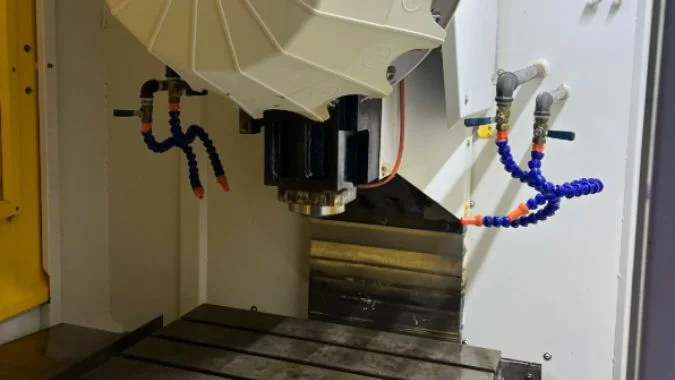
Daily and weekly maintenance
A tapping center usually has a faster tool change cycle than a general machining center7. Because of this, maintenance should be based not only on calendar time, but also on actual tool change count. A machine that performs thousands of tool changes per shift needs closer inspection than a machine that runs one or two tools for long cycles.
Daily cleaning is essential. Chips, oil sludge, and dust should be removed from the tool magazine, tool pot, fork area, and tool arm path8. The spindle taper and tool holder taper should also stay clean. A dirty taper weakens contact and may create tool wobble9. Pull studs should be checked for wear and tightness. A worn pull stud can slip in the spindle claw and create unclamp or clamp detection faults10.
Weekly maintenance should include lubrication of guide rails, cams, bearings, and moving points according to the machine manual. Dry motion increases friction and causes slow tool arm movement. Slow movement often becomes a timeout alarm.
Pressure, alignment, and record control
The air source should stay clean and dry. Moisture in the air line damages valves, cylinders, and seals11. Pressure fluctuation during tool change should be treated as a warning sign. A practical workshop check is often 0.5 to 0.7 MPa, but the machine builder’s value should be followed first.
Spindle orientation should be checked regularly, especially after collision or heavy cutting vibration. A small position shift can make the tool arm scrape or jam during tool exchange. The tool change origin position should also be checked. If the origin drifts, the tool arm and magazine may no longer meet at the correct point.
Maintenance records help reduce repeated faults. Alarm codes, abnormal noise, tool change time, worn parts, and replaced seals should be recorded. Stock should be prepared for common wear parts, such as forks, seals, sensors, pull studs, and air hoses.
| Maintenance item | Recommended action | Failure prevented |
|---|---|---|
| Tool magazine cleaning | Remove chips and sludge | Tool pot jamming |
| Air source check | Drain water and check pressure | Weak unclamp |
| Lubrication | Grease rails and moving parts | Slow ATC movement |
| Pull stud inspection | Check wear and tightness | Tool slipping |
| Spindle orientation | Verify M19 position | Arm and spindle mismatch |
| Alarm records | Track repeated warnings | Sudden ATC shutdown |
What Warning Signs Indicate an Upcoming Tool Change Failure?
A tool changer usually does not fail without signals. Noise, delay, vibration, pressure changes, and repeated minor alarms often appear before a serious jam.
Upcoming tool change failure can be indicated by abnormal metal noise, slow or jerky tool arm movement, unstable spindle orientation, pressure fluctuation, sensor light abnormality, intermittent ATC alarms, tool wobble, magazine overshoot, or mismatch between tool number and actual tool pot.
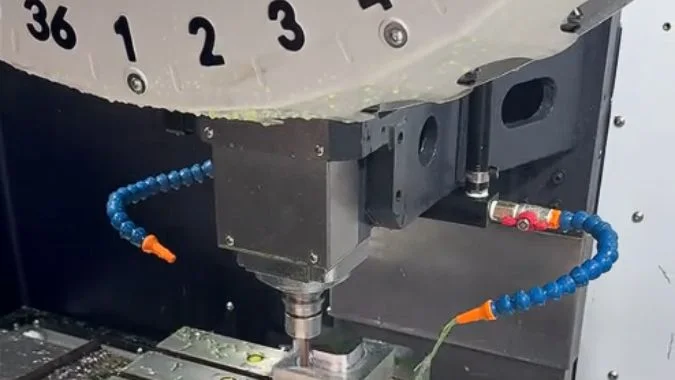
Mechanical warning signs
Abnormal sound is one of the clearest early signals. A healthy tool changer has a stable and repeatable rhythm. Metal friction sound, impact sound, scraping sound, or sudden heavy knocking means the mechanism may be misaligned or worn. If the tool arm moves slowly or stops briefly during motion, friction, weak driving force, or mechanical blockage may already exist.
Manual magazine rotation can also reveal early failure. If rotation resistance increases, the magazine drive, guide surface, bearing, or tool pot may have a problem. Looseness in the tool holder is another serious sign. If the tool holder has slight vertical movement inside the spindle, the pull stud, spindle claw, or clamping mechanism needs inspection.
Tool scraping near the spindle guard should not be ignored. Scraping shows that the tool change point may have shifted. If the same tool always creates alarms, that tool holder and pull stud should be checked before the whole machine is blamed.
Pneumatic, hydraulic, and control warning signs
Pressure behavior gives many useful clues. If the pressure gauge needle jumps during tool change, the air supply may be unstable. Hissing sound near a hose or valve usually means leakage. A delayed unclamping cylinder may cause the spindle to hold the tool longer than the tool arm expects.
Control signals can warn of failure before a hard alarm appears. A machine may sometimes fail after an M6 command and then work again after reset. This should not be treated as normal. Intermittent faults often come from loose cables, weak sensors, signal interference, or parameter drift12.
Sensor indicator lights should switch clearly. A light that stays on, stays off, or flashes randomly may show signal failure. Tool pot in-position, manipulator clamped, arm home, spindle clamped, and spindle unclamped signals are especially important. If two or more warning signs appear together, immediate inspection is safer than continued production.
| Warning sign | Possible cause | Recommended response |
|---|---|---|
| Metal impact noise | Fork wear or misalignment | Stop and inspect |
| Slow tool change | Low pressure or dry guide rail | Check air and lubrication |
| Tool wobble | Pull stud or spindle claw wear | Remove and inspect holder |
| Repeated M19 failure | Spindle orientation drift | Adjust orientation angle |
| Sensor light abnormality | Sensor or cable fault | Check PLC input |
| Tool number mismatch | Magazine position loss | Reconfirm tool map |
| Pressure fluctuation | Leak or weak air source | Repair air system |
Conclusion
A stalled tool changer requires safe shutdown, careful diagnosis, and steady maintenance. Clean mechanics, stable pressure, and clear signals keep tapping centers reliable.
-
"[PDF] THINK SAFETY ! – NC State ISE", https://ise.ncsu.edu/processes/wp-content/uploads/sites/11/2013/08/mill_safety.pdf. Machine tool safety standards such as ISO 16090-1 identify automatic tool changers as hazard zones requiring interlocked guarding and controlled recovery procedures, noting that unauthorized forced operation during a fault condition can result in uncontrolled tool ejection, spindle damage, and operator injury. Evidence role: expert_consensus; source type: institution. Supports: Forcing motion through a stalled ATC sequence without clearing the fault condition creates risks of mechanical collision, spindle taper damage, and operator injury from ejected tooling. Scope note: ISO 16090-1 addresses general machining center safety design rather than prescribing specific ATC recovery procedures; the cited risks are consistent with the standard’s hazard identification framework. ↩
-
"(PDF) Study on failure warning of tool magazine and automatic tool …", https://www.researchgate.net/publication/301725669_Study_on_failure_warning_of_tool_magazine_and_automatic_tool_changer. Studies on high-cycle mechanical systems document that repeated dynamic contact loading in components such as tool arm claws and locating pins leads to progressive surface wear, dimensional loss, and eventual functional degradation. Evidence role: mechanism; source type: paper. Supports: Progressive mechanical wear in high-cycle ATC components including tool arms, forks, and locating elements due to repeated dynamic loading. Scope note: General tribological literature on wear mechanisms may not address ATC-specific geometry or cycle rates directly; machine-specific wear data would require manufacturer documentation. ↩
-
"How to fix CNC Mill unclamp issues – YouTube", https://www.youtube.com/watch?v=N5Gam7NoeaY. Technical references for CNC machining center pneumatic systems commonly specify operating pressures in the range of 0.5–0.7 MPa for tool unclamp actuators, though exact values vary by machine builder and spindle design. Evidence role: general_support; source type: education. Supports: Typical operating air pressure ranges used in CNC machining center pneumatic systems for tool clamping and unclamping functions. Scope note: Specific pressure requirements differ across manufacturers and spindle models; the cited range represents a general workshop guideline rather than a universal standard. ↩
-
"Fault Root Cause Tracking of the Mechanical Components of CNC …", https://pmc.ncbi.nlm.nih.gov/articles/PMC10181511/. CNC control system literature identifies PLC input/output signal timing inconsistencies and servo gain or offset parameter drift over extended operation as contributors to sequencing faults in automated machine functions. Evidence role: mechanism; source type: education. Supports: PLC signal timing errors and servo parameter drift as recognized fault sources in CNC automated sequences including tool change operations. Scope note: The relationship between parameter drift and ATC-specific failures is contextual; direct empirical data linking servo drift to tool change stalls would require machine-specific testing. ↩
-
"Service tip.21 [EN] – How to adjust the spindle orientation position", https://www.youtube.com/watch?v=jmVKkhzqJEM. Tool holder interface standards such as those governing BT and HSK tapers specify drive key geometry that requires the spindle to be oriented to a defined angular position before the tool arm can engage or disengage the tool holder without interference. Evidence role: definition; source type: institution. Supports: The requirement for precise spindle angular orientation to align drive keys with tool holder keyways as a prerequisite for ATC tool insertion and extraction. Scope note: The cited requirement is derived from tool holder interface standards; specific angular tolerance values vary by spindle and tool holder design. ↩
-
"CNC Machining | Magazine is not in position – Practical Machinist", https://www.practicalmachinist.com/forum/threads/magazine-is-not-in-position.166686/. CNC tool management systems maintain a software table mapping tool numbers to magazine pot positions; if an ATC sequence is interrupted and reset without completing the positional handshake, the control’s tool table may retain an incorrect assignment, causing subsequent tool calls to retrieve the wrong tool. Evidence role: mechanism; source type: education. Supports: Improper ATC fault recovery can cause the tool number stored in the CNC control to diverge from the actual physical position of tools in the magazine. Scope note: The specific behavior during fault recovery depends on the CNC control brand and software version; some modern controls include position verification routines that mitigate this risk. ↩
-
"Chapter 4. Air Traffic Control – FAA", https://www.faa.gov/air_traffic/publications/atpubs/aim_html/chap4_section_1.html. Tapping centers are characterized by short machining cycles involving frequent tool changes between drills, taps, and reamers, resulting in higher cumulative ATC cycle counts per shift compared to general machining centers performing longer individual operations. Evidence role: general_support; source type: other. Supports: Tapping centers are designed for high-frequency tool changes in short-cycle production, resulting in greater cumulative ATC usage than general-purpose machining centers in comparable time periods. Scope note: Actual tool change frequency depends on the specific part program and production mix; no universal comparative statistic exists across machine categories. ↩
-
"Best way to keep tool magazine clean | Practical Machinist", https://www.practicalmachinist.com/forum/threads/best-way-to-keep-tool-magazine-clean.294625/. Machine tool maintenance guidelines consistently identify chip and coolant sludge accumulation in tool magazine pockets, fork guides, and arm travel paths as a primary contributor to ATC positional errors and mechanical jamming, requiring scheduled cleaning intervals. Evidence role: expert_consensus; source type: institution. Supports: Regular removal of chips and contaminants from tool magazine and ATC mechanical paths is a standard preventive maintenance practice to avoid jamming and positional errors. Scope note: Specific cleaning intervals are machine-dependent; the cited practice represents general industry consensus rather than a single codified standard applicable to all tapping centers. ↩
-
"DRILLING 101: Dealing with runout – Shop Metalworking Technology", https://shopmetaltech.com/machining/drilling-101-dealing-with-runout-in-drilling-operations/. Research on spindle-tool holder interface mechanics demonstrates that particulate contamination at the taper contact surface reduces the effective contact area, lowers interface stiffness, and increases radial runout of the tool assembly. Evidence role: mechanism; source type: paper. Supports: Contamination at the spindle-tool holder taper interface reduces contact area and stiffness, leading to increased tool runout. Scope note: Quantitative runout values depend on contamination type, taper geometry, and clamping force; the cited mechanism is general and may not reflect all tapping center configurations. ↩
-
"Haas retention knobs normal wear? – Facebook", https://www.facebook.com/groups/769782850345135/posts/1792588658064544/. Pull stud geometry standards such as MAS 403 define dimensional tolerances for retention knob profiles; wear beyond these tolerances reduces the contact area with spindle clamping fingers, lowering drawbar retention force and potentially causing false or missed clamp detection signals. Evidence role: mechanism; source type: institution. Supports: Dimensional wear on pull studs reduces engagement with spindle clamping fingers, leading to reduced retention force and unreliable clamp confirmation signals. Scope note: The direct link between pull stud wear and detection signal faults is inferred from mechanical engagement principles; empirical failure rate data would require manufacturer service records. ↩
-
"How Moisture and Particles Cause Damage to Pneumatic Systems", https://www.packserv.co/how-moisture-and-particles-cause-damage-to-pneumatic-systems/. ISO 8573 and related compressed air quality standards document that liquid water and water vapor in pneumatic supply lines accelerate corrosion of metal components, degrade elastomeric seals, and cause valve spool stiction, reducing actuator reliability. Evidence role: mechanism; source type: institution. Supports: Moisture in compressed air lines causes corrosion, seal degradation, and valve malfunction in industrial pneumatic systems. Scope note: The severity of moisture-related damage depends on air quality class, component materials, and operating temperature; ISO 8573 provides classification rather than machine-specific failure rates. ↩
-
"Deep Anomaly Detection for CNC Machine Cutting Tool Using …", https://pmc.ncbi.nlm.nih.gov/articles/PMC7506642/. Diagnostic literature on CNC machine tool control systems identifies intermittent faults as frequently originating from high-resistance connector joints, proximity sensor signal margin reduction, electromagnetic coupling from drive cables, and gradual parameter offset, all of which produce non-repeatable alarm conditions. Evidence role: expert_consensus; source type: paper. Supports: Intermittent faults in CNC control systems are associated with connector degradation, sensor signal instability, electromagnetic interference, and control parameter variation. Scope note: The relative frequency of each cause varies by machine age, installation environment, and control architecture; no single study quantifies their proportional contribution across all CNC platforms. ↩

Chris Lu
Leveraging over a decade of hands-on experience in the machine tool industry, particularly with CNC machines, I'm here to help. Whether you have questions sparked by this post, need guidance on selecting the right equipment (CNC or conventional), are exploring custom machine solutions, or are ready to discuss a purchase, don't hesitate to CONTACT Me. Let's find the perfect machine tool for your needs.