

What Positioning Accuracy and Repeatability Qualify as High Precision in CNC Machining Centers?
Achieving consistent quality in CNC manufacturing requires strict adherence to geometric tolerances. Relying on unverified machine specifications often leads to unacceptable dimensional deviations. Understanding the quantitative benchmarks for true CNC precision is essential for ensuring reliable production outcomes and optimizing equipment investments.
High precision in CNC machining centers means a positioning accuracy within ±0.005 millimeters. Ultra-high precision reaches ±0.001 millimeters. Repeatability must stay below ±0.002 millimeters. These tight numbers guarantee that the machine hits the exact target position consistently during long production runs.
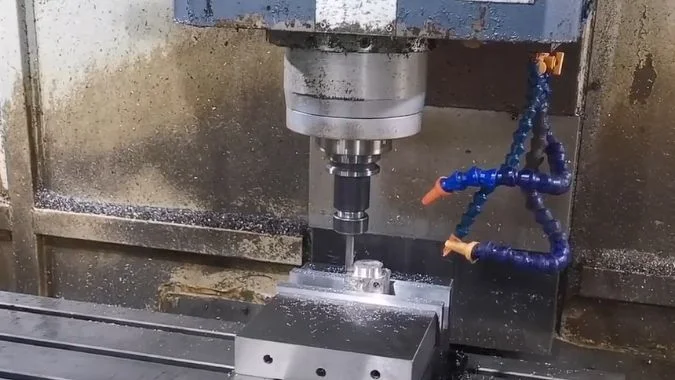
Selecting the appropriate machining center requires moving beyond basic marketing literature and thoroughly analyzing the underlying metrology data. The following technical breakdown details the core principles of positioning accuracy and repeatability, providing a precise framework to evaluate and specify high-precision CNC equipment effectively.
What Are the Core Definitions of Positioning Accuracy and Repeatability?
Distinguishing between positioning accuracy and repeatability is fundamental for assessing a machine tool’s true kinematic capability. While both metrics govern the final dimensions of a workpiece, they represent different mechanical characteristics. Defining these terms clearly allows engineering teams to maintain tight process control and ensure absolute consistency across long production runs.
Positioning accuracy measures the exact difference between the commanded target and the actual machine position. Repeatability measures how consistently the machine returns to that exact same spot over multiple attempts. Both guarantee good parts.
The Meaning of Positioning Accuracy
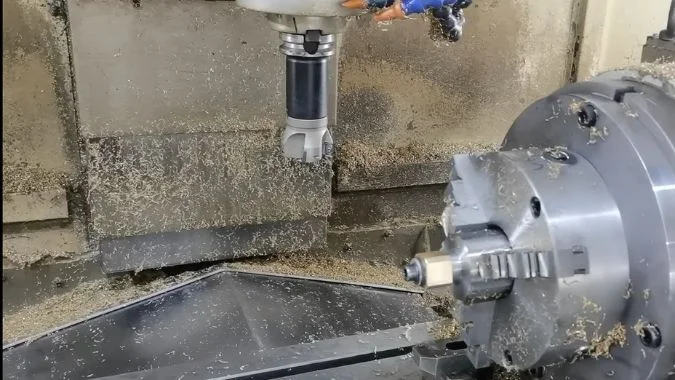
The computer tells the X-axis to move exactly 100.000 millimeters. The machine might stop at 100.005 millimeters instead. The 0.005 millimeter difference equals the positioning error. A high positioning error means the machine fundamentally moves to the wrong place. I always check this number first when testing a new machine.
The Importance of Repeatability
Repeatability matters even more for long production runs. Repeatability measures the absolute stability of the machine tool over time. The machine might miss the exact target on the very first try. The machine must land near that exact same spot every single time after that first cut. High repeatability guarantees the physical consistency of batch-produced parts. A bad repeatability means every single part in the metal batch will have a totally different size.
What Numerical Benchmarks Define High-Precision Positioning and Repeatability?
Relying on ambiguous marketing specifications makes it difficult to accurately predict a machine’s true cutting performance under load. Evaluating equipment against standardized numerical benchmarks provides an objective baseline for procurement. Utilizing these strict parameters ensures the selected machinery aligns perfectly with your facility’s specific tolerance requirements.
Industry standards define precision grade as positioning accuracy within ±0.005 millimeters. Ultra-high precision hits ±0.001 millimeters. High-precision repeatability stays below ±0.002 millimeters. Repeatability usually ranges from one-third to one-half of the total positioning accuracy value.
Standard Precision Grades
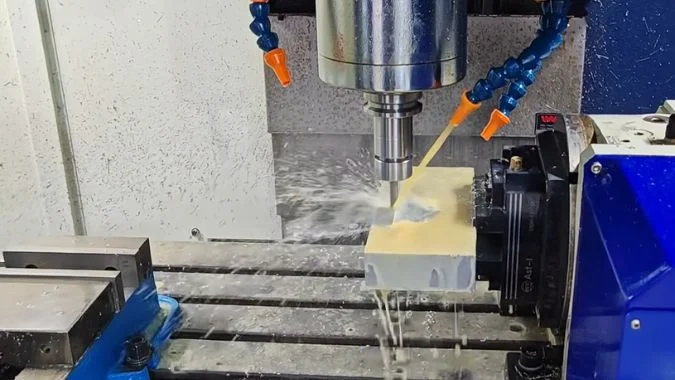
Evaluating machine tools requires strict numbers. I look at the mainstream international standard called ISO 230-21. Industry consensus says a positioning accuracy within ±0.005 millimeters counts as true precision grade. This tight level handles most complex automotive and medical parts perfectly. I use this standard daily in my own shop to verify machine health before cutting expensive metal.
Ultra-High Precision Levels
Some special jobs require extreme numbers. Reaching ±0.001 millimeters falls into the ultra-high precision category. One single micron is incredibly small. We use this exact level for complex optical parts and tiny electronic components. Repeatability always sits much tighter than general positioning accuracy. The repeatability of a high-precision machine tool must stay strictly below ±0.002 millimeters. A machine hitting these small numbers costs a massive amount of money. You must match these exact benchmarks to your actual part drawings. This matching process avoids wasting shop money on unneeded extreme precision.
| Precision Category | Positioning Accuracy | Repeatability Limit |
|---|---|---|
| Standard CNC | ±0.010 mm | ±0.005 mm |
| High Precision | ±0.005 mm | ±0.002 mm |
| Ultra-High Precision | ±0.001 mm | ±0.001 mm |
What Critical Factors Influence Positioning Accuracy and Repeatability?
Maintaining tight machining tolerances requires strict management of the facility’s physical environment. Thermal expansion and mechanical friction continuously influence the kinematic chain of the machine tool. Implementing environmental controls and routine calibration procedures mitigates these variables, ensuring stable dimensional accuracy throughout the daily production cycle.
Thermal deformation from temperature changes ruins machine accuracy. Closed-loop feedback systems like linear scales control exact positions. Regular machine calibration with a laser interferometer fixes wear and tear on the guide rails and ballscrews.
Thermal Deformation Effects
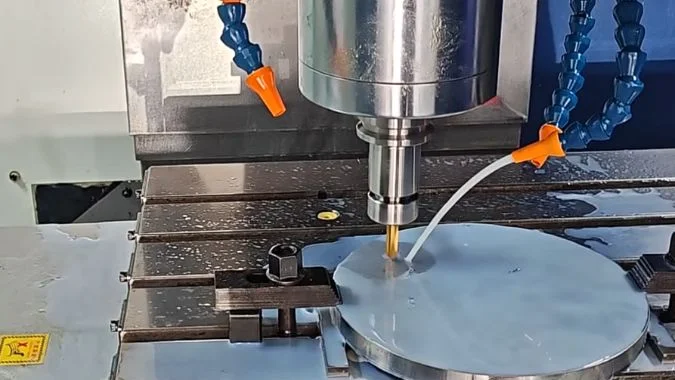
Achieving high accuracy relies on more than just the machine nameplate numbers. Heat changes metal dimensions completely. A cast iron machine bed expands linearly by about 0.01 millimeters per meter for every one degree Celsius change2. I once ruined a whole batch of aluminum parts because the hot morning sun hit the machine side. High-precision machining needs a constant-temperature workshop set strictly to 20 degrees Celsius3. Some advanced machines use real-time temperature compensation software to fix this heat problem automatically.
Feedback and Calibration Methods
The control system matters greatly too. Closed-loop feedback systems improve accuracy completely4. Machine tools using dual feedback from glass linear scales and motor encoders control errors at the micron level. Open-loop systems amplify small errors tenfold easily. Long-term daily use wears down steel ballscrews and guide rails. This physical wear decreases accuracy slowly over many months. I calibrate my machines regularly with a special laser interferometer. This tool measures pitch error perfectly across the whole table. Adding this pitch error compensation back into the computer recovers more than ninety percent of the lost accuracy.
| Influencing Factor | Shop Problem | Effective Solution |
|---|---|---|
| Temperature Shift | Cast iron expands | Climate control workshop |
| Axis Movement | Motor errors grow | Glass linear scales |
| Mechanical Wear | Ballscrew gaps widen | Laser calibration |
How Should We Correctly Interpret Positioning Accuracy and Repeatability Data?
Equipment manufacturers evaluate machine precision using various international metrology standards, which can complicate direct capability comparisons. Failing to account for these differing methodologies can lead to inaccurate assumptions about a machine’s precision grade. Normalizing this data against a unified standard ensures an accurate and objective assessment of the equipment.
Different regions use vastly different testing standards. The Japanese JIS standard shows much smaller error numbers than the ISO or German VDI standards. You must always check which standard the manufacturer used before comparing machine accuracy numbers.
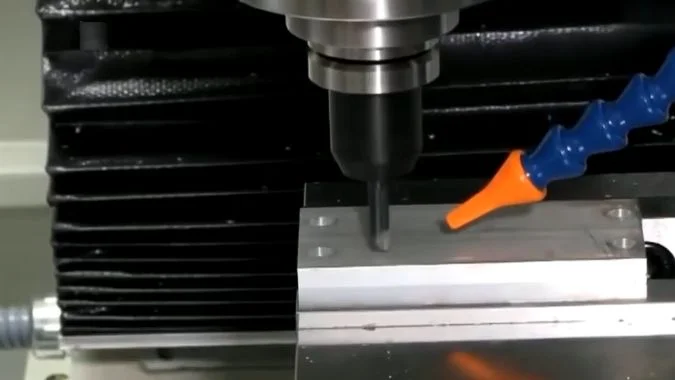
Understanding Global Standards
You must avoid basic numerical traps when buying a new machine. Different countries adopt totally different mathematical evaluation standards. The values shown by the exact same machine tool change wildly under different rules. The Japanese JIS B6338 standard, the German VDI 3441 standard, and the ISO standards use completely different math5. The JIS standard only takes the absolute value of the maximum positional deviation6. ISO and VDI standards use a strict statistical distribution method based on multiple runs. This difference makes data under the JIS standard look much prettier on a printed sales brochure.
Matching Needs to Data
A machine showing ±0.005 millimeters under JIS might fail the ISO test completely. Good machine suppliers list the exact testing standard next to the numbers. I read these data sheets very carefully now before buying anything. General mold processing needs a repeatability of ±0.003 millimeters7. This specific number meets all basic shop requirements. Semiconductor packaging molds require top-tier optical equipment. These extreme parts demand a repeatability of ±0.001 millimeters or better. You must read the data correctly to match the right machine to your daily shop jobs.
| Testing Standard | Math Method | Visual Result on Brochure |
|---|---|---|
| Japanese JIS | Absolute maximum deviation | Looks highly precise |
| ISO Standard | Statistical deviation | Looks less precise |
| German VDI | Statistical deviation | Looks less precise |
Conclusion
True high precision demands positioning accuracy within ±0.005 millimeters. Understanding global standards, controlling shop temperatures, and using linear scales guarantees perfectly consistent parts every single time.
-
"[PDF] Precision in machining: research challenges", https://nvlpubs.nist.gov/nistpubs/Legacy/IR/nistir5628.pdf. ISO 230-2 specifies test procedures for determining the positioning accuracy and repeatability of numerically controlled machine tools under no-load or quasi-static conditions, providing standardized methodology for performance verification. Evidence role: definition; source type: institution. Supports: the role of ISO 230-2 as an international standard for machine tool accuracy testing. ↩
-
"Thermal expansion – Wikipedia", https://en.wikipedia.org/wiki/Thermal_expansion. Gray cast iron exhibits a coefficient of linear thermal expansion typically ranging from 9 to 12 × 10⁻⁶ per °C (equivalent to 0.009-0.012 mm/m/°C), with specific values depending on composition and graphite structure. Evidence role: statistic; source type: education. Supports: the linear thermal expansion coefficient of cast iron. Scope note: Thermal expansion varies with cast iron grade and composition ↩
-
"20 °C—A Short History of the Standard Reference Temperature for …", https://pmc.ncbi.nlm.nih.gov/articles/PMC4654601/. International metrology standards, including ISO 1, establish 20°C (68°F) as the standard reference temperature for dimensional measurements and precision manufacturing, with controlled environments maintaining ±1°C or tighter tolerances for high-precision operations. Evidence role: definition; source type: institution. Supports: the standard reference temperature for precision measurement and manufacturing. ↩
-
"A Review: Absolute Linear Encoder Measurement Technology – PMC", https://pmc.ncbi.nlm.nih.gov/articles/PMC12526919/. Closed-loop control systems incorporating direct position feedback from linear encoders compensate for mechanical transmission errors, thermal effects, and backlash, enabling positioning accuracy improvements of one to two orders of magnitude compared to open-loop stepper motor systems. Evidence role: mechanism; source type: education. Supports: the accuracy improvement mechanism of closed-loop feedback systems in CNC machine tools. Scope note: Actual improvement depends on encoder resolution, control algorithm, and mechanical system quality ↩
-
"[PDF] National Standard for Spatial Data Accuracy", https://www.fgdc.gov/standards/projects/accuracy/part3/chapter3. International standards for machine tool accuracy testing employ varying statistical approaches: ISO 230-2 uses bidirectional positioning with statistical analysis of multiple measurements, while different national standards may specify alternative measurement protocols, statistical treatments, and reporting formats that can yield numerically different results for the same machine. Evidence role: mechanism; source type: institution. Supports: the methodological differences between international machine tool accuracy standards. Scope note: Specific calculation differences require detailed comparison of current standard versions ↩
-
"Development of a spatial accuracy compensation method based on …", https://pmc.ncbi.nlm.nih.gov/articles/PMC12078488/. Different national and international standards for machine tool testing specify varying approaches to data analysis and reporting, with some emphasizing maximum deviation values and others employing statistical measures such as mean deviation and standard deviation, leading to potentially non-comparable numerical results. Evidence role: mechanism; source type: institution. Supports: the calculation methodology specified in JIS standards for positioning accuracy. Scope note: Specific methodological details require reference to current versions of each standard ↩
-
"The Ultimate Guide to Injection Molding Tolerances – Fictiv", https://www.fictiv.com/articles/injection-molding-tolerances-an-in-depth-look. Precision mold manufacturing, particularly for injection molding tooling, typically requires machining tolerances in the range of ±0.005 to ±0.010 mm for general features, with tighter tolerances for critical surfaces, corresponding to machine tool repeatability specifications of several microns. Evidence role: general_support; source type: education. Supports: typical precision requirements for mold manufacturing applications. Scope note: Specific tolerance requirements vary widely with mold type, part complexity, and material ↩

Chris Lu
Leveraging over a decade of hands-on experience in the machine tool industry, particularly with CNC machines, I'm here to help. Whether you have questions sparked by this post, need guidance on selecting the right equipment (CNC or conventional), are exploring custom machine solutions, or are ready to discuss a purchase, don't hesitate to CONTACT Me. Let's find the perfect machine tool for your needs.