

Why Do Heavy Duty Gantry Machining Centers Use Square Ram Instead of T-Ram?
Investing in a massive gantry machining center is a critical capital decision. If the machine lacks the right structural rigidity1, heavy cuts will cause violent spindle vibration, risking expensive large parts. Understanding ram designs before you purchase is essential to guaranteeing permanent stability and precision for your shop.
Heavy-duty gantry machines use square rams because the symmetrical four-sided enclosed structure provides extreme torsional rigidity. This design features four guide rails and direct-drive motors. It prevents tool chatter, distributes wear evenly, and handles massive cutting torque easily in industries like shipbuilding and mining.
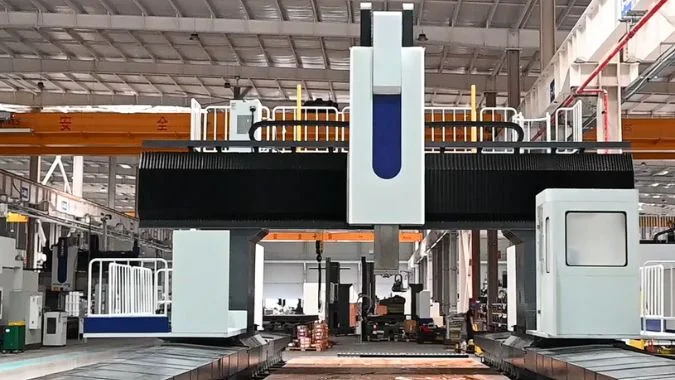
A gantry machining center is a foundational asset for your production, getting the configuration right from the start is crucial for long-term profitability. Let’s break down the exact mechanical differences between these two ram types so you can confidently specify the ideal architecture for your manufacturing needs.
What Are the Primary Structural Differences Between Square Ram and T-Ram?
When you push a machine to its cutting limits, the structural integrity of the ram is the ultimate test. If the design allows flexing under pressure, your dimensional accuracy is lost. Knowing exactly how the physical shape of the ram dictates your maximum cutting capability will help you specify the right equipment for your toughest jobs.
The square ram features a fully enclosed, symmetrical four-sided profile with four guide rails. The T-ram uses an asymmetrical double-track shape with a wide top. The square ram offers balanced multi-directional strength, while the T-ram focuses only on vertical bending resistance.
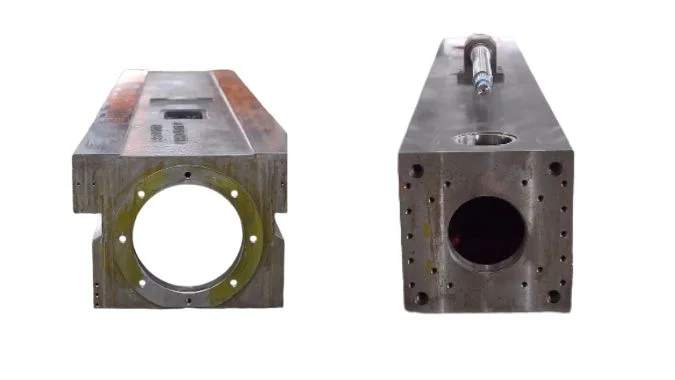
The physical shape of the ram determines the ultimate capability of the gantry machining center. You must look at the cross-section2 to understand this completely. The square ram uses a massive box-type structure. It has four closed sides. This large profile usually measures around five hundred millimeters. This symmetrical design distributes cutting forces perfectly across all surfaces. It uses four linear guide rails3 with ten sliders. This creates a complete four-sided restraint system. The machine builder machines relief areas on the friction surfaces to reduce drag. This makes the movement smooth and precise. The square ram often uses a direct-driven built-in motor4. This eliminates long couplings and torque loss. The T-ram uses a single-sided support structure. It relies on a double-track design with only six sliders. This asymmetrical design creates uneven force distribution. A machine sits perfectly still. One side of the T-ram rail still feels a constant opposing force. This constant stress leads to uneven wear patterns over years of heavy use. The T-ram often uses belt-driven transmissions5. These belts cause power loss during heavy cutting.
| Feature | Square Ram System | T-Ram System |
|---|---|---|
| Cross-Section Shape | Symmetrical four-sided box profile | Asymmetrical wide-top double-track |
| Guide Rail Support | Four rails with ten sliders | Two rails with six sliders |
| Drive Mechanism | Direct-driven built-in motor | Belt-driven or long coupling |
| Force Distribution | Perfectly balanced everywhere | Uneven and constant on one side |
Why Is Vibration Dampening Superior in Square Ram Gantry Machining Centers?
Running a large facing mill requires absolute spindle stability. Without it, the tool screams through the metal, leaving a poor surface finish and threatening part quality. Selecting a ram structure with maximum rigidity is the only way to prevent this destructive chatter from ever starting.
Square rams provide superior vibration dampening because their closed box structure offers balanced rigidity. The four-rail symmetric design distributes loads evenly. Direct-drive motors eliminate belt vibration. This rigid setup absorbs heavy shocks and keeps the spindle stable.
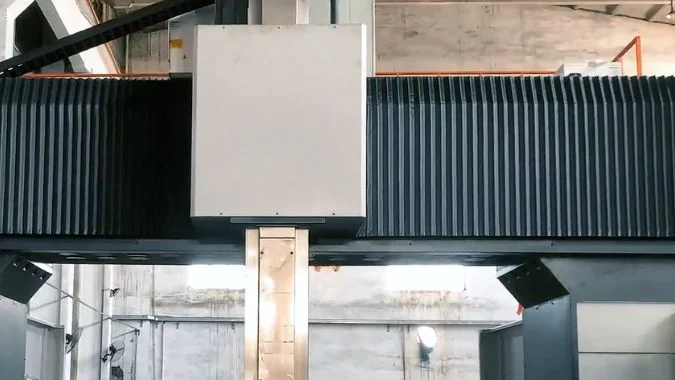
A cutting tool hits hard metal. It creates a twisting force. We call this cutting torque6. The T-ram resists vertical bending very well. It fails to resist twisting forces. The asymmetrical shape flexes more under load. The long drive belts introduce noise and poor dynamic balance. This tiny twist creates loud chatter and bad surface finishes. The square ram has extreme torsional rigidity7. The four closed sides lock the spindle in place firmly. The direct-drive spindle improves dynamic balance instantly. You can run five-face composite machining without any vibration. The square ram handles the highest cutting torques easily. The square ram uses a wraparound guide rail design8. The builder adds stepped reinforcements inside the heavy iron casting. Manufacturers also put nitrogen counterbalance cylinders9 inside the closed ram. This dense structure absorbs shockwaves instantly. You get smoother motion and higher surface finish.
| Rigidity Factor | Square Ram System | T-Ram System |
|---|---|---|
| Torsional Strength | Extremely high resistance | Weak against twisting forces |
| Drive Balance | Direct drive stops vibration | Belts amplify harmonic noise |
| Vibration Control | Absorbs heavy shocks easily | Prone to chatter under heavy load |
| Application Match | Heavy metallurgy and mining | Medium to light fabrication |
Why Do Light Duty Gantry Machining Centers Use T-Ram?
If your production focuses on soft aluminum molds or lightweight composites, over-investing in a massive heavy-duty machine wastes capital and sacrifices dynamic processing speed. Matching the ram design precisely to your workpiece material ensures you maximize both performance and return on investment.
Light-duty gantry machines use T-rams because they process lighter parts requiring low cutting forces. The T-ram is simpler, cheaper to build, and moves fast. This design matches the high-speed needs of small machines perfectly.
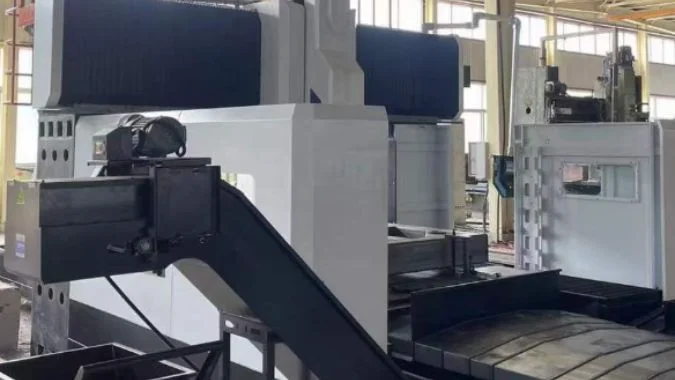
Some clients came to me. They do not need massive cutting power. They need fast movement and low machine prices. A small gantry machine has a narrow bridge width. A large square ram simply will not fit. It is also completely unnecessary. Small shops cut aluminum, automotive parts, and composite materials. These soft materials need only medium cutting force. The T-ram provides good vertical rigidity for this basic work. It handles high-speed feed rates perfectly. It gives a great surface finish on soft materials without shaking. The T-ram is very light. It reduces the weight of the moving parts greatly. This helps the machine start and stop very quickly. The builder pairs the T-ram with linear guide rails. This creates very low frictional resistance. The machine moves fast and positions accurately. The factory saves money on iron casting and complex reinforcements. You save money on the purchase price. It is the smartest choice for high-speed lightweight part machining.
| Selection Factor | T-Ram Benefit | Why Square Ram Fails Here |
|---|---|---|
| Machine Bridge Width | Fits narrow small gantry bridges | Too bulky for small machines |
| Moving Weight | Very light and fast | Too heavy and slows down speed |
| Material Target | Aluminum and soft composites | Over-engineered and wasteful |
| Purchase Price | Highly cost-effective | Unnecessarily expensive |
What Are the Differences in Maintenance Requirements Between Square Ram and T-Ram Systems?
In a heavy machining environment, iron chips and contaminated coolant are constant threats to precision moving parts. A vulnerable design leads to hours of unplanned downtime. Choosing a ram structure with superior structural sealing minimizes daily maintenance and keeps your spindle turning profitably.
Square rams require minimal maintenance. Their enclosed structure blocks dirt, and direct drives eliminate belt replacements. T-rams need frequent cleaning and belt tensioning. Their open structure allows chips to contaminate the rails easily.
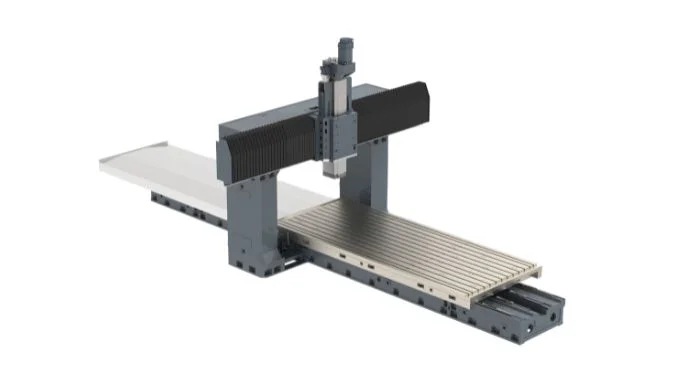
Dirt kills machine tools faster than anything else. You must understand how these two rams handle a dirty shop environment. The square ram uses a fully enclosed design. This metal shell acts like a perfect shield. Metal chips and dirty coolant cannot reach the internal bearings. The grease stays clean inside for a long time. The direct-drive system has no belts or long couplings. You never tension or replace worn belts. The machine uses external constant-temperature cooling to protect the spindle. Your daily maintenance is very simple. The T-ram uses an open structure. The sliding parts sit exposed to the cutting area. Sharp chips and dirty water fly directly onto the guide rails. You must clean this machine constantly. You must pump fresh grease frequently to push the dirt out. The T-ram uses belts and couplings. These parts stretch and vibrate over time. You must check the belt tension constantly. You ignore this maintenance task. The T-ram wears down. You must manually adjust the gib gaps.
| Maintenance Item | Square Ram System | T-Ram System |
|---|---|---|
| Structural Sealing | Fully enclosed and safe | Open and exposed to dirt |
| Drive Components | Direct drive needs no service | Belts require frequent tensioning |
| Lubrication Cycle | Very long intervals | Requires frequent fresh grease |
| Wear Compensation | Symmetrical wear needs no fix | Needs frequent gib gap tuning |
Conclusion
You must choose a square ram for heavy shipbuilding and mining parts. You should pick a T-ram for fast aluminum work. Choose correctly to save money.
-
Learn how rigidity reduces vibration and preserves dimensional accuracy during heavy cuts and high-torque operations. ↩
-
See analyses linking cross-section geometry to flex, torsion resistance, and maximum safe cutting forces. ↩
-
Find resources showing how multi-rail support distributes loads, reduces wear, and improves long-term precision. ↩
-
Learn why direct-drive reduces torque loss, vibration, and maintenance compared with belts and long couplings. ↩
-
Understand maintenance needs, power loss, and dynamic balance issues linked to belt drives under heavy cutting loads. ↩
-
Find guidance on matching ram geometry to expected cutting torques to avoid twist-induced chatter and part scrap. ↩
-
Read practical tests and metrics connecting torsional stiffness to chatter suppression and improved surface quality. ↩
-
See schematics and case studies showing how wraparound rails and internal reinforcements improve stability. ↩
-
Discover how counterbalances reduce operator load, absorb shockwaves, and improve motion smoothness and safety. ↩

Chris Lu
Leveraging over a decade of hands-on experience in the machine tool industry, particularly with CNC machines, I'm here to help. Whether you have questions sparked by this post, need guidance on selecting the right equipment (CNC or conventional), are exploring custom machine solutions, or are ready to discuss a purchase, don't hesitate to CONTACT Me. Let's find the perfect machine tool for your needs.