

Wat zijn de voordelen van een hulsspindel in een CNC-draaifreescentrum?
Spindelbeweging, trillingen en hitte kunnen de nauwkeurigheid, oppervlaktekwaliteit en standtijd van gereedschap stilletjes beschadigen tijdens complexe draai-freesbewerkingen.
Een huls-type spindel verbetert de verspaning door een gemeenschappelijk montagenulpunt, een korte uitsteeklengte, stijve perifere ondersteuning, gebalanceerde thermische uitzetting, effectieve koeling en modulair onderhoud. Deze kenmerken ondersteunen een hoge concentriciteit, stabiele C-as positionering, sterke trillingsweerstand en lagere onderhoudskosten op lange termijn.
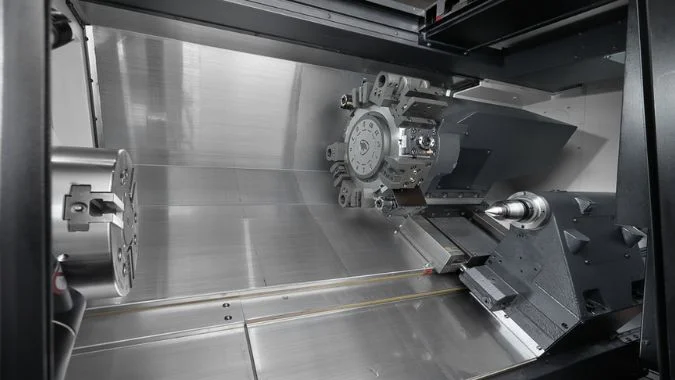
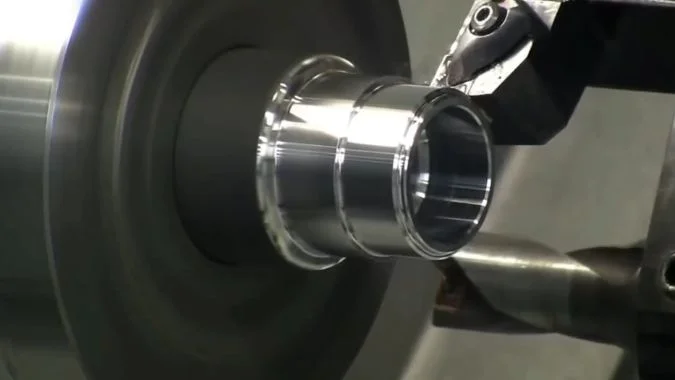
A CNC-draaifreescentrum combineert draaien, frezen, boren en indexeren in één machine1. Elk proces creëert verschillende krachten en hitte. De spindel moet stabiel blijven terwijl de snelheid, belasting en bedrijfsmodus veranderen. Een huls-type spindel, ook wel quill-type spindel genoemd2, plaatst de spindel en het lagersysteem in een stijve cilindrische huls. Deze structuur creëert een gecontroleerde mechanische en thermische basis. De waarde hiervan wordt duidelijk wanneer nauwkeurigheid, slagvastheid, thermische stabiliteit en onderhoud afzonderlijk worden onderzocht.
Waarom kan het een uitstekende verspaningsnauwkeurigheid en concentriciteit bereiken?
Kleine uitlijningsfouten tussen spindellagers kunnen leiden tot slingering, oneffen oppervlakken, een korte standtijd van gereedschap3, en onnauwkeurige gefreesde kenmerken.
Een huls-type spindel bereikt een hoge nauwkeurigheid door gebruik te maken van een gemeenschappelijk montagenulpunt voor de lagerzittingen, een korte spindeluitsteeklengte, voorgespannen precisielagers en een stabiele cilindrische behuizing. Deze elementen verminderen assemblage-excentriciteit, buiging, radiale slingering en C-as positioneringsfouten.
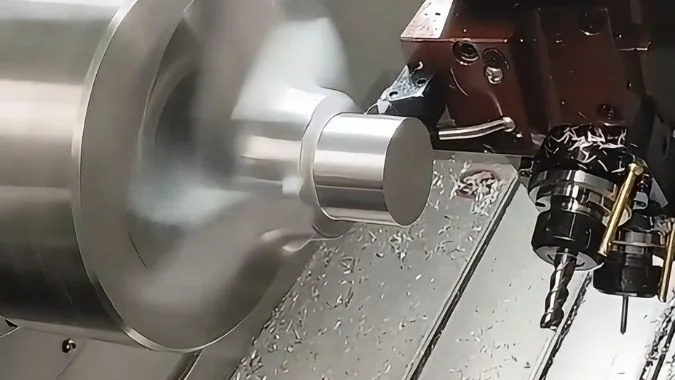
Een uniform nulpunt controleert de lageruitlijning
De voorste en achterste lagerhuizen moeten dezelfde as delen. Een huls-type ontwerp gebruikt het spindellichaam en de voorste lagerhuls als een gemeenschappelijk positioneringsnulpunt. Deze montagemethode beperkt de kans dat elk lagerhuis vanuit een afzonderlijke referentie wordt uitgelijnd. Hierdoor worden opgebouwde assemblagefouten verminderd.
Het gemeenschappelijke nulpunt dwingt de voorste en achterste lagerboringen in een zeer coaxiale verhouding4. De spindelas kan vervolgens rond een stabielere hartlijn roteren. Dit verbetert de radiale slingering, axiale slingering en de concentriciteit van het onderdeel.
| Structureel kenmerk | Gecontroleerde fout | Voordeel van verspaning |
|---|---|---|
| Algemeen referentievlak voor lagers | Uitlijnfout van de lagerboring | Betere concentriciteit van de spil |
| Precisie-lagervoorspanning | Interne lagerspeling | Lagere radiale beweging |
| Cilindrische hulsbehuizing | Vervorming van de behuizing | Stabielere rotatie |
| Gecontroleerde montagepassing | Excentriciteit bij montage | Lagere slingering van de spil |
Korte overstek verbetert de buigstijfheid
Het gereedschapsbevestigingsuiteinde bevindt zich dicht bij de voorste lagersteun. Deze korte afstand vermindert de momentarm die door de snijkracht wordt gecreëerd. De spilneus buigt hierdoor minder bij zware draai- of freesbelastingen.
Een korte overstek is belangrijk wanneer een gereedschap herhaaldelijk het werkstuk in- en uitgaat. Het is ook belangrijk bij excentrisch frezen. Beide bewerkingen kunnen wisselende radiale belastingen op de spil uitoefenen.
Stabiele rotatie ondersteunt C-as-nauwkeurigheid
Een draai-freescentrum gebruikt de spil als C-as tijdens frezen en boren. De huls biedt een stabiel rotatiereferentievlak voor deze beweging. Wanneer de spil wordt gecombineerd met een direct-drive motor en een encoder met hoge resolutie, kunnen high-end systemen een herhaalbaarheid van hoekpositionering van maximaal ±1 boogseconde5 bereiken onder geschikte bedrijfsomstandigheden.
Deze stabiele relatie vermindert contourfouten die worden veroorzaakt door een mismatch tussen spilrotatie en C-as commando's. Het ondersteunt ook nauwkeurige gatenpatronen, vlakken, groeven en gefreesde profielen.
Waarom kan de huls-type spindel een uitstekende trillingsweerstand behouden tegen schokbelastingen tijdens complexe bewerkingen?
Onderbroken sneden en excentrisch frezen creëren herhaaldelijke impacten6. Deze krachten kunnen leiden tot ratelwerking, zichtbare gereedschapssporen, instabiele afmetingen en vroegtijdige lagerschade7.
De huls-type spil weerstaat trillingen dankzij zijn compacte cilindrische behuizing, nauwe pasvorm met het machinehuis, korte spiluitsteek en brede lagerafstand. Deze kenmerken spreiden de impactbelasting, verhogen de buigstijfheid en verminderen de trillingsamplitude tijdens draaien, frezen en onderbroken snijden.
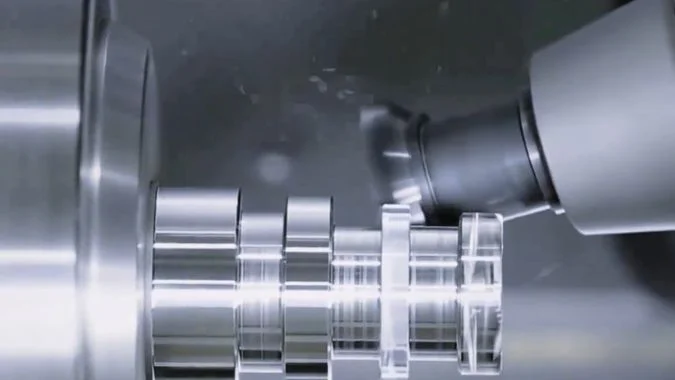
Perifere ondersteuning creëert een rigide belastingspad
De buitenwand van de huls past nauw in het machinehuis. Dit contact zorgt voor ondersteuning rondom een groot deel van het spillichaam in plaats van te vertrouwen op een klein aantal geïsoleerde montagepunten. Snijkrachten kunnen daardoor via een kort en stijf pad door de huls naar de machinestructuur worden geleid.
De cilindrische vorm verwerkt ook krachten vanuit verschillende richtingen. Dit is van belang bij een draai-freescentrum, omdat draaien meestal een constante radiale kracht creëert, terwijl frezen veranderende krachten in meerdere richtingen veroorzaakt.
| Bewerkingsconditie | Belangrijkste belastingskenmerk | Respons van het huls-type |
|---|---|---|
| Zwaar draaiwerk | Continue radiale belasting | Hoge buigstijfheid |
| Onderbroken draaiwerk | Herhaalde impact | Betere lastverdeling |
| Excentrisch frezen | Wisselende radiale richting | Stabiele perifere ondersteuning |
| Boren | Axiale stuwkracht | Directe overdracht naar de behuizing |
| C-as frezen | Gecombineerde torsie- en radiale belasting | Stabiel rotatiereferentiepunt |
De huls helpt trillingsenergie te verminderen
Een stijve structuur neemt niet alle trillingen weg. Het beperkt de beweging en verandert de manier waarop trillingen door het spindelsysteem reizen. De huls, lagerzittingen, machinebehuizing en contactoppervlakken vormen een compact geheel. Deze assemblage kan lokale buiging verminderen en helpen bij het verplaatsen van trillingsenergie naar de grotere machinestructuur.
De lagerafstand beïnvloedt ook de trillingsbestendigheid. Een grotere afstand tussen de voorste en achterste lagergroepen zorgt voor een sterkere ondersteuning tegen kantelmomenten. Voorgespannen lagers verminderen interne beweging verder. De exacte lagerrangschikking is nog steeds afhankelijk van spindelsnelheid, gereedschapsgrootte, koppel en de verwachte snijbelasting.
Directe aandrijving kan extra trillingsbronnen verwijderen
Sommige hoogwaardige spindels van het huls-type gebruiken een ingebouwde motor. Dit ontwerp verwijdert riemen, poelies of afzonderlijke koppelingen uit de transmissieketen. Minder transmissieonderdelen betekenen minder mogelijke bronnen van speling, onbalans en trillingen.
Het resultaat is een stabieler snijproces. De oppervlakteafwerking kan verbeteren, gereedschapsslijtage kan gelijkmatiger worden en maatafwijkingen tussen onderdelen kunnen worden verminderd.
Hoe onderdrukt de huls-type spindel de invloed van thermische vervorming op de nauwkeurigheid?
Spindellagers en motoren genereren warmte tijdens lange productiecycli. Ongelijke verhitting kan het spindelmidden verschuiven en de afmetingen van onderdelen geleidelijk veranderen.8.
Een huls-type spindel beperkt thermische fouten door een symmetrische constructie, omhullende koelkanalen, gecontroleerde lagervoorspanning en gelijkmatige warmteoverdracht. De cilindrische vorm ondersteunt een gebalanceerde uitzetting, terwijl onafhankelijke vloeistofkoeling warmte afvoert voordat lokale temperatuurverschillen leiden tot ernstige verschuivingen van het spindelmidden.
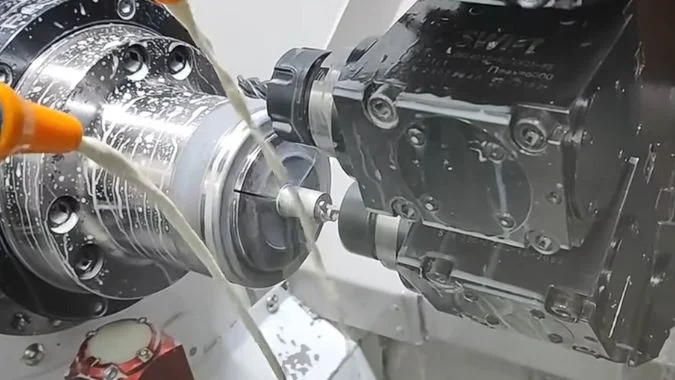
Symmetrische constructie bevordert gebalanceerde uitzetting
De huls heeft een rotatie- symmetrische vorm. Wanneer warmte gelijkmatig wordt verdeeld, heeft de structuur de neiging om rond de spindelas uit te zetten9 in plaats van de as sterk naar één kant te trekken. Dit gedrag helpt radiale middenverschuiving te verminderen.
Een grote lagerafstand kan ook de thermische balans verbeteren. De lagergroepen bevinden zich in één gecontroleerde hulseenheid, waardoor hun posities op een meer voorspelbare manier reageren op temperatuurveranderingen. Deze structuur elimineert thermische groei niet, maar maakt thermisch gedrag gemakkelijker te beheersen en te compenseren.
| Thermische bron | Mogelijk probleem | Controlemethode |
|---|---|---|
| Warmte voorlager | Verschuiving spindelneus | Lokale vloeistofkoeling |
| Warmte achterlager | Axiale groei | Gebalanceerde koeling en voorspanning |
| Warmte ingebouwde motor | Ongelijke uitzetting behuizing | Onafhankelijk koelcircuit |
| Stijging van de smeermiddeltemperatuur | Lagere viscositeit en slijtage | Circulatie op constante temperatuur |
| Lokale hotspots | Radiale verplaatsing van het middelpunt | Omhullende koelkanalen |
Omhullende koeling voert warmte snel af
De hulsstructuur biedt ruimte voor koelkanalen rondom de spil- en lagerzones. Water, olie of een andere geregelde vloeistof kan door deze kanalen circuleren. Het koelsysteem voert warmte dicht bij de bron af voordat deze zich ongelijkmatig door het spilhuis verspreidt.
Onafhankelijke koelcircuits kunnen de motor- en lagerzones afzonderlijk regelen. Deze aanpak is nuttig omdat de motor en de lagers warmte met verschillende snelheden kunnen produceren.
De voorspanning van het lager moet gecontroleerd blijven
Temperatuurveranderingen kunnen de lagerspeling en voorspanning veranderen. Overmatige voorspanning zorgt voor meer wrijving en warmte. Onvoldoende voorspanning zorgt voor ongewenste beweging van de spil.10 De huls helpt de geometrie van de lagerzittingen te behouden, terwijl het koelsysteem de temperaturen binnen een gecontroleerd bereik houdt.
Opwarmprocedures van de machine, koelvloeistoftemperatuur, kamertemperatuur, spiltoerental en snijbelasting zijn nog steeds van invloed op de uiteindelijke nauwkeurigheid. De huls creëert een stabiele basis, maar een goede bedieningscontrole blijft noodzakelijk voor precisieproductie.
Hoe verlaagt de huls-type spindel de daaruit voortvloeiende onderhoudskosten?
Een conventionele revisie van de spil kan grote demontage, geschoolde arbeid, lange stilstandtijd en dure heruitlijning vereisen voordat de productie opnieuw kan worden opgestart.
Een spil van het huls-type verlaagt de onderhoudskosten door modulaire vervanging, gestandaardiseerde interfaces, onafhankelijke koelcomponenten en eenvoudigere toegang voor service. Beschadigde lagers, afdichtingen of koelhulzen kunnen vaak als één geheel worden onderhouden, wat demontagewerkzaamheden, uitlijningstijd, kosten voor reserveonderdelen en productieverliezen vermindert.
Modulaire vervanging verkort de stilstandtijd
Lagers, afdichtingen, koelhulzen en aanverwante onderdelen kunnen als onafhankelijke modules worden gerangschikt. Wanneer er een ernstig defect optreedt, kan de beschadigde quill-eenheid vaak worden verwijderd zonder de machinekop volledig te demonteren.
Deze methode vermijdt onnodig werk aan gezonde onderdelen. Het kan ook de noodzaak wegnemen om het volledige spilsysteem terug te sturen naar de oorspronkelijke fabriek. Bij geschikte machineontwerpen, kan modulaire vervanging de onderhoudsstilstand met meer dan 60 procent verkorten11. De werkelijke vermindering hangt af van de toegang tot de machine, de beschikbaarheid van reserveonderdelen, de vaardigheid van de technicus en het type defect.
| Onderhoudsfunctie | Traditioneel serviceprobleem | Kostenvoordeel |
|---|---|---|
| Verwijderbare quill-module | Volledige demontage van de spil | Kortere reparatietijd |
| Onafhankelijke afdichtingen | Vervanging van grote assemblage | Gebruik van onderdelen uit het lagere segment |
| Standaard lagerinterfaces | Inkoop van speciale componenten | Eenvoudigere inkoop |
| Quick-release structuur | Verwijdering van randapparatuur | Lagere arbeidskosten |
| Vooraf ingestelde vervangingsmodule | Langdurig uitlijnproces | Sneller herstel van de productie |
Betere koeling verlengt de levensduur van componenten
Een stabiele lagertemperatuur beschermt de kwaliteit van het smeermiddel. Het vermindert ook herhaalde thermische uitzetting en krimp. Deze veranderingen belasten lagers, afdichtingen en pasvlakken.
Een geïntegreerde water- of oliekoelingshuls kan de slijtagegraad van lagers met ongeveer 30 tot 50 procent verminderen12 in correct gecontroleerde toepassingen. De werkelijke levensduur hangt af van snelheid, belasting, smering, vervuiling, installatiekwaliteit en koelprestaties. Desalniettemin zorgt een lagere bedrijfstemperatuur meestal voor langere onderhoudsintervallen.
Standaardinterfaces verlagen de kosten voor reserveonderdelen
Standaard lagerhuizen en algemene hulsspecificaties kunnen het gemakkelijker maken om vervangende onderdelen te vinden. Een standaardinterface biedt machine-eigenaren ook meer reparatiemogelijkheden. Dit kan de afhankelijkheid van een enkel aangepast onderdeel met een lange levertijd verminderen.
Eenvoudigere procedures verminderen de arbeidsbehoefte
Een gedeelde of quick-release huls kan worden onderhouden zonder de transmissieketting, gereedschapswisselaar en andere nabijgelegen systemen te verwijderen. Getrainde fabriekstechnici kunnen routinevervangingen uitvoeren na een basis technische instructie. Voor slijpen, balanceren of het afstellen van uiterst nauwkeurige lagers kunnen nog steeds senior spindelspecialisten nodig zijn.
J&M Machine Tools evalueert de spindelstructuur in combinatie met de machinetoepassing, de verwachte snijbelasting, het snelheidsbereik, het koelingsontwerp en de lokale serviceomstandigheden. Deze volledige beoordeling helpt het spindelontwerp af te stemmen op zowel productiedoelen als langetermijnonderhoudsplannen.
Conclusie
Een hulsspil combineert nauwkeurige uitlijning, hoge stijfheid, gebalanceerde koeling, stabiele C-asbesturing en modulaire onderhoudsvriendelijkheid om de bewerkingskwaliteit te verbeteren en tegelijkertijd stilstandtijd en onderhoudskosten te verlagen.
-
"Wat is CNC-bewerking? – Goodwin University", https://www.goodwin.edu/enews/what-is-cnc/. Draai-freescentra vormen een categorie van multifunctionele werktuigmachines die de mogelijkheden van een draaibank en een bewerkingscentrum integreren, waardoor zowel rotatie- als prismatische bewerkingen op één werkstukopstelling kunnen worden uitgevoerd om de handling te verminderen, de nauwkeurigheid te verbeteren en de productiecycli te verkorten. Bewijsrol: definitie; brontype: encyclopedie. Ondersteunt: de functionele definitie en mogelijkheden van draai-freescentra. ↩
-
""Machine tool spindle design" door Jamie Hoyt", https://repository.rit.edu/theses/7199/. Quill- of hulsspilontwerpen kenmerken zich door de roterende spil die in een cilindrische behuizing is gemonteerd, wat zorgt voor structurele ondersteuning en lagerafstelling, waardoor ze zich onderscheiden van direct gemonteerde spilconfiguraties in de architectuur van werktuigmachines. Bewijsrol: definitie; brontype: educatie. Ondersteunt: terminologie en classificatie van het ontwerp van werktuigmachinespillen. ↩
-
"Runout in Machining Explained: Causes, Effects, and How to Reduce It", https://taigtools.com/blog/runout-in-machining/. Spilafwijking door lagerfouten introduceert periodieke geometrische fouten tijdens rotatie, wat zich manifesteert als oppervlakteruwheid, maatvariaties, ongelijkmatige gereedschapsaangrijping en versnelde slijtage van de snijkant door inconsistente snijkrachten. Bewijsrol: mechanisme; brontype: educatie. Ondersteunt: het causale verband tussen spilafwijking en verslechtering van de bewerkingskwaliteit. ↩
-
"Bearing position tolerances", https://www.eng-tips.com/threads/bearing-position-tolerances.434143/. Het vaststellen van een gemeenschappelijk referentiekader voor het bewerken van lagerzittingen maakt een strakkere controle van de coaxialiteit tussen lagerlocaties mogelijk, waardoor cumulatieve tolerantieopbouw wordt verminderd die anders het gevolg zou zijn van onafhankelijke referentiepunten in precisieconstructies. Bewijsrol: mechanisme; brontype: educatie. Ondersteunt: hoe gemeenschappelijke referentiemethoden bij assemblage de geometrie van de lagerafstelling beheersen. ↩
-
"Rotary Axis Explained: Key Concepts in CNC Machining", https://sarkinencalibrating.com/feeds/blog/rotary-axis. Herhaalbaarheid van de hoekpositionering op boogsecondeniveau vertegenwoordigt de prestaties die haalbaar zijn bij uiterst nauwkeurige roterende assen wanneer omgevingscondities, encoderresolutie, kwaliteit van het aandrijfsysteem en thermische stabiliteit zijn geoptimaliseerd, hoewel de werkelijke resultaten variëren per implementatie. Bewijsrol: statistiek; brontype: onderzoek. Ondersteunt: haalbare hoekpositioneringsnauwkeurigheid in roterende assen van precisiewerktuigmachines. Toelichting: Dit beschrijft het theoretisch vermogen onder gecontroleerde omstandigheden in plaats van gegarandeerde prestaties voor alle implementaties van hulsspindels. ↩
-
"Onderzoek naar het modelleren van snijkrachten en verspaning … – PMC", https://pmc.ncbi.nlm.nih.gov/articles/PMC12388261/. Onderbroken verspaningsbewerkingen en excentrische gereedschapspaden genereren periodieke aangrijpings- en ontkoppelingsgebeurtenissen die schokbelastingen en in de tijd variërende snijkrachten creëren, waardoor trillingsmodi van de spindel worden geactiveerd en dynamische doorbuigingen worden geïntroduceerd die verder gaan dan die van stationaire verspaning. Bewijsrol: mechanisme; brontype: educatie. Ondersteunt: de krachtkarakteristieken van onderbroken en asymmetrische verspaningsbewerkingen. ↩
-
"Een onderzoek naar trillingen door gereedschapsratel in machines …", https://scholarworks.uni.edu/cgi/viewcontent.cgi?article=4664&context=grp. Ongecontroleerde trillingen bij verspaning veroorzaken regeneratieve ratel door dynamische koppeling tussen gereedschapsdoorbuiging en oppervlaktegeneratie, terwijl ze ook wisselende belastingen overbrengen op lagers die vermoeiing versnellen door Brinelling, valse Brinelling en het afbreken van de smeerfilm. Bewijsrol: mechanisme; brontype: onderzoek. Ondersteunt: de gevolgen van overmatige trillingen in precisiebewerking-systemen. ↩
-
"(PDF) Evaluatie van thermische stabiliteit van werktuigmachines tegen …", https://www.academia.edu/96653499/Evaluation_of_Machine_Tool_Thermal_Stability_against_Dimensional_Accuracy. Thermische uitzetting in structuren van werktuigmachines volgt de temperatuurverdeling, en asymmetrische verwarming produceert differentiële groei die het gereedschapcenterpunt verplaatst ten opzichte van het werkstukcoördinatensysteem, wat leidt tot systematische dimensionale fouten die toenemen tijdens het opwarmen en variëren met de bedrijfsomstandigheden. Bewijsrol: mechanisme; brontype: onderzoek. Ondersteunt: hoe thermische gradiënten geometrische fouten in spindels van werktuigmachines veroorzaken. ↩
-
"Stijve, sterke roosters met nul thermische uitzetting via het Poisson-effect", https://lakeslab.ep.wisc.edu/ZeroAlphaStiffJMR13.pdf. Rotatiesymmetrische geometrieën die onderworpen zijn aan een uniforme temperatuurstijging vertonen radiale uitzetting die de hartlijnpositie behoudt bij afwezigheid van externe beperkingen, een eigenschap die in precisie-mechanisch ontwerp wordt benut om thermische drift van warmtebronnen rond de rotatieas te minimaliseren. Bewijsrol: mechanisme; brontype: educatie. Ondersteunt: thermisch uitzettingsgedrag van rotatiesymmetrische structuren. ↩
-
"Uitleg over de basisprincipes van lagervoorspanning", https://www.lily-bearing.com/resources/blog/explaining-the-basics-of-bearing-preload?srsltid=AfmBOorSif7118qJ-d7gMZSipwMidPQH3Tz6C2ACu3jbvitkkwKsui6w. Lagervoorspanning creëert een gecontroleerde contactkracht die interne speling elimineert en de stijfheid verhoogt, maar een hogere voorspanning verhoogt de rolweerstand, warmteontwikkeling en het stroomverbruik, wat optimalisatie vereist op basis van snelheid, belasting, vereiste stijfheid en thermisch beheer. Bewijsrol: mechanisme; brontype: onderzoek. Ondersteunt: de afwegingen bij de selectie van lagervoorspanning tussen stijfheid en warmteontwikkeling. ↩
-
"7 voordelen van het repareren van CNC-spindels in plaats van vervangen …", https://www.setco.com/blog/7-benefits-of-repairing-cnc-spindles-instead-of-replacing-them/. Strategieën voor het vervangen van modulaire componenten in werktuigmachines kunnen de gemiddelde reparatietijd aanzienlijk verkorten in vergelijking met een volledige systeemrevisie, waarbij de werkelijke tijdsbesparing afhangt van het type defect, de beschikbaarheid van reserveonderdelen, de training van technici en het systeemontwerp. Bewijsrol: statistiek; brontype: onderzoek. Ondersteunt: potentieel voor verkorting van de downtime door modulaire versus geïntegreerde onderhoudsbenaderingen voor spindels. Toelichting: Het specifieke cijfer van 60% vertegenwoordigt een potentiële verbetering in gunstige scenario's in plaats van een universeel resultaat. ↩
-
"Beheersing van thermisch geïnduceerde lagerbelastingen om … te verbeteren", https://deepblue.lib.umich.edu/items/a94ad7cd-8dba-4b96-b132-e85f56b56c80. De levensduur van lagers vertoont een sterke temperatuurafhankelijkheid, waarbij gecontroleerde koeling de levensduur verlengt door vermindering van smeermiddelafbraak, thermische spanning en effecten van differentiële uitzetting, hoewel de exacte verbetering varieert per lagertype, belasting, snelheid en ontwerp van het smeersysteem. Bewijsrol: statistiek; brontype: onderzoek. Ondersteunt: de relatie tussen de bedrijfstemperatuur van lagers en de levensduur. Toelichting: Het geciteerde bereik weerspiegelt algemene tribologische principes in plaats van specifieke testgegevens voor hulsspindellagers. ↩

Chris Lu
Met meer dan tien jaar praktijkervaring in de werktuigmachine-industrie, vooral met CNC-machines, ben ik er om je te helpen. Of je nu vragen hebt naar aanleiding van dit bericht, begeleiding nodig hebt bij het selecteren van de juiste apparatuur (CNC of conventioneel), aangepaste machineoplossingen onderzoekt of klaar bent om een aankoop te bespreken, aarzel niet om contact met mij op te nemen. Laten we de perfecte bewerkingsmachine voor uw behoeften vinden.