

What Are the Differences Between Electric and Direct-Drive Spindles on CNC Milling Machines?
Although both "electric" and "direct-drive" spindles run on electricity, their internal designs cater to vastly different machining demands. Confusing built-in motorized units with coupled direct-drive systems often leads to buying a spindle that fails your production requirements.
An electric, or motorized, spindle integrates the motor rotor with the spindle shaft. A direct-drive spindle uses a separate motor connected to the spindle through a coupling. Motorized spindles favor extreme speed and fast response, while direct-drive spindles usually balance torque, rigidity, cost, and serviceability.
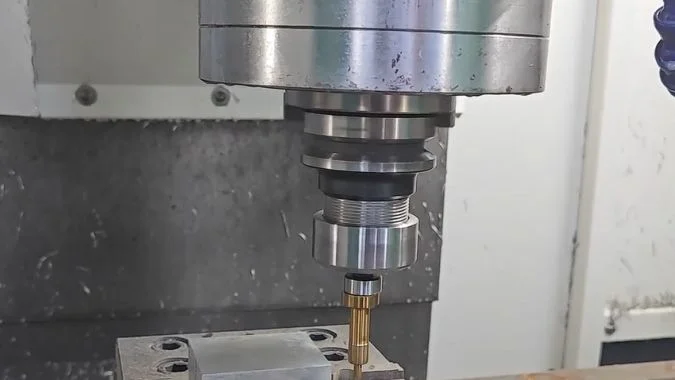
While both types use electric motors, the key distinction is structural: motorized spindles place the motor inside the shaft for speed, while direct-drive spindles connect a separate motor via a coupling for balanced performance.
How Do Electric Spindles and Direct-Drive Spindles Compare in Speed and Torque Output?
Selecting only by maximum rpm can create a weak roughing process. Selecting only by peak torque can also limit small-tool speed and reduce finishing productivity.
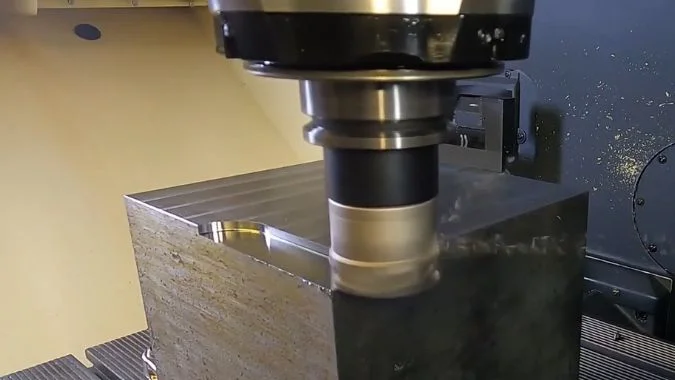
Motorized electric spindles generally provide higher maximum speeds, lower rotational inertia, and faster acceleration. Direct-drive spindles commonly provide stronger low-speed torque, higher practical rigidity, and better performance during medium or heavy milling, although actual results depend on each spindle’s power and torque curves.
How Does Spindle Structure Affect Maximum Speed?
A motorized spindle has a zero-transmission structure. The motor rotor and spindle shaft form one rotating assembly. This structure eliminates belts, gears, and an external coupling. It reduces the number of rotating components and can support fast acceleration and high rotational speed.
General motorized spindles may run from about 15,000 to 40,000 rpm. Specialized units for engraving, micro-machining, or grinding can exceed 60,000 rpm.1 Some small units may reach much higher speeds. These figures do not apply to every machine because tool interface size, bearing diameter, spindle power, and application all influence the safe limit.
A direct-drive spindle uses an external motor and coupling. Many models operate between about 8,000 and 18,000 rpm. Higher-performance versions may reach 20,000 or 24,000 rpm.2 The coupling, motor balance, bearing system, and alignment can limit further speed increases.
| Performance factor | Motorized electric spindle | Direct-drive spindle |
|---|---|---|
| Motor arrangement | Built into the spindle housing | Separate from the spindle |
| Connection | Rotor integrated with spindle shaft | Motor connected through a coupling |
| Common speed focus | High and ultra-high speed | Medium to high speed |
| Rotational inertia | Usually lower | Usually higher |
| Acceleration | Very fast | Fast, but often slower |
| Best tool range | Small and medium tools | Medium and larger tools |
| Typical cutting focus | Light, fast finishing | General milling and medium cutting |
Why Does a Direct-Drive Spindle Often Provide More Practical Torque?
Spindle power, torque, and speed are related. A spindle cannot maintain the same torque across its entire speed range.3 Torque normally remains stable in a lower-speed constant-torque zone. It then falls after the spindle enters its constant-power range.
Direct-drive units are often designed with larger external motors and stronger spindle assemblies. Their design can provide stable torque at low and medium speeds. The spindle may also use larger bearings and a strong tool interface, such as BT40, CAT40, or BBT40. These features support larger cutters and heavier radial loads.
Motorized spindles often trade low-speed torque for higher maximum speed. They perform well with small tools, light cutting depths, and high feed rates. However, a high-power motorized spindle can still provide useful roughing capacity. A small direct-drive spindle may also have limited torque. Rated power, continuous torque, peak torque, base speed, bearing capacity, and tool interface must therefore be compared instead of relying on the spindle category alone.
What Spindle Type Delivers Better Precision and Surface Finish in CNC Milling?
High rotational speed does not automatically produce a smooth finish. Runout, balance, vibration, thermal growth, toolholding, and machine rigidity can have a greater effect.
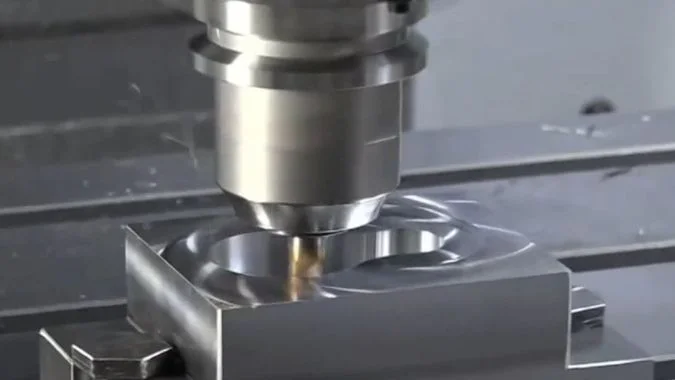
A motorized electric spindle often delivers better high-speed finish because it removes the coupling and has low inertia and vibration. A direct-drive spindle can provide better stability under heavier cuts. Final precision still depends on runout, bearings, balance, cooling, tooling, and machine structure.
Why Can a Motorized Spindle Improve High-Speed Finishing?
Every transmission part can introduce alignment error, vibration, backlash, or elastic movement.4 A motorized spindle removes the coupling between the motor and spindle. Its integrated rotating assembly can be balanced as one unit. This structure supports smooth operation at high rpm.
Low inertia also allows the spindle to change speed quickly. This response is useful during five-axis milling, mold finishing, and machining with small tools.5 A stable high-speed spindle helps a ball-end mill maintain the required surface speed as the effective cutting diameter changes.
Motorized spindles are commonly used for mold finishing, impellers, medical components, electronic housings, micro-features, and precision aluminum parts. They can reduce vibration marks when the tool, holder, program, and machine remain stable.
A direct-drive spindle still has a much shorter transmission path than a belt-driven or geared spindle. It can therefore achieve good rotational accuracy and surface quality. However, coupling quality and motor-to-spindle alignment become important. A damaged or poorly aligned coupling can introduce vibration.
| Precision factor | Motorized electric spindle | Direct-drive spindle |
|---|---|---|
| Transmission components | No external coupling | Includes a coupling |
| High-speed balance | Excellent in a quality unit | Good when properly aligned |
| Dynamic response | Very fast | Fast |
| High-speed vibration potential | Generally low | Can increase through coupling error |
| Heavy-cut stability | Depends heavily on spindle size | Often stronger for comparable machines |
| Typical finish application | High-speed and small-tool finishing | General precision and medium-load milling |
When Can a Direct-Drive Spindle Produce Better Results?
Surface finish depends on cutting stability as well as rotational smoothness. A motorized spindle may lose its advantage when a process applies high radial force or uses a large cutter. Limited bearing size or lower bending rigidity can allow deflection and vibration.
A direct-drive spindle often performs better in medium-load roughing and semi-finishing because its spindle assembly can be larger and more rigid. Mold steel roughing, general part production, and efficient aluminum removal may benefit from this balance.
Machine geometry also affects the result. Axis straightness, guideway condition, fixture rigidity, tool runout, toolholder cleanliness, and cutting parameters can overshadow the difference between spindle designs. Thermal warm-up and compensation are equally important.
Claims of submicron rotational accuracy should be treated carefully. Such figures may describe spindle runout under controlled test conditions rather than finished-part accuracy.6 Machine specifications should identify the measurement location, spindle speed, temperature, and test standard. A cutting trial using representative tools and materials provides a more useful comparison.
How Does Heat Generation Differ Between Electric Spindles and Direct-Drive Spindles?
Uncontrolled spindle heat causes tool-center movement, bearing damage, and dimensional drift. Long production cycles can turn a small temperature rise into rejected precision parts.
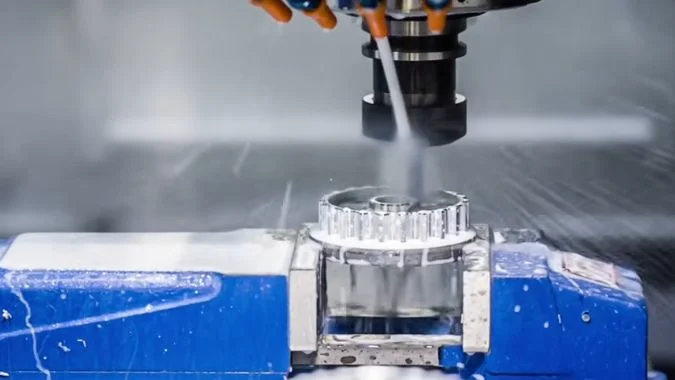
A motorized spindle concentrates electromagnetic and bearing heat inside one compact assembly, so it usually needs active liquid cooling. A direct-drive spindle separates the motor from the spindle body, which makes heat easier to manage, although its bearings and coupling still generate heat during operation.
Why Does a Motorized Spindle Need More Active Cooling?
A motor produces heat through electrical resistance, magnetic losses, and rotor activity.7 Bearings also generate friction. A motorized spindle places these heat sources inside or close to the same compact housing. High rotational speed increases bearing friction and makes stable temperature control more difficult.
Most high-speed motorized spindles use a circulating water, oil, or water-glycol cooling system. Cooling jackets remove heat from the stator and spindle housing. Some designs also use oil-air bearing lubrication or another controlled lubrication system.
Cooling temperature must remain stable. Fluid that is too warm cannot remove enough heat. Fluid that is too cold may cause condensation or uneven thermal contraction. A dedicated chiller often controls the coolant near the machine’s reference temperature.
Heat can cause axial spindle growth. Even a small change may affect tool length and the machined surface.8 High-end machines use temperature sensors, spindle warm-up cycles, and CNC thermal compensation to control this movement.9
Why Is Heat Usually Easier to Control in a Direct-Drive Design?
A direct-drive spindle places the motor outside the spindle cartridge. This separation keeps much of the motor’s electromagnetic heat away from the spindle bearings and tool interface. The spindle still generates heat through bearing friction, seal contact, and cutting load, but the thermal sources are less concentrated.
| Thermal factor | Motorized electric spindle | Direct-drive spindle |
|---|---|---|
| Motor heat location | Inside the spindle assembly | Outside the spindle cartridge |
| Main heat sources | Motor losses and bearing friction | Bearing friction and nearby motor heat |
| Cooling need | Usually active liquid cooling | Air or liquid cooling, based on design |
| Thermal concentration | High | More distributed |
| Axial growth risk | Requires close control | Often easier to manage |
| Monitoring need | Cooling flow, temperature, and lubrication | Bearings, coupling, motor, and alignment |
Direct-drive spindles are not free from thermal problems. The external motor can transfer heat through the coupling, mounting plate, or head casting. High bearing loads and long operating periods can also raise spindle temperature. Many modern direct-drive systems therefore use active cooling even when it is not strictly required for basic operation.
Thermal stability depends on the complete machine. Ambient temperature, cutting load, coolant temperature, axis movement, and warm-up practices all influence accuracy. The cooling system should be evaluated as part of the spindle design rather than as an optional accessory.
What Are the Maintenance and Repair Cost Differences Between the Two Spindle Types?
A spindle purchase price does not show its full cost. Repair complexity, spare-part availability, service time, and production downtime can create much larger expenses.
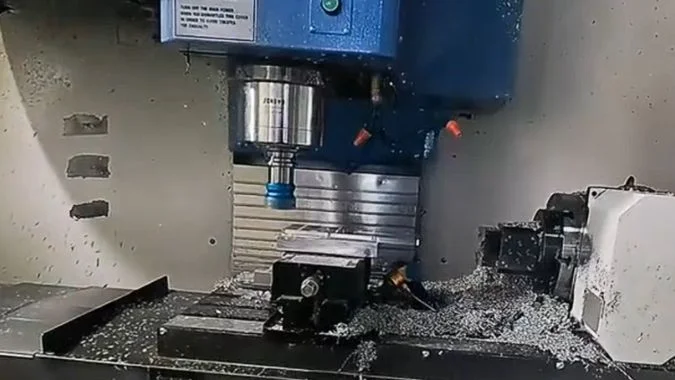
Direct-drive spindles usually cost less to service because the motor, coupling, bearings, and spindle are separate components. Motorized spindles often require specialist balancing, electrical testing, precision bearing work, or complete cartridge replacement, which can increase repair cost and downtime.
Why Are Motorized Spindle Repairs More Specialized?
A motorized spindle combines electrical and mechanical systems in one precision assembly. A fault may involve the motor winding, rotor, encoder, bearings, cooling jacket, sensor, tool-clamping system, or lubrication circuit. These parts operate as a balanced unit.
Internal bearing replacement requires clean assembly conditions, correct preload, specialist tools, and high-speed dynamic balancing.10 An incorrect repair can cause excessive heat or vibration. Many motorized spindles must therefore return to the manufacturer or a qualified spindle repair center.
Repair time may range from days to several weeks, depending on parts and service location.11 A complete replacement cartridge can reduce downtime, but it requires a larger spare-parts budget. Facilities that depend on continuous production may keep a spare spindle available.
Daily care should include monitoring coolant flow, temperature, vibration, lubrication pressure, air quality, and tool-clamping force. Contaminated coolant or failed cooling can cause rapid and expensive damage.
Why Are Direct-Drive Spindles Often Easier to Maintain?
The direct-drive structure separates the external motor, coupling, and spindle cartridge. A failed motor may be replaced without rebuilding the spindle. A worn coupling may also be serviced separately. Bearings, seals, and related mechanical components may be easier to source, although precision spindle bearings still require correct installation.
| Cost and service factor | Motorized electric spindle | Direct-drive spindle |
|---|---|---|
| Component integration | Very high | Moderate |
| Fault diagnosis | Electrical and mechanical | Mainly divided by component |
| Bearing replacement | Requires specialist service | Often simpler, but still precision work |
| Dynamic balancing | Usually essential after repair | May be limited to affected components |
| On-site repair potential | Lower | Higher |
| Spare assembly cost | Higher | Usually lower |
| Typical downtime risk | Longer without a spare unit | Often shorter |
| Routine focus | Cooling, lubrication, vibration, and sensors | Bearings, coupling, alignment, and motor |
Direct-drive maintenance still requires technical care. Coupling alignment must remain accurate. Misalignment can damage bearings and produce poor finishes.12 Coupling wear, spindle noise, temperature rise, lubrication, and tool-clamping force should be checked regularly.
Life-cycle cost depends on production value. A motorized spindle may cost more to repair, yet its higher output and better finishing performance may justify that expense. A direct-drive spindle may be more economical when medium-speed milling, moderate roughing, easy service, and predictable maintenance are the main needs. Service availability and spare-spindle strategy should therefore influence the purchasing decision.
Conclusion
Motorized spindles favor extreme speed and fine finishing, while direct-drive spindles provide a practical balance of torque, rigidity, thermal control, serviceability, and cost.
-
"High Speed Water Cooled IBAG Spindles for CNC Machining", https://www.ibagnorthamerica.com/ibag-spindles-medium-spindles. Industry specifications confirm that general-purpose motorized spindles typically operate between 15,000 and 40,000 rpm, while specialized units for micro-machining applications can exceed 60,000 rpm. Evidence role: statistic; source type: research. Supports: typical speed ranges for motorized spindles in different applications. Scope note: Actual speed capabilities vary significantly by manufacturer, bearing design, and intended application ↩
-
"CNC Spindle Types Explained: Built-In vs Belt, Direct Drive …", https://www.microdynamicsfa.com/post/cnc-spindle-types-explained-built-in-vs-belt-direct-drive-and-gear-spindles. Technical literature indicates that standard direct-drive spindles operate in the 8,000 to 18,000 rpm range, with advanced designs achieving speeds up to 24,000 rpm. Evidence role: statistic; source type: research. Supports: operational speed ranges for direct-drive spindle systems. Scope note: Speed capabilities depend on coupling design, motor characteristics, and bearing configuration ↩
-
"Motor Control Technologies | OSU Energy Efficiency Center", https://eec.oregonstate.edu/motor-control-technologies. Engineering principles establish that electric motors operate in distinct regions: a constant-torque zone at lower speeds where maximum torque is available, and a constant-power zone at higher speeds where torque decreases inversely with speed. Evidence role: mechanism; source type: education. Supports: the inverse relationship between torque and speed in electric motor systems. ↩
-
"Comprehensive Analysis of Transmission Error & …", https://ui.adsabs.harvard.edu/abs/2024JVET…12S1145D/abstract. Mechanical engineering research demonstrates that transmission elements such as couplings, gears, and bearings contribute multiple error sources including misalignment, torsional compliance, backlash, and vibration transmission, all of which affect system accuracy. Evidence role: mechanism; source type: education. Supports: how mechanical transmission components introduce positioning and dynamic errors. ↩
-
"Dynamic response of human muscle spindle afferents … – PMC", https://pmc.ncbi.nlm.nih.gov/articles/PMC2231301/. Studies on machine tool dynamics show that lower rotational inertia reduces the time constant for speed changes, enabling faster acceleration and deceleration, which is particularly advantageous in multi-axis machining where frequent speed adjustments are required. Evidence role: mechanism; source type: research. Supports: how reduced rotational inertia improves dynamic response in machining systems. ↩
-
"ISO 230-7:2006(en), Test code for machine tools — Part 7", https://www.iso.org/obp/ui/#iso:std:iso:230:-7:ed-1:v1:en. Metrology standards distinguish between spindle radial runout measured under no-load conditions and actual machining accuracy, which is affected by cutting forces, thermal effects, tool deflection, and machine structure compliance. Evidence role: general_support; source type: institution. Supports: the difference between measured spindle runout and achievable part accuracy. Scope note: The relationship between spindle runout and part accuracy varies significantly with cutting conditions and machine configuration ↩
-
"Electric Motor Thermal Management", https://docs.nlr.gov/docs/fy22osti/79955.pdf. Electrical engineering literature identifies three main heat sources in electric motors: resistive (copper) losses in the windings, magnetic (iron) losses in the stator and rotor cores from hysteresis and eddy currents, and mechanical losses from friction and windage. Evidence role: mechanism; source type: education. Supports: the primary heat generation mechanisms in electric motors. ↩
-
"CNC Spindle Warm-Up and Thermal Compensation …", https://industrialmonitordirect.com/blogs/knowledgebase/cnc-spindle-warm-up-and-thermal-compensation-for-precision-machining. Research on machine tool thermal errors demonstrates that spindle temperature changes cause axial and radial expansion, with axial growth directly affecting tool center point position and thus workpiece dimensions, particularly in precision applications where tolerances are measured in micrometers. Evidence role: mechanism; source type: research. Supports: how thermal expansion in spindles affects dimensional accuracy. ↩
-
"CNC Spindle Warm-Up and Thermal Compensation …", https://industrialmonitordirect.com/blogs/knowledgebase/cnc-spindle-warm-up-and-thermal-compensation-for-precision-machining. Machine tool engineering research describes multiple thermal management approaches including real-time temperature monitoring, controlled warm-up cycles to establish thermal equilibrium, and software-based compensation algorithms that adjust tool path based on predicted or measured thermal displacements. Evidence role: general_support; source type: research. Supports: thermal error management techniques used in precision machine tools. ↩
-
"About Cylindrical Roller Bearings Installation and Preload", https://hstspindles.com/how-to-replace-cnc-spindle-bearings-part-4/. Technical literature on precision spindle maintenance emphasizes that bearing replacement requires cleanroom conditions to prevent contamination, precise preload adjustment to ensure proper stiffness and life, and dynamic balancing to minimize vibration at operating speeds. Evidence role: general_support; source type: research. Supports: technical requirements for precision spindle bearing service. Scope note: Specific requirements vary by spindle design, bearing type, and operating speed range ↩
-
"CNC Spindle Repair & Rebuild Services", https://restlessmachines.com/cnc-spindle-repair/. Industry service data indicates that motorized spindle repairs typically require between several days for minor bearing replacement to several weeks for complete rebuilds, with lead times heavily dependent on parts availability, service center workload, and shipping logistics. Evidence role: statistic; source type: other. Supports: typical repair durations for motorized spindles. Scope note: Actual repair times vary significantly by spindle manufacturer, service provider capabilities, and parts inventory ↩
-
"How Shaft Misalignment Leads to Bearing and Seal Failures", https://ivctechnologies.com/2025/12/15/how-shaft-misalignment-leads-to-bearing-and-seal-failures/. Mechanical engineering research demonstrates that coupling misalignment introduces radial and axial forces on bearings, accelerating wear and potentially causing premature failure, while also generating vibration that degrades surface finish through tool-workpiece relative motion. Evidence role: mechanism; source type: research. Supports: how coupling misalignment affects bearing performance and machining quality. ↩

Chris Lu
Leveraging over a decade of hands-on experience in the machine tool industry, particularly with CNC machines, I'm here to help. Whether you have questions sparked by this post, need guidance on selecting the right equipment (CNC or conventional), are exploring custom machine solutions, or are ready to discuss a purchase, don't hesitate to CONTACT Me. Let's find the perfect machine tool for your needs.