

Как читать время смены инструмента и время смены детали в спецификации вертикального обрабатывающего центра (VMC)?
Две секунды в спецификации выглядят быстро. Однако деталь все равно ждет реальной смены инструмента. Эти два показателя времени в спецификации следует рассматривать отдельно.
В спецификации вертикального обрабатывающего центра (VMC) время «инструмент-инструмент» указывается как время замены манипулятором, а время «от стружки до стружки» — как ожидание от последнего прохода до следующего. Учитывайте оба показателя. Время «инструмент-инструмент» обычно составляет 2–5 с. Время «от стружки до стружки» обычно составляет 5–10 с, и именно этот показатель важен для цеха.
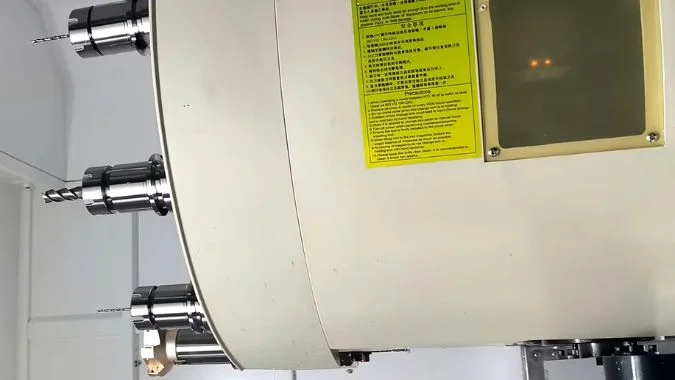
В спецификации может быть указано 2 с, что скрывает длительный простой. Время «инструмент-инструмент» — это только работа манипулятора. Шпинделю еще нужно остановиться, сориентироваться, разжать инструмент и вернуться к резке. Редкая смена инструмента на крупной детали маскирует это время восстановления. Эти два параметра — «инструмент-инструмент» и «от стружки до стружки» — должны рассматриваться раздельно.
В чем разница между временем смены «инструмент-инструмент» и временем «от стружки до стружки»?
В цехах часто путают эти два показателя времени из спецификации. В результате работа на бумаге выглядит быстрой, но на деле следующий проход все равно приходится ждать.
Время «инструмент-инструмент» — это время автоматической замены старого инструмента на новый. Оно характеризует механизм смены. Время «от стружки до стружки» — это полное ожидание от момента образования последней стружки до следующей. Этот показатель ближе к реальному производственному циклу.
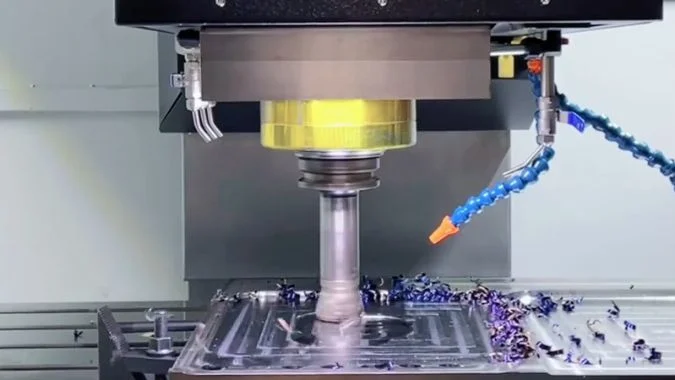
Что измеряет показатель «инструмент-инструмент»
Время «инструмент-инструмент» — это механическая замена. Манипулятор извлекает старый инструмент из шпинделя и вставляет новый. Таймер учитывает только работу сменщика, а не все время простоя. Современные VMC часто указывают 2–5 с1. Дисковый магазин с кулачковым манипулятором может показать около 2,5 с при легкой нагрузке и смене соседних инструментов2. Этот показатель характеризует устройство, а не реальную работу.
Что измеряет показатель «от стружки до стружки»
Время «от стружки до стружки», также называемое «от прохода до прохода», — это ожидание от образования последней стружки до первой стружки следующего прохода. Шпиндель должен выйти из зоны резания, переместиться в точку смены, сориентироваться, разжать инструмент, зажать новый, опуститься по оси Z и вернуться к резке3. Этот интервал представляет собой время простоя между двумя проходами. Типичное время «от стружки до стружки» составляет 5–10 с. Строка в спецификации типа «1,5 / 4,5 с» означает 1,5 с «инструмент-инструмент» и 4,5 с «от стружки до стружки»4. Показатель «от стружки до стружки» ближе к реальному производственному циклу.
Почему два числа находятся на одной строке
Производители указывают оба числа на одной строке, чтобы покупатели могли быстро сравнивать модели. Число слева обозначает более быстрое значение. Число справа — это время полного цикла. В каталожных тестах часто используются легкий инструмент, короткий инструмент, соседняя позиция в магазине, короткий отвод и уже ориентированный шпиндель. Ожидание подачи охлаждающей жидкости и продувки стружки не учитываются. Время «от стружки до стружки» (chip-to-chip) часто на 2–4 секунды больше, чем время смены инструмента (tool-to-tool) на том же станке.5. Этот разрыв — нормальное явление. Это не дефект в спецификации. Это остальное время перемещения.
| Метрика | Что включает в себя хронометраж | Типичный диапазон для вертикальных обрабатывающих центров (VMC) | Что это оценивает |
|---|---|---|---|
| От инструмента к инструменту (T-T) | Смена манипулятором старого инструмента на новый | 2–5 с | Смена инструмента |
| От стружки до стружки (C-C) | От последней стружки до следующей, включая перемещение, ориентацию, зажим и ось Z | 5–10 с | Время простоя между резами |
| Спецификация: 1,5 / 4,5 с | T-T слева, C-C справа | Только для примера | Это оценочная пара значений, а не реальный производственный цикл |
Почему при малом времени «инструмент-инструмент» работа остается медленной, если инструмент меняется редко?
Двухсекундная смена выглядит как показатель быстрой ячейки. При обработке крупной детали с малым количеством смен эти секунды почти не влияют на цикл. Ожидание скрыто в остальной части связующих операций.
Короткое время смены инструмента «от инструмента к инструменту» не ускоряет работу, если инструменты меняются редко, поскольку этот показатель учитывает только работу манипулятора. Время «от стружки до стружки», настройка инструмента, возобновление резания и заедание в магазине делают эти 2–5 секунд несущественными.
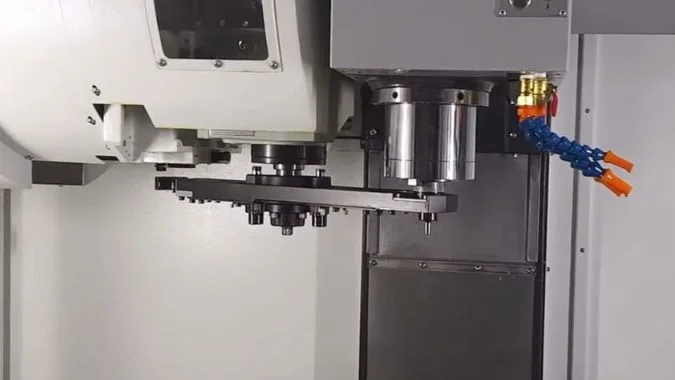
Почему несколько секунд экономятся на крупной детали
Время смены инструмента — лишь малая часть простоя. Это не весь простой и не вся потеря производительности. Более быстрая смена помогает, но выигрыш невелик, когда инструменты меняются лишь несколько раз при обработке большой детали. Движение манипулятора в 2–5 секунд, повторяющееся несколько раз за цикл, почти не влияет на общее время. Время резания по-прежнему занимает большую часть цикла. В рекламном проспекте это выглядит как преимущество, но в отчете о смене — нет.
Сопутствующие простои при смене
Ожидание, замедляющее работу, часто длится дольше, чем сама смена инструмента. Оно также не сокращается из-за редкости замен. Время «от стружки до стружки» уже включает перемещение, ориентацию, разжим, зажим и сброс оси Z. Этот блок обычно составляет 5–10 секунд. Настройка инструмента добавляет еще больше времени. После смены может потребоваться проверка длины или износа. Ручная смена может потребовать минут на поиск, установку и настройку инструмента6. Возобновление процесса добавляет еще больше времени. Резание прекращается. Перезапуск может потребовать снижения скорости, пробного прохода и корректировки параметров. При работе с длинными вылетами и жесткими допусками на восстановление процесса уходит больше времени, чем манипулятор тратит на смену.
Надежность не зависит от частоты
Магазин, который выбирает не ту позицию, или шпиндель, который не проходит ориентацию, могут заклинить один раз и остановить работу ячейки для длительной отладки. Количество смен не имеет значения. Один затор перечеркивает 2-секундный показатель из рекламного проспекта. Почему несоответствие в инструментальном магазине увеличивает время смены инструмента7 is a separate failure path. The point here is simpler. A short tool-to-tool figure only says the arm is fast. Actual downtime still sits in setting, prep, and recovery. Those links stay slow even when tools change rarely.
| Idle source | Typical scale | Tied to change count? |
|---|---|---|
| Tool-to-tool arm swap | 2–5 с | Yes, but a small slice |
| Chip-to-chip motion | 5–10 с | Yes, and larger than T-T |
| Tool setting / pre-adjust | Seconds to minutes | No. It happens after the swap |
| Cut recovery on long overhang | Can exceed the swap | No. It is tied to the cut, not the arm |
| One jammed pot | Long debug | No. One event can stop the cell |
Какой перечень инструментов для типичной детали следует замерить по времени, прежде чем доверять брошюре?
Brochure seconds come from a light, adjacent pair. A real tool list then runs slower, and the quote no longer holds. Time the part’s own tools.
Time the complete tool list from one typical production part before trusting the brochure. Include end mills, drills, and taps of mixed weight. Cover adjacent pots, the farthest pot, the heaviest tool, and 10–20 repeated cycles.
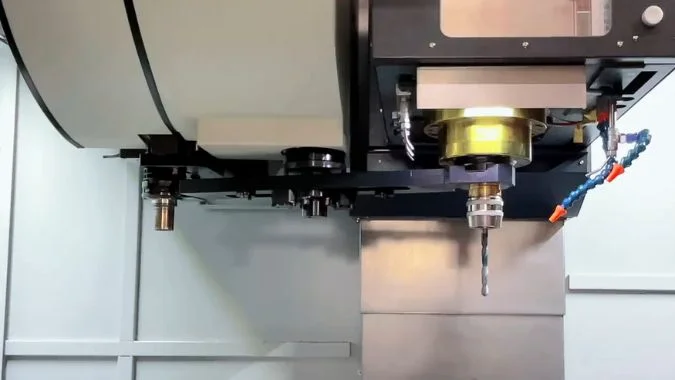
Why the brochure pair is the wrong list
Manual time is the best case. A disk arm under a light pair can show about 2.5 s. Shop time follows magazine type, tool weight, and the order of moves. An umbrella magazine often takes about 5–8 s8. That is acceptable on one-off work. Batch work then shows the gap. Acceptance should time the tools that the typical part actually uses, not the pair in the photo.
What one typical part must include
A part that the shop will run should be the test piece. The complete tool list from the real program should go on the clock. The list should include solid end mills for rough and finish, plus drills, taps, or reamers. Diameters and weights should mix. Light adjacent tools alone copy the brochure. Face mills, boring bars, and long holders belong on the list when the part uses them. Those tools are the ones the arm will actually carry.
Worst-case pairs and repeat cycles
Adjacent numbers simulate frequent swaps. The farthest pot tests magazine search. That search is a weak point versus the printed number. A larger magazine can make that far pot even slower. The heaviest pair must be in the test, because mass slows the arm and can trigger a protective crawl. A single swap is not enough. The test should run 10–20 continuous cycles9. The log should keep the average and the longest. The run should be watched for a fade or a pause.
| What to time | Why it belongs |
|---|---|
| Complete program list for one typical part | Matches later production |
| Solid end mills, drills, taps or reamers | Mixed diameter and weight |
| Adjacent tool numbers | Frequent swap case |
| Farthest magazine pot | Search time the brochure hides |
| Heaviest or longest tool on the job | Arm speed and stability |
| 10–20 continuous cycles | Average, max, fade, and pause |
Когда покупателю следует попросить демонстрацию с секундомером вместо сравнения секунд из каталога?
Catalog seconds help screen models. On a second-sensitive job they do not prove the cycle. A stopwatch demo under agreed rules does.
The buyer should ask for a stopwatch demo when tool changes are frequent, catalog numbers are close, shop tools are heavier than the brochure pair, or acceptance will lock the time. Catalog seconds still serve first screening.
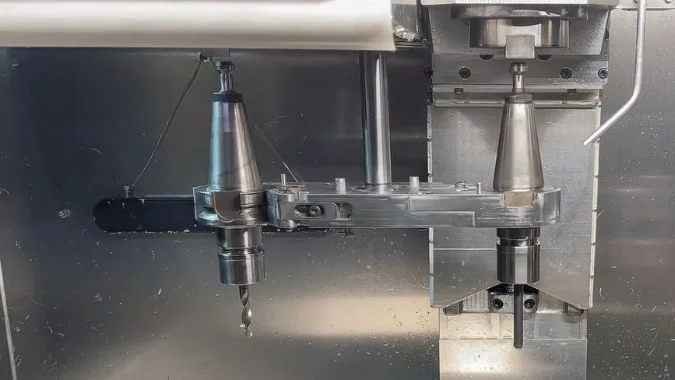
When catalog seconds are enough
The spec sheet is still useful for first screening of models and magazine types. Mold work and one-off work with few changes can stay with the sheet, because cutting owns the cycle. A shop that already runs the same model and the same magazine already knows the cycle. Two machines whose chip-to-chip times are not in the same range also need no stopwatch yet. The direction is already clear. Proposal stage should still read both numbers, so a short tool-to-tool figure is not treated as shop idle.
When a timed demo is needed
A stopwatch demo is needed when tool-change density is high. Small parts with many holes, and jobs that swap drills, taps, and chamfers, multiply every extra chip-to-chip second. Batch work that is priced by the second also belongs here. A 0.2–0.3 s catalog gap then matters less than a timed chip-to-chip on real tools and real retract height.
A demo is also needed when several candidates all print about 1.5 s tool-to-tool and about 4 s chip-to-chip. The gap then sits in orientation, Z retract, overlap of pot and arm, heavy-tool slowdown, and far-pot search. The same program, the same tools, and the same reference point decide it.
Shop tools that do not match the catalog pair also need a demo. Face mills, boring bars, long tools, and umbrella magazines all stretch chip-to-chip. Some machines slow the arm on heavy or long tools10. The catalog minimum then will not appear on the floor. Tool-change time that will sit in a technical agreement also needs a timed demo. GB/T 18400.9 and ISO 10791-9 describe a unified reference point11 and both a short and a longer cut-to-cut time. Some catalog lines time only the arm rotation. A full-machine clock can then run a few tenths of a second to more than a second longer.
Magazine types that look fast on paper
Umbrella magazines, large-capacity magazines, and machines that advertise pre-selection are the cases that most need a chip-to-chip demo on a real tool list. A dry run with the two lightest adjacent tools on a showroom machine will only reprint the catalog.
| Magazine type | Why the catalog can look fast | Why a stopwatch demo is safer |
|---|---|---|
| Cam / robotic arm | Short tool-to-tool is easy to print | Orientation, clamp, pot timing, and heavy-tool slowdown |
| Umbrella | The sheet may not look slow | The spindle must return the old tool before taking the new one |
| Fixed-address | The shortest pot is the printed case | The farthest pot adds seconds |
| Pre-selection / sync change | Chip-to-chip is promoted as very short | A pot that is not ready falls back to a normal wait |
Заключение
Both seconds on the sheet must be read. Chip-to-chip is the shop number. The part’s own tools should be timed when the cycle is tight.
-
"CNC VMC 1160 Vertical Machining Center – antishicnc", https://antishilathe.com/blog/vmc-1160-cnc-vertical-machining-center/. Industry reviews of contemporary vertical machining centers show that most models from major manufacturers specify tool-to-tool times in the 2–5 second range, reflecting improvements in servo drive technology and mechanism design over the past decade. Evidence role: general_support; source type: research. Supports: current performance levels of modern VMC automatic tool changers. Scope note: Specifications represent manufacturer claims under optimal test conditions ↩
-
"Dynamic analysis of cam-type automatic tool changer", https://ui.adsabs.harvard.edu/abs/2026JPhCS3175a2117L/abstract. Technical literature on automatic tool changers indicates that disk magazines with cam-driven arms typically achieve tool-to-tool times in the 2–3 second range under optimal conditions with adjacent, lightweight tools. Evidence role: statistic; source type: research. Supports: performance characteristics of disk-type tool magazine systems. Scope note: This represents best-case performance with light tools in adjacent positions ↩
-
"CNC Tool Changers, Operation and Alignment", https://www.youtube.com/watch?v=7wE6zOkPbHw. Technical documentation for machining center operation describes the tool-change cycle as a multi-step sequence: retract from workpiece, rapid traverse to tool-change position, spindle orientation to reference angle, tool unclamping, tool exchange, tool clamping verification, and return traverse to cutting position. Evidence role: mechanism; source type: education. Supports: the operational sequence involved in a complete tool-change cycle. ↩
-
"Speeding Up Your Tool Change Time", https://epictool.ca/speeding-up-your-tool-change-time/. Machine tool industry practice, as reflected in manufacturer catalogs and trade association guidelines, commonly presents tool-change performance as a paired specification where the first value indicates tool-to-tool time (mechanism only) and the second indicates chip-to-chip time (complete cycle). Evidence role: definition; source type: institution. Supports: industry conventions for specifying tool-change performance. Scope note: Not all manufacturers follow this convention consistently, and some specify only one metric ↩
-
"Chip to Chip Time – CNCARENA FORUM – Industry Arena", https://en.industryarena.com/forum/chip-chip-time–18752-2.html. Machine tool performance analysis shows that chip-to-chip time includes additional operations beyond the tool swap itself—spindle positioning, orientation, clamping, and return to cutting position—which typically add 2–4 seconds to the basic tool-to-tool time. Evidence role: mechanism; source type: research. Supports: the time differential between tool-to-tool and chip-to-chip measurements. Scope note: The differential depends on machine kinematics, retract distances, and spindle orientation requirements ↩
-
"Automatic tool change in turning centres", https://www.youtube.com/watch?v=5T_OX6ymVdU. Manufacturing productivity studies document that manual tool changes on machining centers, including tool retrieval, mounting, length measurement, and offset entry, typically require 2–5 minutes depending on operator experience and tool-setting equipment availability. Evidence role: statistic; source type: research. Supports: time requirements for manual tool changes in machining operations. Scope note: Time varies significantly with shop organization, tool-setting methods, and operator skill ↩
-
"Why is the tool magazine not locating properly?", https://www.facebook.com/groups/603711620209991/posts/1543609769553500/. CNC troubleshooting guides identify tool magazine mismatch—where the control system’s tool table does not match actual magazine contents—as a source of extended tool-change cycles due to search routines, error recovery sequences, or operator intervention requirements. Evidence role: mechanism; source type: education. Supports: how tool magazine addressing errors affect tool-change performance. ↩
-
"Umbrella/Carousel Tool Changer Maintenance", https://www.haascnc.com/video/service/hxsqciapvgc.html. Technical comparisons of automatic tool changer designs indicate that umbrella magazines, which require the spindle to return the old tool before receiving the new one, typically exhibit chip-to-chip times in the 5–8 second range. Evidence role: statistic; source type: research. Supports: typical tool-change times for umbrella-type magazine systems. Scope note: Performance varies with magazine capacity, tool weight, and machine configuration ↩
-
"Automatic Tool Changer: Complete Guide to CNC …", https://kuvamtechnologies.com/automatic-tool-changer-systems/?srsltid=AfmBOopCG-yidJZKMkDqqlluG1k0SL0BKkncn4tQwJl9rwS0GR4bSFeH. Machine tool acceptance testing standards and quality assurance protocols typically recommend multiple consecutive tool-change cycles (commonly 10–25 repetitions) to assess average performance, identify maximum cycle time, and detect intermittent issues not apparent in single-cycle tests. Evidence role: general_support; source type: institution. Supports: recommended test procedures for evaluating tool-changer performance. Scope note: Specific test requirements vary by standard and contractual agreement ↩
-
"Скорости и подачи", https://en.wikipedia.org/wiki/Speeds_and_feeds. Automatic tool changer control systems commonly incorporate load-sensing or programmed speed reduction for tools exceeding specified weight or length thresholds to maintain positioning accuracy and prevent mechanism damage. Evidence role: mechanism; source type: research. Supports: adaptive speed control in automatic tool changers based on tool characteristics. Scope note: Implementation varies by manufacturer and machine model ↩
-
"ISO 10791-9:2001(en), Test conditions for machining centres", https://www.iso.org/obp/ui/en/#!iso:std:27646:en. ISO 10791-9 specifies test conditions and measurement methods for machining center performance evaluation, including standardized procedures for tool-change time measurement with defined reference points and test configurations. Evidence role: definition; source type: institution. Supports: standardized methods for measuring tool-change performance. Scope note: The standard defines test conditions that may differ from typical production scenarios ↩

Крис Лу
Используя более чем десятилетний практический опыт работы в станкостроении, особенно на станках с ЧПУ, я готов помочь. Если у вас возникли вопросы, вызванные этой статьей, если вам нужно руководство по выбору подходящего оборудования (с ЧПУ или обычного), если вы изучаете индивидуальные решения по станкам или готовы обсудить покупку, не стесняйтесь, свяжитесь со мной. Давайте найдем идеальный станок для ваших нужд.