

لماذا ينقطع السلك في القطع الثاني في عملية التصنيع بالتشغيل الكهربائي السلكي متعدد القطع (MS-WEDM)؟
يمكن أن ينتهي القطع الأولي الناجح بانقطاع السلك أثناء التشذيب. تساعد مقارنة التمريرتين في تحديد الحالة المتغيرة قبل البدء من جديد.
قد ينتج انقطاع السلك في القطع الثاني عن ضيق الفتحة، أو تلف سلك الموليبدينوم، أو إعدادات التشذيب غير المناسبة، أو تآكل نقاط التلامس الخاصة بالتغذية الكهربائية، أو سوء عملية التنظيف. يمكن أن تؤدي عملية التخشين إلى تغيير قطعة العمل والسلك قبل بدء التشذيب. يتطلب الفشل إجراء فحوصات لكل من الخلوص الميكانيكي وظروف التفريغ.
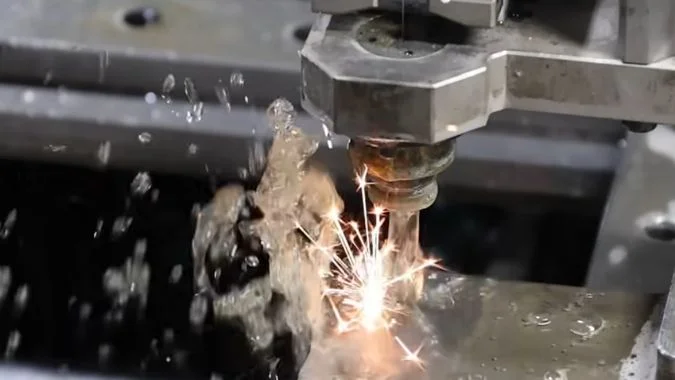
وصل القطع الأولي إلى نهايته، لكن السلك انقطع بعد بدء التشذيب بفترة قصيرة. يوفر هذا التسلسل للمشغل مقارنة مفيدة، حيث أكملت الآلة مجموعة واحدة من الظروف وفشلت في ظل مجموعة أخرى. يجب أن يبدأ الفحص بقطعة العمل والسلك والإعداد كما كانت بين هاتين التمريرتين.
ما الذي تغير بين القطع الأولي الناجح والقطع الثاني الفاشل؟
تثبت التمريرة الأولى أن عملية التخشين كانت ممكنة، لكنها لا تثبت أن ظروف التشذيب لا تزال سليمة، لذا فإن الانتقال بين التمريرات يتطلب فحصاً منفصلاً.
يمكن أن يؤدي القطع الأولي إلى تغيير خلوص الفتحة، وشكل قطعة العمل، ودعم الخردة، وحالة السلك، ومستويات الحطام. يستخدم القطع الثاني أيضاً إزاحة مسار مختلفة وإعدادات تفريغ مختلفة. أي مناولة أو إعادة تثبيت للسلك بين التمريرات يمكن أن تقدم تغييراً آخر يؤثر على خلوص السلك أو استقراره.
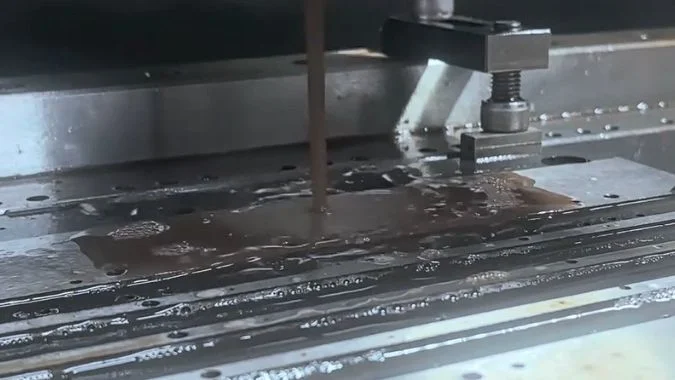
قد تكون قطعة العمل والفتحة قد تغيرتا
تزيل عملية التخشين المواد التي كانت تساعد في الحفاظ على القطعة بشكلها الأصلي. يمكن أن تؤدي الإجهادات المتبقية بعد ذلك إلى تشويه جدار رقيق أو قسم ضيق1. فتحة كانت مفتوحة أثناء التخشين قد تصبح ضيقة بما يكفي لقرص السلك.
المادة المقطوعة تحتاج أيضاً إلى الاهتمام. يمكن أن تميل القطعة المقطوعة المفكوكة أو المرتبطة جزئياً نحو مسار السلك. يجب أن تتبع إزالة الخردة تسلسل الدعم والتثبيت المخطط له لأن إزالتها يمكن أن تغير الإعداد أيضاً.
| عنصر للمقارنة | التغيير بعد التخشين | الأدلة المراد فحصها |
|---|---|---|
| الفتحة والأقسام الرقيقة | قد ينخفض الخلوص المحلي | فتحة ضيقة، أو علامات تلامس، أو دوائر قصر متكررة |
| مادة القطع | قد ينزاح الجزء المقطوع أو يبقى عالقاً | موقعه ونقاط التثبيت المتبقية |
| سلك الموليبدينوم | قد يزداد التآكل أو الضرر الموضعي | تفاوت القطر، أو وجود خدوش، أو أقسام ضعيفة مرئية |
| سائل التشغيل | قد تتبقى بقايا في مسار القطع | حالة الفلتر وتدفق السائل عند القطع |
| برنامج التشذيب | تغير في الإزاحة والإعدادات الكهربائية | التمريرة المختارة، والتعويض، ومسار الدخول |
يجب إعادة بناء مرحلة الانتقال
ينبغي على المشغل تسجيل ما حدث بعد التخشين. تشمل التفاصيل المفيدة التعامل مع الخردة، والتنظيف، وتعديلات المشابك، واستبدال السلك، وتغييرات المعايير.
إعادة اللقم هي إجراء فحص عند الحاجة إليه في العملية؛ وليست مطلباً تلقائياً لكل تمريرة تشذيب. يجب أن يتبع السلك مسار التوجيه المقصود وأن يدخل في مسار واضح.
إعداد التشذيب منخفض الطاقة لا يمكنه منع الكسر الميكانيكي في مسار قطع مغلق. يجب أن تثبت المقارنة وجود خلوص قبل البدء في التعديلات الكهربائية.
هل يمكن أن يسهم تلف السلك الناتج عن القطع الأولي في انقطاعه أثناء التمريرة الثانية؟
يمكن للسلك إكمال التخشين مع وجود ضرر يقلل من قوته المتبقية. نقل هذه الحالة إلى التشذيب قد يحول قسماً ضعيفاً إلى كسر تالٍ.
ضرر السلك الناتج عن التخشين يمكن أن يساهم في حدوث كسر في التمريرة الثانية. قد يحمل سلك الموليبدينوم المعاد استخدامه تآكلاً، أو ترققاً، أو ضرراً ميكانيكياً إلى عملية التشذيب. قد يفشل قسم ضعيف تحت الشد أو بسبب تفريغ غير مستقر. يجب أن يشمل الفحص نقاط التلامس والموجهات التي قد تلحق الضرر به مرة أخرى.
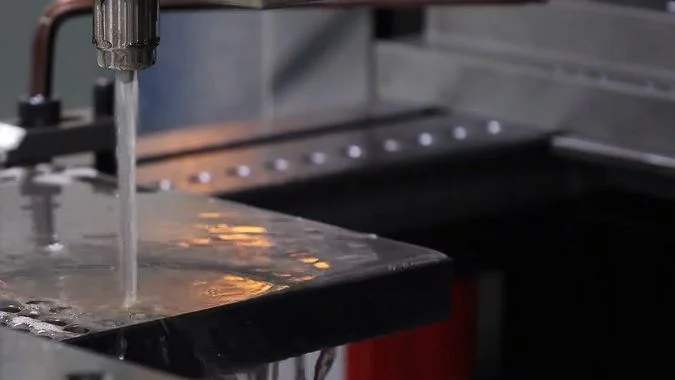
السلك المعاد استخدامه يحمل حالته السابقة معه
عادة ما تعيد ماكينات القطع بسلك الموليبدينوم ذات السرعة المتوسطة استخدام السلك عبر تكرار حركته2. قد يكون السلك الداخل إلى عملية التشذيب قد تعرض بالفعل لتفريغ كهربائي كبير.
يمكن أن تؤدي ظروف التجليخ الخشنة القاسية وضعف إزالة الحطام إلى زيادة التسخين المحلي والتآكل.3. يتمتع القسم التالف بهامش أقل في مواجهة التأثيرات المشتركة للشد والاحتكاك والتفريغ الإضافي.
يجب أن يغطي الفحص أكثر من القطعة القصيرة بجانب الكسر، فقد تكون أقسام أخرى من السلك العامل مهترئة أيضاً. يمكن أن تساعد فحوصات القطر في عدة مواضع في الكشف عن الترقق غير المتساوي، ولكن يجب أن يتوافق حد القبول مع مواصفات السلك والآلة.
| الملاحظة | عامل مساهم محتمل | الفحص التالي |
|---|---|---|
| ترقق غير متساوي أو أقسام متآكلة | تآكل ناتج عن التفريغ تراكم أثناء التجليخ الخشن | ظروف التجليخ الخشن، وعملية التنظيف، وملاءمة السلك |
| خدوش على طول السلك | ملامسة دليل تالف أو ملامس تغذية الطاقة | أسطح التلامس ومسار السلك بالكامل |
| انقطاعات بالقرب من الموجه | الاحتكاك، أو عدم المحاذاة، أو تلف الموجه | دوران الموجه، وحالة المجرى، والمحاذاة |
| انقطاع سلك جديد عند نفس موقع الكنتور | بقاء مشكلة محلية في شق القطع، أو المسار، أو عملية الغسيل | قطعة العمل والظروف في ذلك الموقع |
يجب أن يعالج الاستبدال مصدر التلف
يمكن لموصل تغذية الطاقة المحزز أن يخدش السلك أو يعيق حركته4. يمكن لعجلات التوجيه والمحامل البالية أن تؤثر أيضًا على حركة السلك وشده. تحتاج هذه المكونات إلى الفحص قبل إعادة سلك الاستبدال إلى الخدمة.
إعادة المحاولة الناجحة بسلك جديد تدعم احتمالية أن السلك القديم كان هو السبب. يشير تكرار الانقطاع في نفس موقع قطعة العمل إلى وجود حالة محلية لم يتم حلها. لا ينبغي لأي من النتيجتين أن يغنيا عن فحص العملية بالكامل.
كيف يمكن استبعاد حركة قطعة العمل بعد القطع الأولي؟
يمكن للتغيرات الصغيرة في قطعة العمل أن تغلق خلوص التشذيب دون فشل واضح في المشبك. هناك حاجة إلى قياسات للفصل بين التشوه المحلي وحركة الجزء بالكامل.
يمكن التحقق من حركة قطعة العمل عن طريق مقارنة ميزات مرجعية ثابتة قبل وبعد التشغيل الخشن. يجب أن يفصل الفحص بين انزلاق المشبك والتشوه المحلي وتأكيد الخلوص بالقرب من القطع الفاشل. تكشف خطوط العلامات عن التحولات الكبيرة، لكنها لا تستطيع استبعاد التغييرات الصغيرة التي تهم أثناء التشذيب.
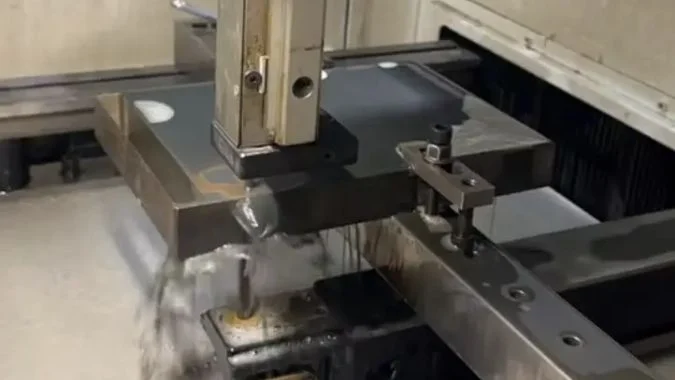
يترك انزلاق المشبك والتشوه أدلة مختلفة
يمكن أن يظل الجزء مثبتاً بإحكام ومع ذلك يتغير شكله. قد يؤدي إطلاق الإجهاد المتبقي إلى ثني قسم رقيق بينما تظل منطقة التثبيت الرئيسية في مكانها.
يغير انزلاق المشبك موقع الجزء بالنسبة للتركيب. يغير التشوه المحلي العلاقة بين الميزات داخل الجزء. تتطلب الحالتان إجراءات تصحيحية مختلفة.
تسجل خطة القياس المفيدة الميزات المرجعية المستقرة قبل التشغيل الخشن. يمكن بعد ذلك فحص نفس الميزات بعد التشغيل الخشن باستخدام مؤشر مناسب، أو مسبار، أو طريقة فحص.
| تحقق | ما الذي يساعد على تأسيسه | التقييد |
|---|---|---|
| علامات الشاهد عبر الجزء والتركيب5 | ما إذا كان قد حدث تحول نسبي كبير | لا تعالج العلامات التغيرات الموضعية الصغيرة |
| فحوصات متكررة لمراجع التثبيت | ما إذا كان الجزء قد تحرك في التجهيزة | المراجع المستقرة لا تثبت أن الجدران الرقيقة بقيت مستقيمة |
| قياسات بالقرب من الخط الفاشل | ما إذا كانت الهندسة المحلية أو الخلوص قد تغيرت | يجب معرفة المرجع الأصلي أو الهندسة المقصودة |
| فحص المشابك والدعامات | ما إذا كان التثبيت لا يزال آمناً | المثبتات المشدودة وحدها لا تثبت عدم تغير الهندسة |
يجب أن تغطي الأدلة المنطقة الفاشلة
يجب على المشغل فحص الزوايا، والجسور الضيقة، والجدران الرقيقة، وموضع المواد المقطوعة. مرجع التثبيت المستقر لا يمكنه استبعاد انغلاق شق القطع في مكان آخر من الجزء.
الفحص الذي يبدأ فقط بعد الفشل لا يمكنه تحديد الموضع السابق من خطوط العلامات وحدها. يجب على المشغل مقارنة سجلات المراجع المتاحة والتحقق من المخزون المتبقي والخلوص.
أي تغيير في المشبك يمكن أن يغير موضع الجزء مرة أخرى، لذا يجب تكرار فحوصات المرجع بعد التعديل. يجب أن تمسك الدعامات الإضافية الجزء دون إجبار قسم مشوه على اتخاذ شكل مؤقت.
يمكن التحقيق في تحديد موضع الآلة إذا ظلت فحوصات التجهيزة والجزء متسقة. أخطاء عودة المحور هي قضية منفصلة6 عن انزلاق قطعة العمل ويجب فحصها من خلال الإجراء المعتمد للآلة.
ما الذي يجب التحقق منه قبل إعادة محاولة تمريرة التشذيب الفاشلة؟
إعادة التلقيم دون تصحيح الخطأ يمكن أن تكرر الكسر وتتلف الخط. تتطلب إعادة التشغيل الخاضعة للرقابة التحقق من الخلوص، وحركة السلك، وحالة السائل، وإعدادات التشذيب.
قبل إعادة المحاولة، يجب على المشغل التحقق من مسار سلك مفتوح، وتثبيت عمل آمن، وسلك صالح للخدمة، وشد مستقر، وموجهات سليمة، وملامسات تغذية الطاقة، وتدفق فعال، وبرنامج تشذيب صحيح. يجب أن يتبع موضع إعادة التشغيل والتعويض إجراء استعادة الآلة وبدل التشغيل المتبقي.
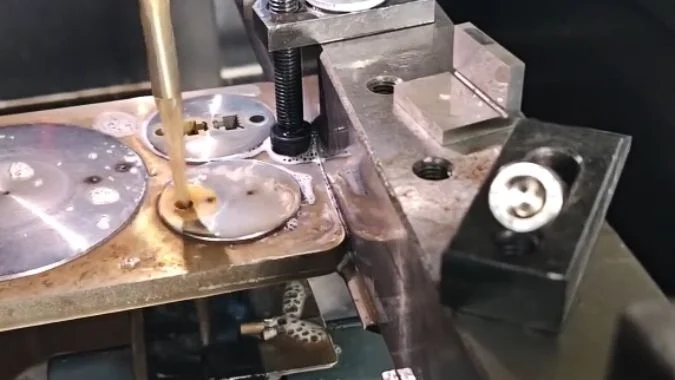
يجب أن يوجه موقع الكسر عملية الفحص
يجب على المشغل الحفاظ على موضع الفشل وسجل الإنذار المتاح قبل إعادة تعيين المهمة7. تشير الدوائر القصيرة المتكررة بالقرب من جدار رقيق إلى وجود مشكلة في الخلوص، ولكنها قد تصاحب أيضاً تراكم الحطام. يوجه الانقطاع بالقرب من الموجه الانتباه إلى حركة السلك وأسطح التلامس.
يجب إزالة السلك المكسور والحطام المحصور مع وضع الآلة في الحالة المحددة للتنظيف.8. يجب أن يكون شق القطع والموجهات نظيفين قبل عودة السلك إلى منطقة القطع.
| التحقق | الأدلة المطلوبة قبل إعادة المحاولة |
|---|---|
| قطعة العمل والخردة | التثبيت الآمن والخلوص على طول مسار إعادة التشغيل |
| حالة السلك | قطر سلك مناسب وعدم وجود أي تلف غير مقبول |
| الشد والحركة | Stable operation without catching, jumping, or abnormal vibration |
| Contacts and guides | Serviceable surfaces, smooth rotation, and correct alignment |
| سائل التشغيل | Suitable condition, effective filtration, and delivery into the kerf |
| Trim settings | The correct pass settings for material, thickness, and wire |
| Recovery path | Confirmed position, compensation, and remaining stock |
Settings must match the actual machine and consumables
The fluid concentration should follow the approved fluid supplier’s range. A refractometer reading must be interpreted using that product’s measurement instructions9. One concentration range cannot be transferred to every medium-speed EDM fluid.
Wire tension and travel speed also need the machine’s specified values10. The check should include actual stability because a correct setpoint does not prove smooth wire motion.
The selected trim conditions should include the intended pulse width, peak current, pulse interval, and tracking settings11. Roughing settings should not carry into trimming through an overlooked program selection.
Recovery must preserve the remaining contour
The restart position and offset need checking against the completed portion of the pass. Wire replacement can also require a review of the diameter used for compensation.
A fixed retreat distance or added offset cannot suit every failed trim cut12. The recovery procedure must account for the current position, cut direction, and remaining allowance. The first resumed section should be monitored for stable discharge and smooth travel before the job continues.
الخاتمة
Second-pass breakage needs a comparison with roughing conditions. Verified kerf clearance, workpiece stability, wire condition, flushing, and trim settings provide a sound basis for retrying.
-
"Thin-Wall Machining Mistakes: Residual Stress and More", https://www.linkedin.com/posts/mohammadzandindustrial_thinwallmachining-cncmachining-manufacturingengineering-activity-7465162084973002752-QQWs. Material removal during machining can release residual stresses that were balanced in the original workpiece, leading to distortion particularly in thin-walled or flexible geometries where structural rigidity is insufficient to resist the stress redistribution. Evidence role: mechanism; source type: research. Supports: Residual stress release can cause dimensional changes in thin-walled machined components. Scope note: General machining principle; specific magnitude of distortion in wire EDM depends on material properties, geometry, and cutting parameters ↩
-
"Molybdenum Wire for EDM: Selection Guide", https://edmzap.com/post/molybdenum-wire-for-edm-selection-factors-for-wire-edm. Medium-speed wire electrical discharge machining systems employ wire reuse strategies where the electrode wire travels through the cutting zone multiple times, contrasting with high-speed systems that use fresh wire continuously, thereby reducing wire consumption at the cost of requiring wire condition monitoring. Evidence role: general_support; source type: education. Supports: Medium-speed wire EDM systems are designed to reuse wire through multiple passes. Scope note: Specific reuse patterns vary by machine design and manufacturer implementation ↩
-
"Electrical discharge machining", https://en.wikipedia.org/wiki/Electrical_discharge_machining. In electrical discharge machining, each discharge pulse generates localized heating at both the workpiece and electrode surfaces; accumulated thermal and erosive effects can degrade the wire electrode, with inadequate flushing exacerbating damage by allowing debris to concentrate discharge energy and impede heat dissipation. Evidence role: mechanism; source type: research. Supports: High discharge energy and inadequate debris removal contribute to wire electrode degradation in EDM. ↩
-
"Gold-Plated Electrode with High Scratch Strength for … – PMC", https://pmc.ncbi.nlm.nih.gov/articles/PMC6393511/. Power feed contacts in wire EDM systems must maintain electrical conductivity while allowing wire travel; wear grooves or surface damage on these contacts can create mechanical interference that scratches or weakens the wire electrode, potentially leading to wire breakage during cutting operations. Evidence role: mechanism; source type: education. Supports: Worn or damaged electrical contacts in wire EDM can cause mechanical damage to the wire electrode. ↩
-
"Using witness marks for CNC machining reference points", https://www.facebook.com/groups/585824148849958/posts/2141300506635640/. Witness marks—deliberate marks made across the boundary between a workpiece and its fixture—serve as visual indicators of relative movement; any shift between the components will cause misalignment of the marks, providing a simple method to detect gross positioning changes during machining operations. Evidence role: general_support; source type: education. Supports: Witness marks are used in manufacturing to detect relative movement between workpieces and fixtures. Scope note: Method detects only movement large enough to be visually discernible; cannot resolve small positional changes ↩
-
"Machine Tool Metrology and Modeling", https://webpages.charlotte.edu/~jamiller/machmet/machmet.html. Computer numerical control machine tools can exhibit positioning errors arising from mechanical wear, thermal effects, or control system issues that affect axis positioning accuracy and repeatability; these machine-based errors are independent of workpiece fixturing and require different diagnostic and correction procedures than workpiece movement or deformation. Evidence role: general_support; source type: education. Supports: CNC machine tool positioning errors represent a distinct error source from workpiece movement. ↩
-
"Best Practices for Data Preservation", https://libguides.unco.edu/datamgt/bestpractices. Effective troubleshooting of manufacturing equipment failures requires preservation of failure state information, including machine position, alarm codes, and process conditions at the time of failure; this data provides diagnostic clues about failure mechanisms and helps distinguish between different potential causes, but may be lost if the machine is reset before documentation. Evidence role: general_support; source type: education. Supports: Preserving failure state information aids in manufacturing problem diagnosis. ↩
-
"Electrical discharge machining", https://en.wikipedia.org/wiki/Electrical_discharge_machining. Electrical discharge machining equipment operates with high-voltage electrical systems and dielectric fluids, requiring specific safety and operational procedures for cleaning and debris removal; manufacturers specify machine states and procedures for maintenance activities to prevent electrical hazards, fluid contamination, and damage to precision components. Evidence role: general_support; source type: education. Supports: EDM equipment requires specific procedures for cleaning and debris removal. ↩
-
"Recent Advances and Perceptive Insights into Powder-Mixed …", https://pmc.ncbi.nlm.nih.gov/articles/PMC7464327/. Refractometers measure the refractive index of fluids to estimate concentration, but the relationship between refractive index and actual concentration depends on the specific chemical composition of the fluid; manufacturers provide calibration curves or conversion factors specific to their formulations to ensure accurate concentration determination. Evidence role: general_support; source type: education. Supports: Refractometer measurements of fluid concentration require product-specific calibration and interpretation. Scope note: General refractometry principle; specific application to EDM dielectric fluids assumes similar measurement principles apply ↩
-
"Electrical discharge machining", https://en.wikipedia.org/wiki/Electrical_discharge_machining. Wire electrical discharge machining requires controlled wire tension to maintain electrode straightness and positioning accuracy, while wire travel speed must be coordinated with discharge conditions to manage electrode wear and thermal effects; deviations from specified parameters can compromise cutting stability and increase wire breakage risk. Evidence role: general_support; source type: education. Supports: Wire tension and travel speed are critical parameters in wire EDM that affect cutting stability and wire breakage risk. ↩
-
"Electrical discharge machining", https://en.wikipedia.org/wiki/Electrical_discharge_machining. Electrical discharge machining processes are controlled through pulse parameters that define the discharge characteristics: pulse width (duration of each discharge), peak current (maximum current during discharge), and pulse interval (time between discharges), along with servo tracking settings that maintain optimal gap distance; trim passes typically use lower energy settings than roughing to achieve better surface finish. Evidence role: definition; source type: education. Supports: Wire EDM trim operations use specific electrical discharge parameters including pulse characteristics and servo control settings. ↩
-
"Computer numerical control", https://en.wikipedia.org/wiki/Computer_numerical_control. Recovery procedures following machining interruptions must account for the specific failure location, remaining material allowance, tool or electrode condition, and cutting direction to safely resume operations; fixed retreat distances or offsets cannot accommodate the variety of failure scenarios and may result in collision, inadequate clearance, or dimensional errors. Evidence role: general_support; source type: education. Supports: Recovery from machining interruptions requires situation-specific procedures rather than fixed approaches. ↩

كريس لو
بالاستفادة من أكثر من عشر سنوات من الخبرة العملية في مجال صناعة أدوات الماكينات، خاصةً مع ماكينات بنظام التحكم الرقمي، أنا هنا لمساعدتك. سواءً كانت لديك أسئلة أثارها هذا المنشور، أو كنت بحاجة إلى إرشادات بشأن اختيار المعدات المناسبة (ماكينة بنظام التحكم الرقمي أو تقليدية)، أو كنت تستكشف حلولاً مخصصة للماكينات، أو كنت مستعدًا لمناقشة عملية شراء، فلا تتردد في الاتصال بي. دعنا نعثر على الأداة الآلية المثالية لاحتياجاتك.