

How to Choose Between Collet Chuck and 3-Jaw Chuck for Bar Turning?
Bar work fails when the chuck and the stock do not match. Parts slip or go out of round. The gripping method decides the result.
A collet chuck is the better choice for round drawn bar in a tight diameter band. A 3-jaw chuck is the better choice for saw-cut billets and a wide size range. Contact pattern, concentricity, capacity, and grip length decide the pick.
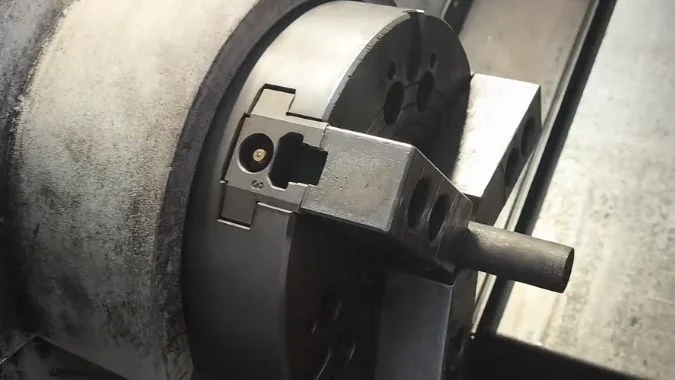
The split starts with how the chuck touches the bar. Contact area sets how clamp force enters the stock. Full-circle grip and three discrete pads do not load a bar the same way, so that difference comes first.
What Are the Differences in Gripping Contact Between Collet Chuck and 3-Jaw Chuck?
Clamping contact looks like a small detail. Poor contact marks thin walls and throws the bar off center. The contact pattern is the first split.
A spring collet grips the bar around the full circle. A 3-jaw chuck grips at three discrete points or small pads. Full-circle contact spreads load. Three-point contact concentrates load.
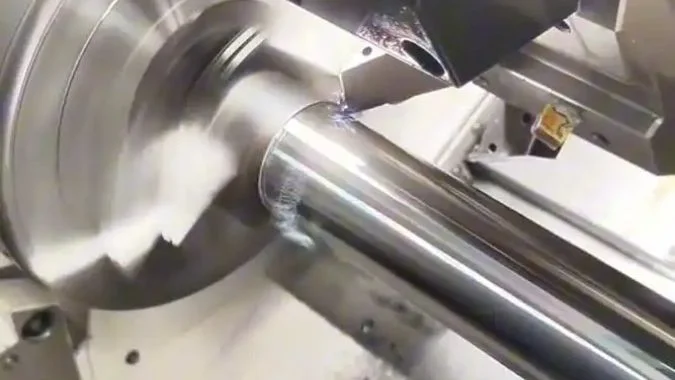
Full-circle collet contact
A spring collet sits in a tapered seat. Draw force pulls the collet back into the taper. The taper closes the bore on the bar. The bore then makes full-circle contact with the outer diameter. Clamping force is spread around the circumference. Loading stays symmetrical. Local crush on thin walls stays low. Positioning and clamping finish together.
Three-point jaw contact
A 3-jaw chuck drives three jaws on a radial path. Each jaw meets the bar at a point or a small pad. The jaws still self-center. Force is not a closed ring. Soft material and thin-wall tubes can dent at the three pads. A shop that needs square or irregular stock still needs a jaw chuck. The 3-jaw versus 4-jaw chuck guide covers that jaw-count choice. Contact pattern is the issue here.
What the contact pattern changes on the machine
Full-circle contact helps centering. Three-point contact helps a wide diameter band. A collet swap can take 15 to 20 seconds. A jaw swap on a standard 3-jaw chuck can take 15 to 20 minutes. A collet pack is also lighter. High spindle speed then has less effect on grip. A heavy 3-jaw chuck accelerates more slowly. Centrifugal force can ease the jaws and weaken clamp force.
| Item | Spring collet | 3-jaw chuck |
|---|---|---|
| Contact | Full-circle surface | Three points or small pads |
| Force spread | Even around the diameter | Concentrated at three pads |
| Thin-wall risk | Lower local crush | Higher local dent |
| Changeover | About 15–20 seconds | About 15–20 minutes for jaws |
| High RPM grip | More stable | Jaws can ease outward |
Why Does Collet Chuck Usually Run More Concentric on Drawn Bar Stock?
Drawn bar can still run out. The stock and the chuck must both be round. Concentricity comes from that match.
A collet chuck usually runs more concentric on cold-drawn bar because the bar is round and straight, and the collet centers on the full diameter. Repeat accuracy can reach 0.0005 inches TIR or better.
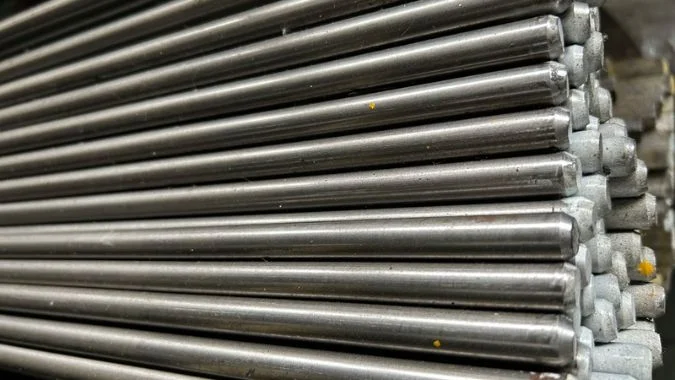
Why drawn bar is round enough for a collet
Cold drawing pulls the bar through dies at room temperature. Diameter tolerance can be held to an h7 band. Surface finish is cleaner than hot-rolled bar. Straightness is also better. The bar is already round, so the rotation center is stable after clamp. That stock quality is the first half of concentricity.
Why the collet adds centering
A spring collet is a self-centering device. The taper contracts in a uniform way. Force meets the full circumference. Positioning and clamping finish together. A 3-jaw chuck applies force at three pads. Repeat accuracy for a spring collet can reach 0.0005 inches TIR or better. A 3-jaw chuck with soft jaws often sits in the 0.0006 to 0.0012 inches TIR band. Actuation type is a separate choice. The pneumatic versus hydraulic chuck guide covers clamp power, not this contact ring.
When the match fails
The collet bore is a fixed size. The bar diameter must sit in that band. Bent bar or large diameter swing can jam or clamp on one side. Hot-rolled bar with scale and ovality fights the collet. Drawn bar plus a full-circle collet is the pair that holds concentricity.
| Factor | Cold-drawn bar + collet | Oval or hot-rolled bar + 3-jaw |
|---|---|---|
| Diameter consistency | Often h7 class | Wider swing |
| Straightness | Better as drawn | Worse if bent |
| Clamp geometry | Full-circle bore | Three pads |
| Typical repeat TIR | 0.0005 in or better | About 0.0006–0.0012 in with soft jaws |
| Risk | Jam if size is off | Dent and local runout |
How Does Collet Capacity Limit the Bar Diameter Range Compared with 3-Jaw Chuck?
One collet covers a narrow size band. A diameter change often means a new collet. Capacity is the hidden limit.
A 3-jaw chuck covers a wide diameter range. A spring collet covers a tight band, often under 3 inches (76 mm). Common ER collets top out near 36 mm. Large bar favors a 3-jaw chuck.
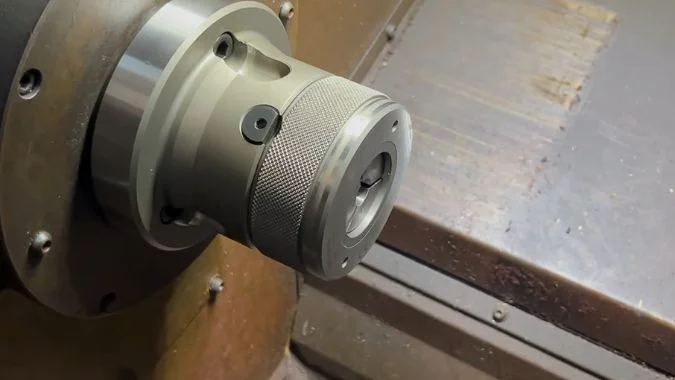
Why each collet is a narrow band
A 3-jaw chuck moves jaws on a scroll or wedges. One chuck covers thin rod and larger blanks. A spring collet uses elastic close. Each collet maps to a narrow diameter. A new bar size often needs a new collet. Small-diameter, high-volume, high-precision bar work fits that model. Mixed diameters fight it.
Typical diameter limits
Spring collets fit small to medium work, often under 3 inches (about 76 mm). Grip falls outside that band. Common ER collets run from about 1 mm to 36 mm. An ER25 pack often stops at 16 mm. An ER50 pack can reach 36 mm. Under JB/T 5556, Q1, Q2, and Q3 collets cover 3–10 mm, 6–20 mm, and 10–25 mm. A hydraulic 3-jaw chuck on bearing rollers can already struggle above 45 mm. Large bar is then a chuck job, not a collet job.
Axial space and long work
A collet chuck also takes axial space. Z-axis travel can shrink. Long work may be easier in a 3-jaw chuck. Jaw face and jaw type still matter on that chuck. The hard jaw versus soft jaw guide covers first-op roughing versus finished diameters.
| Workholding | Typical bar band | Size change | Long-part note |
|---|---|---|---|
| ER25 collet | Up to about 16 mm | New collet | Extra axial stack |
| ER50 collet | Up to about 36 mm | New collet | Extra axial stack |
| Q1 / Q2 / Q3 (JB/T 5556) | 3–10 / 6–20 / 10–25 mm | New collet | Extra axial stack |
| General spring collet band | Often under 76 mm | New collet | Can cut Z travel |
| 3-jaw chuck | Thin rod to larger blanks | Jaw stroke | Less axial stack |
What Happens to Bar Push-Out Force When Collet Grip Length is Too Short?
Short grip looks fine at setup. Axial cutting force then pushes the bar. Slip ruins size and can wreck the tool.
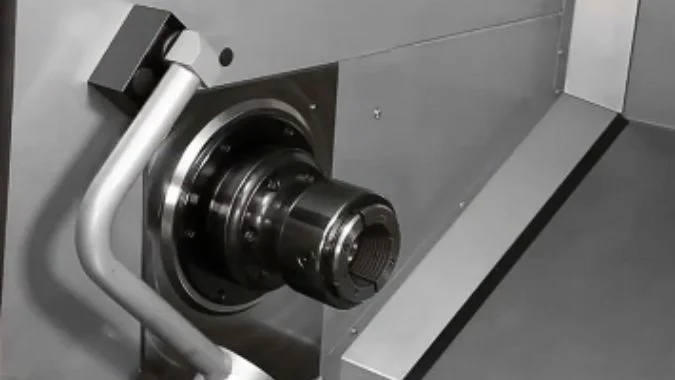
Push-out force capacity drops when collet grip length is too short, because contact area and friction fall. The bar can slip or pull out. Aim for grip length of 1.5 to 2 times bar diameter.
Why short grip loses axial hold
Limit of push-out force is about clamping force times friction coefficient times effective contact area. Grip length shrinks, so contact area shrinks, so the friction limit falls. Cutting thrust or bar feed can then exceed that limit. The bar slips, retracts, or pulls out. Size and safety both fail.
Rigidity in the cut
Short grip also cuts support stiffness in the cut zone. The bar acts like a tool with extra overhang. Tool push-off, vibration, and size error rise. Collet concentricity still needs enough stick-in. Oil or wear on the bore cuts friction more. Short-grip work on a dirty or worn collet is a poor mix.
Practical grip rules
Grip length should be 1.5 to 2 times bar diameter, because that band keeps contact area in a safe zone. The machine manual can state another figure. Slender bar may also need a steady rest. Forced short grip means lower depth of cut and feed, and a higher clamp setting. Dirty or worn collet bores should not run short-grip jobs.
| Condition | What falls | Shop action |
|---|---|---|
| Grip shorter than about 1.5–2 × diameter | Contact area and friction limit | Increase stick-in |
| Oil or wear in the bore | Friction coefficient | Clean or replace the collet |
| Slender bar in the cut | Support stiffness | Add a steady rest and cut lighter |
| Forced short grip | Push-out resistance | Lower depth of cut and feed, raise clamp |
Conclusion
Use a collet for round drawn bar in a tight size band. Use a 3-jaw chuck for wide diameters and saw-cut stock. Keep grip length long enough to resist push-out.

Chris Lu
Leveraging over a decade of hands-on experience in the machine tool industry, particularly with CNC machines, I'm here to help. Whether you have questions sparked by this post, need guidance on selecting the right equipment (CNC or conventional), are exploring custom machine solutions, or are ready to discuss a purchase, don't hesitate to CONTACT Me. Let's find the perfect machine tool for your needs.