

How Does Table Size Limit the Cutting Capability of a VMC?
A workpiece can sit on a VMC table but remain outside the cut. That mismatch wastes setups and time. Table size and travel must be checked as two limits.
Table size limits VMC cutting capability because the table only holds the fixture and part. X/Y/Z travel sets how far the spindle can reach. A part that fits the table needs clamp space and tool approach. Travel must exceed the part, with a 10%–20% margin.
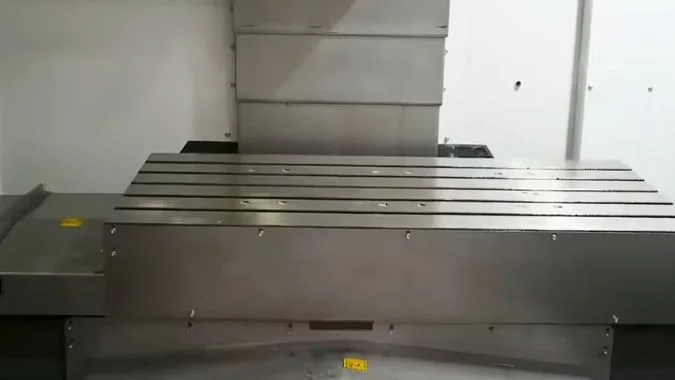
The first trap is treating table length as cutting length. A long table looks like a long cut. The vise then occupies the deck, and the tool needs room to enter and leave. The far corners of the blank sit in view but out of reach. That gap is the difference between working area and usable travel.
What Are the Differences Between Table Working Area and Usable Travel?
Shops mix table size with axis travel. The part then clamps in place, but the tool never reaches the far edge. These two numbers must be calculated apart.
Table working area is the physical length and width of the table. That size sets how large a fixture and workpiece can be mounted. Usable travel is the actual X, Y, and Z motion of the spindle. A part can fit the table but sit outside the cut.
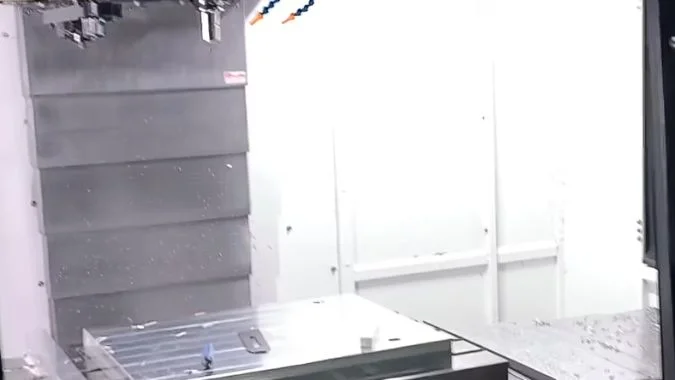
What table working area actually measures
The table working area is the physical deck of the VMC. The printed size is length times width. That area decides how large a fixture and workpiece can sit on the T-slots. Clamps, vises, and locating keys take part of that deck. The mountable blank is smaller than the catalog table size. Table area does not set how far the cutter can move.
What usable travel actually measures
Usable travel is the real stroke of the X, Y, and Z axes. X is left and right. Y is front and back. Z is up and down. This stroke is the reach of the tool relative to the workpiece. Tool change, approach, and retraction also need that stroke. A short Z stroke blocks tall parts on a wide table. A long X stroke on a small table cannot hold a large blank.
Why a part on the table is not a finished cut
Clamp space must remain. The tool must enter and leave. So usable travel must be greater than the maximum part size. A 10%–20% margin is the usual reserve. One working case is a machine with an 800 × 400 mm table and XYZ travel of 600 × 400 × 500 mm. That machine can cut a mold around 500 × 400 mm. A workpiece near 800 × 500 mm needs more room. A VMC850-class machine with 800 mm travel and a 1000 × 500 mm table gives operating space.
The two specs are independent. Some machines have long travel and a small table, so large workpieces cannot be mounted. Some machines have a large table and short Z travel, so tall workpieces cannot be cut. Buyers should check both numbers against workpiece size plus clamping margin. A part that outgrows both specs belongs on a gantry machining center, not on a stretched VMC table.
| Spec | What it answers | Typical check |
|---|---|---|
| Table working area | Can the fixture and blank sit on the deck? | Part plus clamp footprint versus table length × width |
| X/Y usable travel | Can the tool reach the far edges? | Part size plus 10%–20% margin versus X and Y stroke |
| Z usable travel | Can the tool clear height and retract? | Part height plus tool plus fixture versus Z stroke |
| Example A | 800 × 400 mm table, 600 × 400 × 500 mm XYZ | Mold near 500 × 400 mm |
| Example B | 1000 × 500 mm table, 800 mm X on VMC850-class | Workpiece near 800 × 500 mm |
When is Larger Table a Poor Choice Because Rapid Traverse and Accuracy Suffer?
A bigger table looks like extra capacity. Extra mass then slows rapids and stretches error across the stroke. That trade-off must be named before the order.
A larger table is a poor choice when extra mass cuts rapid traverse and full-stroke accuracy at the same time. Weight loads the feed system, so acceleration drops. Full-stroke positioning is often worse, and a longer base can lose rigidity even with more casting.
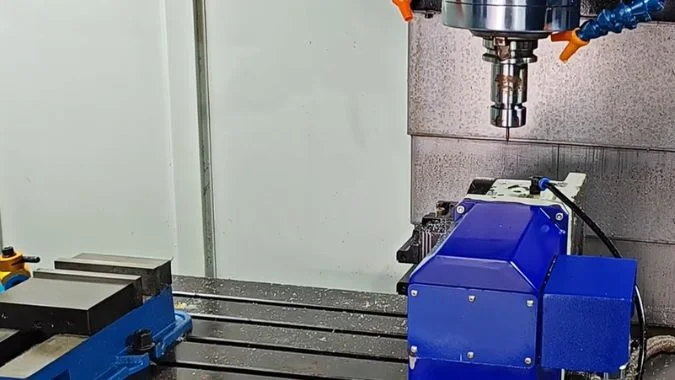
Limited dynamic performance
A larger table adds weight. That weight raises the load on the feed system. Rapid traverse speed then falls. Acceleration and deceleration also fall. The axes respond more slowly on short moves. Cycle time grows on small parts that need many rapids. Rail type also changes rapid speed. Linear or hard rail selection is a separate choice from table mass.
Amplified precision errors
Positioning accuracy over the full stroke of a large-travel machine is usually worse. One common full-stroke figure is 0.02 mm. Cutting across different positions on a large workpiece then stacks error beyond the expected band. A large-travel machine used on small workpieces often holds lower precision than a dedicated small-travel machine at the same price. Full-stroke positioning accuracy and repeatability must be read as full-stroke values, not a best-point claim.
Decreased rigidity
Longer travel needs a longer and heavier base. Extra casting does not always restore stiffness. Overall rigidity can drop. Vibration resistance can worsen. Surface quality then falls on the same cutter and feed. The shop pays for a bigger envelope with a softer cut.
When the larger table remains a fair choice
This warning holds when rapid movement and precision both suffer. Large, medium-weight workpieces with modest rapid needs fit a large table. Frequent precision work on small parts, or tight cycle times, make a large table a negative choice. The lower limit is current maximum workpiece size plus 50–100 mm of clamping margin. Extra travel for vague future growth is not required.
| Shop condition | Larger table | Why |
|---|---|---|
| Large, medium-weight parts, modest rapids | Reasonable | Mass is used, and cycle time is not the driver |
| Small precision parts, short cycle time | Poor | Extra mass slows rapids and spreads error |
| Mixed sizes, rare large jobs | Often poor | Daily work pays the mass penalty |
| Sizing rule | Lower limit | Current max part plus 50–100 mm clamp margin |
How Does Workpiece Overhang Beyond Table Edges Trigger Severe Cutting Chatter?
A blank that hangs past the table looks clamped. The overhang then acts like a beam, and the cut starts to shake. That shake is regenerative chatter.
Workpiece overhang beyond the table edges triggers severe cutting chatter because the unsupported length acts like a cantilever beam. Rigidity falls as overhang grows. Cutting force then causes elastic spring-back, chip thickness changes each pass, and regenerative chatter grows.
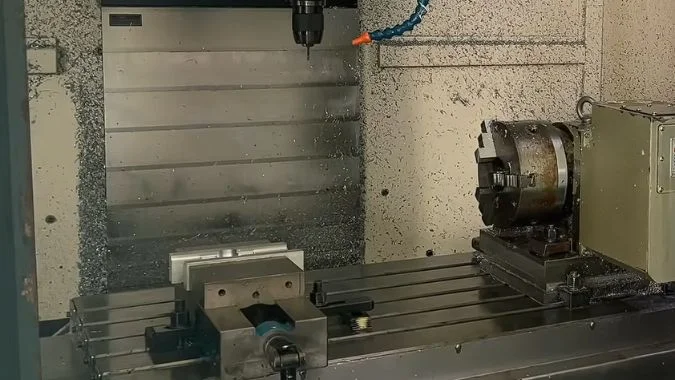
Rigidity drop from overhang
A workpiece that extends past the table edge behaves like a cantilever beam. Longer overhang means a sharper loss of stiffness. Tool overhang beyond about three times the tool diameter is a known cliff for rigidity. The same idea applies to the workpiece. Weak support lets cutting force amplify vibration. The cut is then taken on a spring, not on a solid stack from table to spindle. Support under the cut path is the real stiffness, not the catalog table size.
How regenerative chatter starts
The workpiece is not supported under the cut. Cutting force causes elastic deformation and spring-back. Chip thickness then changes from pass to pass. That loop is regenerative chatter. Each cut shakes more. Each shake damages more. Vibration marks stay on the machined surface. Clamping and positioning issues can add the same shake even when the blank looks seated.
Damage that follows the shake
Surface quality falls because the tool and workpiece move relative to each other. Chatter marks ruin a finish pass. Sustained alternating loads accelerate tool wear. The same loads weaken the connection between spindle and table. Severe cases stop further cutting. Intense vibration also brings high noise, and that noise harms the operator.
| Overhang condition | System effect | Shop result |
|---|---|---|
| Part fully on table, clamps near the cut | High support stiffness | Chatter risk stays lower |
| Short overhang past the edge | Mild cantilever | Finish marks may appear |
| Long overhang, weak support | Sharp rigidity drop | Regenerative chatter, tool wear, noise |
| Tool stickout over about 3× diameter, plus part overhang | Two weak members in series | Severe shake and possible stop |
What Foundation and Leveling Issues Appear When a VMC Table is Oversized for the Shop Floor?
An oversized table brings extra machine weight onto the floor. The slab then settles, and level drifts. Precision and machine life both suffer.
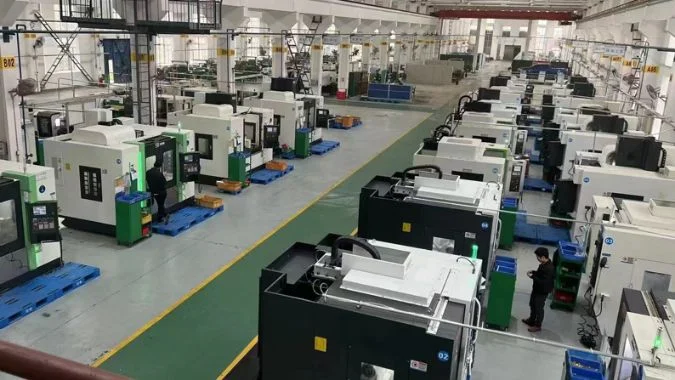
An oversized VMC table creates uneven foundation load, settlement, and long-term leveling trouble. Extra self-weight and cutting load need a stronger floor. Uneven settlement twists the guideways, so spindle-to-table square is lost, and screws and rails wear faster.
Higher settlement risk
A large table implies greater machine self-weight and greater process load. The foundation must carry that load. Thin concrete, short curing time, or soft soil raise the chance of uneven settlement. Level then drifts again and again. Shops that pick table size for a future large job also pick a heavier machine for every day of use. The floor must be specified for that machine, not for the previous mill.
Leveling takes longer and drifts sooner
Large machines with long travel need more time to set level across the full stroke. Leveling a large gantry machine often takes 1–2 days or longer. Leveling pads and anchor bolts need finer adjustment. A VMC with an oversized table follows the same pattern at a smaller scale. Repeat checks are required because settlement continues after install. Foundation thickness, soil, and cure time belong in the machine purchase, not after delivery.
Precision chain from a bad level
A machine that is not level lets gravity twist the guide rails at a small scale. The table then deforms slightly. The spindle is no longer square to the table. Flatness and size on the machined surface both suffer.
Wear on screws and rails
Large level error puts uneven stress on ball screws and guide rails. Wear accelerates. Accuracy cannot be held. Machine life shortens.
| Floor problem | What happens | Effect on the VMC |
|---|---|---|
| Thin slab or soft soil | Uneven settlement | Level drifts after install |
| Short concrete cure | Weak bearing capacity | Repeat re-leveling |
| Long travel, large table | Slow, fussy pad and anchor work | 1–2 days or more on large machines |
| Level left out of spec | Guide twist and table warp | Spindle-to-table square error |
| Lasting level error | Uneven load on screws and rails | Faster wear and shorter life |
Conclusion
Table area holds the part. Travel cuts it. Extra table mass, overhang, and a weak floor all shrink real VMC capability.

Chris Lu
Leveraging over a decade of hands-on experience in the machine tool industry, particularly with CNC machines, I'm here to help. Whether you have questions sparked by this post, need guidance on selecting the right equipment (CNC or conventional), are exploring custom machine solutions, or are ready to discuss a purchase, don't hesitate to CONTACT Me. Let's find the perfect machine tool for your needs.